Running from God’s Call: The Dangers of Disobedience

Have you ever felt God calling you to do something, but found yourself running in the opposite direction? You’re not alone. The story of Jonah in the Bible provides a powerful illustration of what happens when we try to flee from God’s presence and ignore His call on our lives.

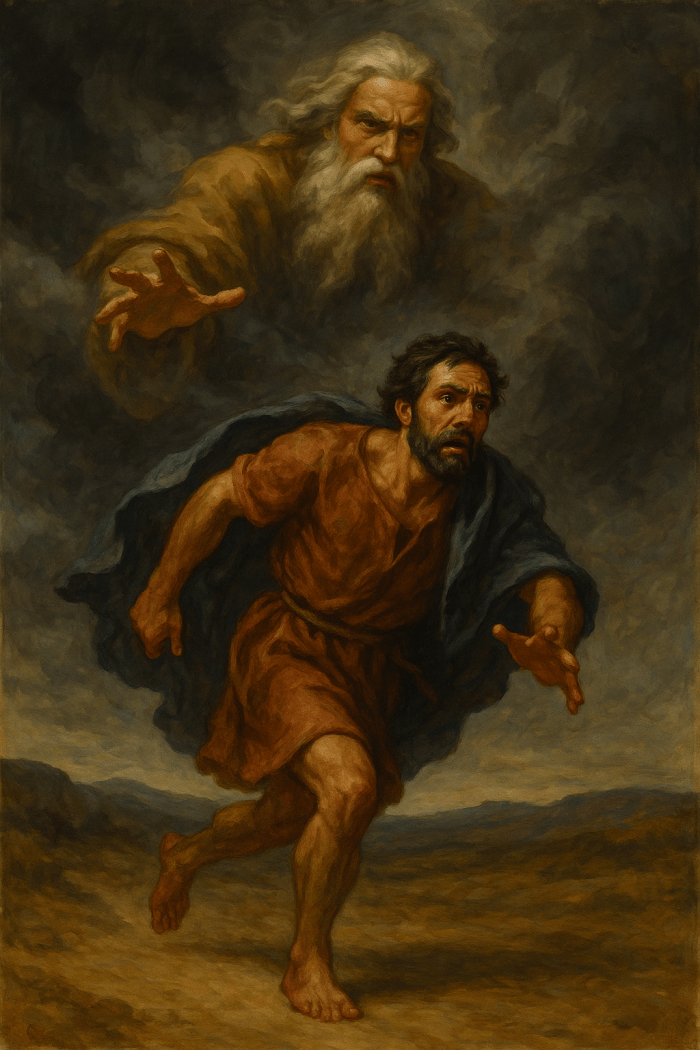
Jonah was a prophet living near Nazareth who received a clear command from God: “Get up and go to the great city of Nineveh and preach against it.” But instead of obeying, Jonah “got up to flee to Tarshish from the Lord’s presence.” He went in the exact opposite direction God told him to go.

This act of disobedience set off a chain of events that endangered not only Jonah, but everyone around him. As he boarded a ship headed for Tarshish, we’re told that “the Lord threw a great wind onto the sea, and such a violent storm arose that the ship threatened to break apart.” The sailors were terrified and began crying out to their gods for help.

Meanwhile, where was Jonah? He had gone down to the lowest part of the vessel and fallen into a deep sleep. His disobedience was affecting others, yet he remained oblivious to the chaos around him.

How often do we do the same thing? When we run from God’s call, it doesn’t just impact us – it can have serious consequences for those in our sphere of influence. Our families, friends, and communities may suffer because of our unwillingness to obey God’s voice.

The story of Jonah teaches us several important lessons about running from God’s call:

  1. You can’t hide from God’s presence. Jonah thought he could flee from the Lord, but God’s presence is everywhere. As Psalm 139:7-10 reminds us: “Where can I go from your Spirit? Where can I flee from your presence? If I go up to the heavens, you are there; if I make my bed in the depths, you are there. If I rise on the wings of the dawn, if I settle on the far side of the sea, even there your hand will guide me, your right hand will hold me fast.”
  2. Disobedience always leads downward. Notice how Jonah kept going “down” – down to Joppa, down into the ship, down into a deep sleep. When we choose to disobey God, we begin a downward spiral in our spiritual lives.
  3. You can’t run forever. Eventually, Jonah had to face the consequences of his actions. God will use whatever means necessary to get our attention and bring us back to His plan for our lives.
  4. Others suffer because of our disobedience. The innocent sailors on the ship were caught in a life-threatening storm because of Jonah’s decision to run from God.
  5. God’s call doesn’t change. Even after all of Jonah’s attempts to flee, God still wanted him to go to Nineveh. The call of God is without repentance – He doesn’t change His mind about what He’s asked us to do.

So why do we run from God’s call? Often, it’s because what He’s asking us to do feels uncomfortable or challenging. Maybe He’s calling you to witness to a difficult group of people, or to step out in faith in a way that scares you. Perhaps you feel unqualified or unprepared for the task He’s given you.

But here’s the truth: God doesn’t call the qualified; He qualifies the called. When He gives us a task, He also provides the strength, wisdom, and resources we need to accomplish it. Our job is simply to obey.

Consider the excuses we often make:

“I’m not ready.”
“Someone else could do it better.”
“I don’t have the time/money/skills.”
“It’s too hard.”
“What if I fail?”

Sound familiar? These are the same kinds of excuses Jonah probably made when God told him to go to Nineveh. But God’s call on our lives isn’t dependent on our feelings of readiness or capability. It’s dependent on His power working through us.

So what does obedience to God’s call look like in practical terms? It might mean:

  • Sharing your faith with a coworker or neighbor
  • Volunteering at a local ministry or outreach
  • Using your talents to serve in your church
  • Showing kindness to someone who’s difficult to love
  • Giving generously, even when it’s a sacrifice
  • Forgiving someone who’s hurt you deeply

The possibilities are endless, but the principle remains the same: when God calls, our response should be immediate obedience.

Remember, delayed obedience is still disobedience. We can’t put off what God is asking us to do today, hoping for a more convenient time in the future. The time to act is now.

If you’ve been running from God’s call on your life, today is the day to stop. You don’t have to wait for a dramatic intervention like Jonah’s “great fish” experience. You can choose right now to turn back to God and say, “I’m sorry for running. I’m ready to do what you’ve called me to do.”

Imagine the impact we could have on the world if every believer stopped making excuses and started living in full obedience to God’s call. Lives would be changed. Communities would be transformed. The Kingdom of God would advance in powerful ways.

So let’s make a commitment today. Let’s stop running and start obeying. Let’s say “yes” to whatever God is asking of us, trusting that His plans for us are good. As we step out in faith, we’ll discover the joy and fulfillment that comes from living in alignment with God’s will for our lives.

Are you ready to stop running and start obeying? The choice is yours. What will your answer be?
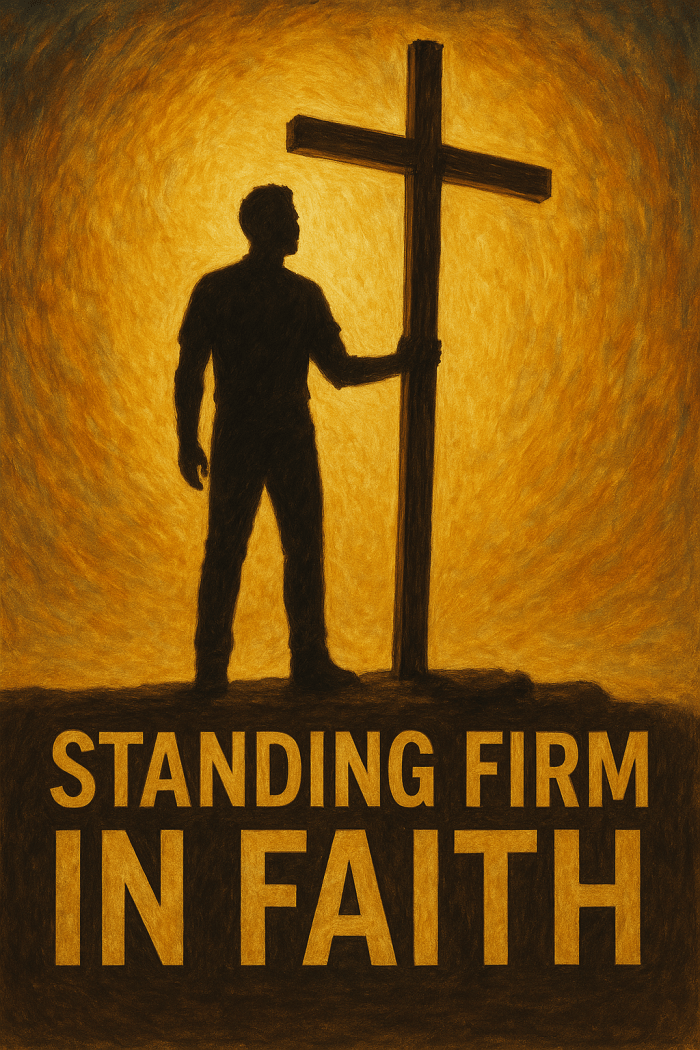
Standing Firm in Faith: A Call for Courageous Witness in Difficult Times

Dear brothers and sisters in Christ,

We live in a tumultuous time, where many things are spiraling out of control. Recently, several events have shaken us to the core, and many of us are struggling to know how to respond as Christians. In the midst of these chaotic times, it’s easy to become overwhelmed and wonder where God is in all of this.

Yet, it is precisely during these times of trial and tribulation that our faith is tested, and our true character is revealed. In the book of Acts, we read about a man named Stephen, who was “full of grace and power” and was falsely accused of blasphemy. Despite the lies and half-truths that were thrown at him, Stephen stood before the religious leaders of his day and preached boldly about the One True God.

In Acts 6: 10, we read about how Stephen’s face “was like that of an angel.” This was no ordinary man; he had the full power of the Holy Spirit within him, and his every word was seasoned with the wisdom of God. Yet, even with all of this, he remained humble and steadfast in his faith, knowing that the power to persevere came not from him but from God alone.

As we read about Stephen’s trial, we must ask ourselves: when has the time been where we can say everything we want and go unchecked by God? Are we so consumed by the culture wars that we have allowed worldly foolishness to be the norm in our churches?

Paul, a chosen vessel, a man who could say “By the grace of God I am what I am” (1 Cor. 15: 10), wrote in Romans 1:16, “For I am not ashamed of the gospel, because it is the power of God that brings salvation to everyone who believes.” So, today, I am calling us all to stand up and be bold for Christ, unashamed of the gospel of our blessed Savior.

But what does it really mean to be unashamed of the gospel? It means to wear our faith proudly on our sleeves, not just on Sundays but every day of our lives. It means being willing to speak the truth in love, even when it’s uncomfortable or unpopular. It means being willing to extend grace and forgiveness to those who have wronged us, just as Christ has forgiven us.

Let me share with you a story about a Catholic priest who kept going to the man who murdered his mother. He would sit across from the man in prison and stare at the back of his head for hours. One day, the prisoner finally asked him, “Why do you keep coming back here? Why do you even look at me?” The priest replied, “Because Jesus loves me as much as he loves you.” The murderer finally came to faith in Christ and is now serving as a prison chaplain.

Friends, that’s the kind of perseverance we need in these difficult times. We must keep going back to Jesus, over and over again, asking for His grace and mercy. We must be willing to look people in the eye, even those who have rejected and despised Christ, and show them that there is hope and redemption in Jesus alone.

As we face the challenges of our day, we must also be prepared for the possibility of increased persecution. Jesus never promised us an easy life in this world; in fact, He told us that following Him would often lead to opposition and even martyrdom. But He also promised us that He would never leave us or forsake us, “I will be with you always, to the end of the age” (Matthew 28:20).

This truth should give us the courage to stand firm in our faith, knowing that our ultimate allegiance is not to this world or its powers but to the King of Kings. We must be willing to count the cost of discipleship and decide whether we are truly ready to follow Christ, no matter the cost.

As we stand firm in our faith, we must also remember the importance of unity within the body of Christ. In a world that is trying to divide us along political, racial, and socioeconomic lines, we must strive to maintain the bond of peace that unites us as believers. Our shared faith in Christ should transcend any earthly differences, allowing us to stand together as a powerful witness to a watching world.

We must also be careful not to fall into the trap of self-righteousness or judgmentalism. While we are called to stand firm in our convictions, we must do so with humility and grace, recognizing that we too are sinners saved by grace. Our goal should always be to point others to Christ, not to win arguments or prove ourselves right.

In conclusion, as we face the challenges of our time, let us draw strength and courage from the examples set before us in Scripture and throughout church history. Let us be unashamed of the gospel, standing firm in our faith while extending love and grace to those around us. May we be known not for our condemnation of others but for our unwavering commitment to Christ and our love for all people.

As we go forth, let us echo the words of the apostle Paul: “I have been crucified with Christ and I no longer live, but Christ lives in me. The life I now live in the body, I live by faith in the Son of God, who loved me and gave himself for me” (Galatians 2:20). This is the essence of what it means to be a true follower of Christ – fully surrendered, unashamed, and ready to stand firm in the face of whatever challenges may come our way.

Understanding the Differences Between Protestant Beliefs and Jehovah’s Witnesses: Communicating With Clarity and Kindness

It’s not uncommon for conversations on the subject of faith to become confusing. Protestants and Jehovah’s Witnesses both claim to be Christians, but our beliefs on some significant issues could not be more different. To have constructive conversations about our faith, we must understand both the differences between our beliefs and those of Jehovah’s Witnesses, as well as the most effective ways to communicate those differences in the spirit of Christlike love.

Trinity

Protestant Beliefs: Protestants confess that God exists eternally as Father, Son, and Holy Spirit, and these three are one in essence but distinct in personhood.

Jehovah’s Witness Beliefs: Jehovah’s Witnesses deny the Trinity. They believe Jehovah (the Father) is the only true God, that Jesus was a created son and therefore is not equal with the Father, and the Holy Spirit is God’s impersonal active force rather than a person.

Jesus Christ

Protestant Beliefs: Protestants confess that Jesus Christ is fully God and fully man, that He eternally existed as the second person of the Trinity with the Father, and that His death and resurrection are the sole source of our salvation, given by God’s grace through faith.

Jehovah’s Witness Beliefs: Jehovah’s Witnesses teach that Jesus was Michael the Archangel before being born of a woman, that He is merely a created being and not God, and that His death provides salvation, but only for those who obey the commands of Jehovah as outlined by the Watchtower Society.

Scripture and Authority

Protestant Beliefs: Protestants affirm the sole authority of the Bible (sola scriptura) for all matters of faith and practice.

Jehovah’s Witness Beliefs: Jehovah’s Witnesses reject sola scriptura. They use a special translation of the Bible called the New World Translation, and teach that the Watchtower organization is the only accurate interpretation of Scripture.

Salvation

Protestant Beliefs: Protestants believe that salvation is a gift of God, received by grace through faith in Christ alone (Ephesians 2:8-9).

Jehovah’s Witness Beliefs: Jehovah’s Witnesses believe faith in Christ is essential for salvation, but it is not enough. To be saved, one must also live obediently to Jehovah’s commands, submit to the requirements of the Watchtower organization, and continue to produce good works.

Afterlife

Protestant Beliefs: Protestants believe in heaven and hell. Jesus taught that all who put their trust in Him will be with Him eternally in heaven (Matthew 25 31–46; John 14:1-3), but all who reject Him will be cast into hell to face eternal punishment (Matthew 8:12; 25:41).

Jehovah’s Witness Beliefs: Jehovah’s Witnesses deny that there is an eternal conscious torment. They teach that only 144,000 will reign with Christ in heaven, while most faithful Witnesses will live forever on a paradise earth. The wicked are destroyed rather than tormented for eternity.

Tips for Sharing Your Faith with Kindness

It’s one thing to be able to recognize the differences between Jehovah’s Witnesses and Protestants on doctrinal matters, but what about in real-life conversations with those who are Witnesses? Knowing what to say and how to say it in a spirit of love is equally important. Here are some helpful tips:

Listen First

Listening well is the fastest way to gain respect and open up a meaningful conversation about the differences between Jehovah’s Witnesses and Protestants’ beliefs. Asking questions about what they believe and why, with genuine interest in their responses, will help you gain their trust.

Start With What You Have in Common

Both Jehovah’s Witnesses and Protestants value the Bible and speak about Jesus. Start with these common beliefs to establish trust and then move into your differences.

Stay Clear and Simple

Leave the theological jargon at home. Be clear and straightforward as you explain the Protestant positions on grace, faith, and the deity of Jesus. Think through examples that will help illustrate these points and make them easy to understand.

Ask Questions Rather Than Arguing

Don’t get into an argument; ask good questions. These help to get past the emotional resistance that often comes when talking about beliefs and into honest consideration of differences. Good questions to ask include: “What does this verse mean to you?” or “How do you understand Jesus’ role in salvation?”

Remember to Love Like Christ

Remember, the goal is not to “win” the argument but to love like Christ. In everything we do, we should do it with humility, gentleness, and respect (1 Peter 3:15).

Final Thought

Sharing our faith with Jehovah’s Witnesses is an opportunity to show them the true hope of the gospel. As long as we stay informed on the differences between Jehovah’s Witnesses and Protestant beliefs, remain grounded in Scripture, and share our faith with gentleness and respect, we can effectively communicate the truth to others in a way that brings honor to Christ and glorifies God.

Restoring Faith in Our Communities: Why Churches Must Work Together

Everywhere we look, our communities are crying out for restoration. Families are fractured, trust in institutions has faded, and many people have quietly walked away from faith altogether. In times like these, the church has a unique calling: to be a place of healing, hope, and renewal. But here’s the truth—restoration happens best when churches work together.

Restoration Through Unity

In John 17, Jesus prayed for His followers to be one so that “the world may believe.” When churches join hands across denominational lines, we display the very restoration Jesus prayed for. Our unity becomes a living testimony that brokenness can be healed and that God’s love is stronger than our differences.

Restoring Broken Lives

No single church can meet every need, but together we can restore what’s been lost:

  • Families can be restored through marriage counseling, parenting classes, and prayer support.
  • Hope can be restored through food pantries, addiction recovery ministries, and community outreach.
  • Faith can be restored through testimonies of grace shared in united services and events.

By working together, churches become instruments of God’s restoring power in places of deep hurt.

Restoring Trust in the Church

Sadly, many people see the church as divided, irrelevant, or judgmental. But when congregations come together—big and small, traditional and contemporary—the community witnesses something different: restoration at work. Unity among churches restores trust and reminds people that the church is still a place of love, care, and transformation.

Restoring Communities

Broken neighborhoods can be rebuilt when churches unite in practical ways:

  • Hosting community prayer walks.
  • Partnering for school supply drives or mentoring programs.
  • Joining forces in disaster relief or neighborhood renewal projects.

Every act of partnership whispers a greater truth: God is making all things new.

Closing Thought

The gospel is a story of restoration—God bringing beauty from ashes, healing from brokenness, and life from death. When churches in a community come together, we embody that story for the world to see.

Now more than ever, our communities need a united church, not divided congregations. Let’s commit to restoring faith, restoring hope, and restoring lives—together.

Restoration: It’s Never Too Late

Have you ever felt too far gone? Like you’ve made too many mistakes, hurt too many people, or wasted too much time to ever be made whole again? I have. We all have at some point. But the beautiful thing about restoration is that it’s never too late. In fact, that’s the point.

In the book of Joel, God promises to “repay you for the years that the swarming locust ate, the young locust, the destroying locust, and the devouring locust” (Joel 2:25). He says this after a time of judgment when the Israelites were hungry and thirsty and turning back to God in repentance. He promises not only to forgive them but to restore what was lost.

That’s the thing about God. He’s not just about taking the losses of your life and forgiving you for them. He’s about restoration. He gives back the years the locusts ate. He restores what was lost and makes it better than it was before. And this isn’t just for spiritual things, though He promises to fill our lives with the knowledge of God so we’ll never be thirsty again (Joel 2:28). This is for all areas of life—marriages, family relationships, personal growth, spiritual vitality, career paths, health, and financial stability.

Restoration is not just for a select few either. In fact, if anything, the opposite is true. In Joel 2: 28-32, He goes on to prophesy a day when God would pour out His Spirit on all people. And this is exactly what happened on the day of Pentecost recorded in Acts 2. The Spirit of God came on all kinds of people from all over the world. It didn’t matter if you were young or old, male or female, married or single, wealthy or poor, slave or free. If you were there, God included you in His plan.

This is one of those passages that challenges our thinking about who is “reachable” or who is “redeemable.” The truth is that no one is too far gone for God to work a miracle of transformation in their lives. From the death row inmate to the drug addict to the atheist, God’s offer of restoration stands.

But what does this restoration look like? For some, it may be reconciliation in broken relationships. For others, it may be finding new purpose and joy after a season of darkness. Restoration could mean healing from past hurts, breaking free from old patterns of sin and addiction, or discovering a new sense of identity and worth in Christ.

The process of restoration will often take time and effort. It’s not always easy or quick. In many ways, it’s like restoring an old car. You have to sand down the rough edges, fill in the holes and blemishes, and sometimes even strip off several layers of paint before you can get to the good stuff underneath. But the end result is always worth it.

God has promised restoration, and He will never go back on that promise. But He won’t force it on us either. We have to be willing to receive it and to do our part in the process. This is where becoming an agent of restoration comes in.

As people who have been forgiven and restored by God, we are called to be agents of restoration in the world around us. This could look like extending forgiveness to others, giving people second chances, or being willing to get our hands dirty in the messy work of reconciliation with those who have wronged us.

Becoming an agent of restoration also means living unashamed of our faith in a world that often marginalizes or ridicules religious people. In a culture that often tells us to keep our faith to ourselves or to quietly practice it behind closed doors, we are called to boldly and with humility share the transformative power of Christ with others. As Paul says in Romans 1: 16, “For I am not ashamed of the gospel, because it is the power of God that brings salvation to everyone who believes.”

Living unashamedly is also a part of being an agent of restoration. It means being willing to share our stories of how God has restored us with others and inviting them into the family of God. It also means being willing to stand firm in our convictions, even when it’s uncomfortable or costly to do so.

Our workplaces, neighborhoods, and social circles are mission fields where God wants to bring His restoring touch through us. But in order to do that, we have to see them as such. We have to be willing to look for the opportunities to be agents of restoration and to step into those opportunities when they present themselves.

As we receive God’s offer of restoration for our own lives and become agents of restoration in the lives of others, we join the grand narrative of redemption that God is weaving in the world. We become living testimonies to the truth that no one is beyond hope, that it’s never too late to start again, and that God’s love can truly make all things new.

So wherever you are today, know that restoration is available. If you are standing in need of God’s restoring touch, know that He’s waiting with open arms to pour out His Spirit on you. But if you’re in a place where you can offer that touch to others, step into that opportunity today. It’s never too late to start again, to heal, to forgive, to dream, and to become all that God has created you to be.

Let’s pray that God would give us eyes to see the opportunities for restoration around us, that He would give us the courage to step into those opportunities, and that He would keep our hearts open to His transforming work in and through us. May we live as people of hope, confident in the God who specializes in restoration, and may our lives be lights of that hope to a world that desperately needs renewal.

Can They Really Change? The Power of Transformation in Christ

We’ve all asked this question at some point: “Can they really change?” Maybe it’s about a family member with a troubled past, a coworker with bad habits, or even ourselves as we struggle with our own shortcomings. The truth is, on our own, genuine transformation can seem impossible. But there’s hope – a hope found in Jesus Christ.

The story of one man’s transformation serves as a powerful testament to this hope. Once known for his violent temper and constant trouble with the law, he seemed beyond redemption. Yet, after an encounter with Jesus in prison, his life took a dramatic turn. The change was so profound that some family members couldn’t believe it was real. They clung to the old image of who he used to be, unable to accept the new man standing before them.

This story challenges us to examine our own beliefs about change. Do we truly believe that Jesus can transform anyone, no matter how far they’ve strayed? Or do we put limits on God’s power, writing off certain people as “too far gone”?

The apostle Paul, in his letter to the Romans, addresses this very issue. He reminds us that when we come to Christ, we die to our old selves and are raised to new life. This isn’t just pretty language – it’s a spiritual reality that should radically alter how we live.

Paul asks a pointed question: “Should we continue in sin so that grace may multiply?” His answer is an emphatic “Absolutely not!” The grace we’ve received isn’t a license to keep sinning; it’s an invitation to a completely new way of life.

This new life in Christ isn’t about following a set of rules or cleaning ourselves up before we come to Him. Jesus wants to change us from the inside out after we come to Him. Too often, the church has put up barriers, imposing standards that Jesus never did. The truth is, Jesus doesn’t care what you wear to church, whether you’ve got tattoos, or if you’ve got a colorful past. He cares about your heart and your willingness to let Him work in your life.

The process of change – what theologians call sanctification – is just that: a process. For some, certain habits or struggles may fall away quickly. For others, it’s a longer journey. The key is to remember that we’re going from victory to victory, even when it doesn’t feel like it.

This journey of sanctification requires active participation on our part. Paul urges us, “Do not let sin reign in your mortal body so that you obey its desires.” In today’s world, this can be incredibly challenging. We’re bombarded with temptations through our phones, computers, and media. It takes intentional effort to guard our hearts and minds.

One practical example given is the importance of protecting our “eye gates” and “ear gates” – being careful about what we allow ourselves to see and hear. In a world where pornography is just a click away, where movies and TV shows push boundaries further and further, we must be vigilant. What starts as a “small” compromise can grow into something much more destructive if left unchecked.

The good news is that we’re not fighting this battle alone. When we stumble – and we will – we serve a forgiving God. Repentance isn’t a one-time event; it’s an ongoing part of our walk with Christ. We get up, dust ourselves off, and keep moving forward.

But here’s a challenging question: What if we put as much effort into living for God as we sometimes do in trying to hide our sins? Imagine the impact we could have if we invested the same energy into righteousness that we often pour into covering up our wrongdoings.

Consider this: Many of us work 40 hours a week for our jobs. How many hours do we dedicate to God? If we gave God even half the time we give our employers, how might our lives – and our communities – be transformed? The early disciples left everything to follow Jesus. While He may not be calling us to such a dramatic step, He is asking us to put Him in the right perspective in our lives.

The truth is, sin has no control over us except what we give it. We are under grace, not law. This isn’t an excuse to sin, but a reminder of the power we have in Christ to live differently.

As we go about our daily lives, what if we looked at every person we encountered with the belief that they are not too far gone for God to change them? What if we loved them and shared Jesus with them, regardless of their current state? We are either pushing people towards Jesus or away from Him – the choice is ours.

In the end, transformation in Christ isn’t just about us. It’s about becoming vessels through which God can work to reach others. It’s about allowing the change in our own lives to be a testimony to the power of Jesus. It’s about believing that no one is beyond the reach of God’s love and grace.

So the next time you’re tempted to ask, “Can they really change?” remember – with Jesus, the answer is always yes. The question is, will we believe it and live like it’s true?