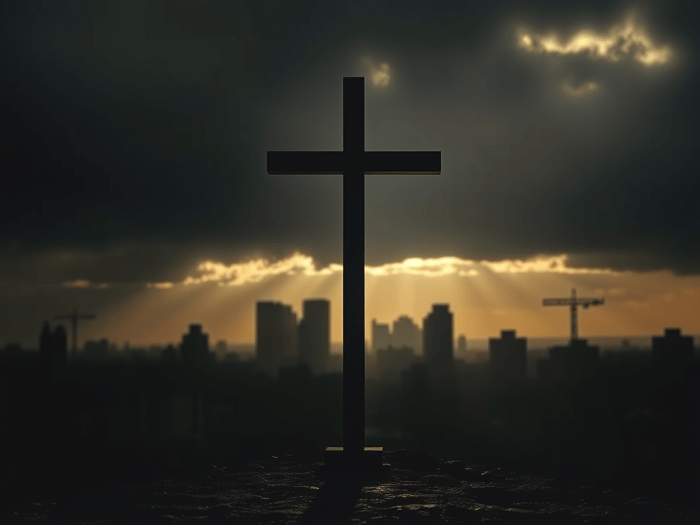
When “Christian” Wasn’t a Compliment—and Why Jesus Called Us to Follow, Not Label

Today, the word Christian is everywhere.

On census forms.
In political debates.
On social media bios.
Even in casual conversation.

People proudly—or casually—identify as Christian, even if they never attend church, have never opened a Bible, and have never personally declared allegiance to Jesus Christ. For many, Christian has become a cultural label rather than a surrendered life.

But here is a truth many do not realize:

The term “Christian” did not originate as a badge of honor—and Jesus never called His followers by that name.

“Christian” Began as an Outsider’s Label

The word Christian appears only three times in the New Testament. Its first appearance tells us everything we need to know:

“And the disciples were called Christians first in Antioch.”
— Acts 11:26

Notice the wording carefully.

They were called Christians.
They did not call themselves Christians.

The term was coined by outsiders, likely as a label of mockery or distinction. In the Roman world, attaching “-ian” to a name meant belonging to or being identified with someone. To be called a Christian meant “those people who follow Christ.”

At the time, that was not a compliment.

It marked believers as strange, socially disruptive, and politically suspicious. To be identified with Christ was to be associated with persecution, loss, and sometimes death. The name “Christian” carried risk, not respect.

Over time, what was once an insult became embraced by the Church. But its original meaning reminds us that it was never meant to be a casual identity.

Jesus Never Said, “Call Yourselves Christians”

What makes this even more significant is that Jesus Himself never used the word Christian.

Not once.

Instead, Jesus consistently used a different word:

“Follow.”

“Follow me.”
“If anyone would come after me…”
“Take up your cross and follow me.”

Jesus did not invite people into a religion.
He invited them into discipleship.

He did not ask for verbal affiliation.
He demanded surrendered obedience.

To follow Jesus meant reordering your entire life—your values, priorities, relationships, and identity. Following was costly. Following was visible. Following required decision and devotion.

Christianity was never meant to be inherited, assumed, or assigned.

The Problem With Cultural Christianity

In today’s culture, Christian often means very little.

Many people claim the name without ever:

  • Repenting of sin
  • Confessing Jesus as Lord
  • Being baptized
  • Joining the body of believers
  • Sitting under biblical teaching
  • Living in obedience to Christ

Some have never personally declared faith in Jesus at all. They simply grew up around church, live in a Christian-influenced region, or agree with certain moral values.

But Jesus never recognized cultural proximity as faith.

He consistently drew a sharp line between those who followed Him and those who merely admired Him from a distance.

Calling yourself Christian does not make you a follower any more than owning a Bible makes you surrendered.

Following Is Personal, Costly, and Visible

Jesus’ call was always personal.

Not “your parents followed Me.”
Not “your culture believes in Me.”
Not “you agree with Me.”

But you—follow Me.

Following Jesus requires a personal declaration. A personal repentance. A personal submission to His authority.

It also produces visible fruit.

Followers of Jesus gather with His people.
They submit to His Word.
They pursue holiness.
They grow in obedience.
They live transformed lives over time.

This does not mean perfection—but it does mean direction.

Reclaiming the Weight of the Name

There is nothing wrong with the word Christian.

The problem is how lightly it is worn.

When everyone claims the label, the meaning becomes diluted. When discipleship is replaced with declaration, faith becomes shallow. When identity is assumed rather than surrendered, transformation stalls.

Jesus is not looking for people who wear His name.
He is looking for people who walk in His ways.

A Call Back to True Following

The question is no longer, “Do you call yourself a Christian?”

The better question is:

Are you actually following Jesus?

Not culturally.
Not casually.
Not selectively.

But fully.

Because in the end, Jesus did not say, “Well done, good and faithful Christian.”

He said:

“Follow me.”

And He still does.

The Fivefold Ministry Has Not Expired

Why Apostles, Prophets, Evangelists, Pastors, and Teachers Still Matter Today

In Part One, we established that the gifts of the Holy Spirit have not ceased and that Scripture never assigns an expiration date to God’s supernatural empowerment of the Church. That conclusion leads naturally to a second, unavoidable question:

If the Spirit’s gifts are still active, what about the ministries Christ gave to steward and equip the Church?

The answer is found plainly—and decisively—in Ephesians 4.


Christ Gave the Fivefold—Not the Church

Ephesians 4:11 begins with a critical truth that is often overlooked:

“And He gave some, apostles; and some, prophets; and some, evangelists; and some, pastors and teachers.”

The fivefold ministry is not a human invention.
It is not a church-growth model.
It is not a denominational structure.

It is a gift from the risen Christ.

To reject or redefine what Christ gave is not discernment—it is presumption.


The Purpose: Equipping, Not Exalting

Paul immediately defines the function of these ministries:

“For the perfecting of the saints, for the work of the ministry, for the edifying of the body of Christ.”

Fivefold ministry exists to equip believers, not to elevate leaders.
It is about function, not hierarchy.
Calling, not control.

When fivefold ministry becomes about titles, power, or personal platforms, it has already drifted from its biblical purpose. But abuse does not negate design.


The Word That Settles the Debate: “Until”

Ephesians 4:13 contains the most decisive word in the entire discussion:

Till we all come in the unity of the faith, and of the knowledge of the Son of God, unto a perfect man, unto the measure of the stature of the fullness of Christ.”

The ministries of Ephesians 4 are given until three conditions are met:

  1. Full unity of the faith
  2. Full knowledge of the Son of God
  3. Full maturity reflecting Christ’s fullness

No honest reading of Church history—or the present Church—can claim these conditions have been fulfilled.

If the “until” remains unmet, the ministries remain in effect.

To argue otherwise is to claim the Church has already arrived at full maturity—something even the most optimistic theologian would not assert.


Foundational Apostles vs. Ongoing Apostolic Ministry

One common objection is that apostles and prophets were “foundational” and therefore temporary. Scripture does affirm a foundational role—but it does not eliminate ongoing function.

The apostles who authored Scripture were unique and unrepeatable. That foundation is complete.

However, apostolic ministry—the function of being sent, establishing, governing, and strengthening churches—continues throughout the New Testament beyond the Twelve.

Paul uses the term apostle more broadly than a closed historical group. The same is true of prophets, whose role involves edification, exhortation, and comfort—not adding Scripture.

Foundation does not mean disappearance.
It means stability for what continues to be built.


Prophets Do Not Threaten Scripture

Another frequent concern is that prophetic ministry undermines biblical authority. Scripture itself addresses this fear by regulating prophecy rather than eliminating it.

Prophecy is to be:

  • Tested
  • Judged
  • Submitted to Scripture

New Testament prophecy does not introduce new doctrine. It applies eternal truth to present circumstances.

The moment prophecy claims equal authority with Scripture, it ceases to be biblical prophecy. But Scripture never concludes that misuse requires removal—only correction.


What Happens When the Fivefold Is Removed

When the Church operates with only pastors and teachers, imbalance is inevitable.

Without apostles, churches lose vision, mission, and structural clarity.
Without prophets, churches lose conviction, holiness, and spiritual sensitivity.
Without evangelists, churches lose urgency for the lost.
Without pastors, people are wounded and scattered.
Without teachers, truth erodes.

The result is a Church that is:

  • Educated but unequipped
  • Gathered but stagnant
  • Informed but immature

Fivefold ministry is not about preference—it is about completeness.


Fivefold Ministry and Restoration

A restoration-minded Church does not ask, “What can we safely remove?”
It asks, “What has Christ already given that we must faithfully steward?”

Fivefold ministry restores:

  • Balance instead of extremes
  • Maturity instead of dependency
  • Mission instead of maintenance

The goal is not charismatic chaos or institutional rigidity, but a Spirit-empowered, Word-governed, Christ-centered Church.


Until He Returns

The Church is still growing.
The Church is still maturing.
The Church is still being built.

Therefore, the tools Christ gave for that work are still necessary.

Apostles still equip.
Prophets still awaken.
Evangelists still gather.
Pastors still shepherd.
Teachers still ground.

Until we reach the fullness of Christ, we need everything Christ has given.

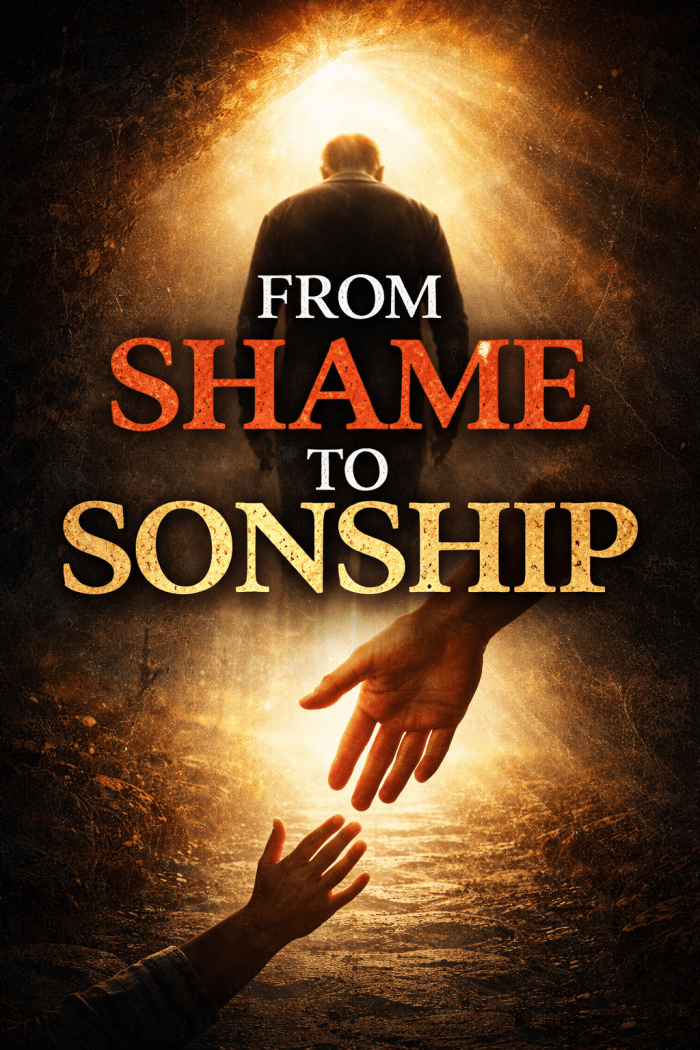
From Shame to Sonship: Living as Children of the King

There’s a powerful scene in the movie Shawshank Redemption that captures something profound about the human condition. An elderly librarian, imprisoned for fifty years, finally receives parole. Free at last, he moves into a small apartment—his own space, his own life. Yet night after night, he sleeps on the floor. The bed feels too exposed, too vulnerable. For half a century, the floor meant safety, a place to hide beneath the bed when danger came. Now, in freedom, he remains imprisoned by the habits of captivity.

This image reflects a spiritual reality many believers face today. Though Christ has set us free, we continue living as slaves. We carry chains that have already been unlocked. We sleep on the floor when a bed has been prepared for us.

The Spirit We’ve Received

Romans 8:12-17 presents a startling truth: “You did not receive a spirit of slavery to fall back into fear. Instead, you received the Spirit of adoption, by whom we cry out, ‘Abba, Father.'”

The distinction is critical. Before knowing Christ, we were slaves—bound by sin, controlled by shame, captive to our past. But salvation changes everything. We don’t merely receive forgiveness; we receive adoption. We become sons and daughters of the King.

Yet many believers never begin to live this out. They remain stuck in shame, viewing God through the lens of their failures rather than through the lens of His grace. When asked whether God tolerates them or delights in them, they hesitate. Deep down, they believe God merely puts up with them—that He’s obligated to accept them but doesn’t truly rejoice over them.

This couldn’t be further from the truth.

The Difference Between Tolerance and Delight

Consider the difference between how you relate to your own children versus other people’s children. You might tolerate twenty neighborhood kids running through your house on a Saturday afternoon. You’ll feed them, supervise them, even correct them when necessary. But your own children? You delight in them. They’re yours. Their presence brings joy, not mere obligation.

God made a way for you to become His child—not through anything you did, but through what Christ accomplished. When you accepted that gift, you became His son or daughter. Why would He suddenly shift to merely tolerating you when you stumble? The belief that He does reveals we’re still living in shame rather than sonship.

The Flesh vs. The Spirit

Romans 8:13 reminds us: “If you live according to the flesh, you are going to die. But if by the Spirit you put to death the deeds of the body, you will live.”

We have power over our flesh through the Holy Spirit. This power wasn’t reserved only for the early church—it’s available to every believer today. Yet most of us simply surrender when our flesh starts demanding attention. We assume that because we’re “in the flesh,” we must live “according to the flesh.”

But that’s not what Scripture teaches. We’re called to be different. When the Holy Spirit moves in, something else must move out. Genuine salvation produces genuine transformation.

Peter’s story illustrates this beautifully. In the garden, he lived according to the flesh—drawing his sword and cutting off a man’s ear. In the courtyard, fear controlled him—he denied Christ three times, even cursing to prove his point. Peter forgot he was a son and lived in shame.

But then came Pentecost. Peter stood on the temple steps, surrounded by Roman guards and the very religious leaders who had orchestrated Jesus’ crucifixion. His flesh surely screamed at him to shut up and hide. Yet Peter preached boldly, calling them to account. The flesh didn’t win that day. The Spirit did.

The Power of Secrets

The enemy’s most effective weapon isn’t making you sin—he can’t force you to do anything. His power lies in keeping you silent about your sin. Shame thrives in secrecy. When you hide something, the devil exploits it, whispering threats: “What if they found out? What if she knew? Your ministry would be over. Your reputation would be destroyed.”

These whispers keep believers paralyzed, living as slaves rather than sons. And here’s the tragic irony: God already knows what you did. He’s simply waiting for you to admit it, to bring it into the light where shame loses its power.

Confession isn’t about informing God of something He doesn’t know. It’s about agreeing with Him about what He already sees and receiving the forgiveness He’s already extended. It’s about moving from hiding to healing, from captivity to freedom.

Your Father Is Waiting

The parable of the prodigal son captures the Father’s heart perfectly. When the wayward son returned home, broken and ashamed, ready to beg for a servant’s position, the father didn’t lecture him. He didn’t make him earn his way back. He ran to him, embraced him, placed a ring on his finger, a robe on his shoulders, sandals on his feet, and threw a party.

Why? Because he was his son.

The Bible tells us there’s rejoicing in heaven when one person comes home—not just among the angels, but in the presence of God Himself. The Father throws the party. He celebrates because His child has returned.

You don’t have to knock and wait for permission to enter. You’re not a guest or a servant. You’re family. Children don’t ask permission—they burst through the door and run to their father.

Living as Heirs

Romans 8:17 declares: “And if children, also heirs—heirs of God and co-heirs with Christ.”

Co-heirs with Christ. Let that sink in. Everything that belongs to the Son belongs to you. The same Spirit that empowered Jesus to perform miracles dwells in you. He said His followers would do the works He did—and even greater works.

So why do we live like powerless slaves? Why do we seek everyone’s approval when we’ve already been approved by the King? Why do we fight as if we’re trying to earn something we’ve already received?

You’re not fighting for victory—you’re fighting from victory to victory. You’re not trying to become God’s child; you already are His child. Your ticket to heaven is already punched. Now it’s time to live like it.

Your Book Is Being Written

God is writing a book with your life. Every chapter—even the difficult, shameful ones—serves His purpose. Romans 8:28 promises that He works all things together for good. Not some things. All things.

If you’re unwilling to let others read your book, you’re still living in shame. This doesn’t mean glorifying your past sins, but it does mean recognizing that the hero showed up in your story. Christ entered your narrative and changed everything. The chapters He’s writing now exist because of what happened in earlier chapters.

Your story has power—power to encourage, to inspire, to point others toward the same Savior who rescued you.

The Choice Before You

You can choose to live in sonship or remain in shame. You can embrace your identity as God’s beloved child or continue dragging around chains that have already been unlocked.

The declaration is simple but profound: I am no longer a slave to fear. I have received the Spirit of adoption. I belong to God as His child. I will live from sonship, not shame.

The bed is ready. It’s time to stop sleeping on the floor.

The Gifts Have Not Ceased

Why Cessationism Fails Beyond the Tongues Debate

In a previous post, we discussed the biblical case for tongues as an ongoing gift of the Holy Spirit. That discussion was necessary because tongues are often the first—and loudest—point of contention in conversations about cessationism. Instead of re-arguing that here, this post focuses on the larger theological claim behind cessationism: the idea that any supernatural gifts of the Spirit were temporary and are no longer active in the Church today.

The issue before us isn’t whether abuses have taken place. They have. The issue isn’t whether discernment is necessary. It is.
The true question is this: Does Scripture teach that the gifts of the Spirit have ceased?

The answer, when Scripture is allowed to speak for itself, is no.

Cessationism: A Conclusion Scripture Never States

Cessationism holds that gifts like prophecy, healing, miracles, discernment, and tongues were limited to the apostolic era and were withdrawn after the New Testament was finished or when the apostles died.

The problem is straightforward: the Bible never teaches this.

There is no verse stating that the gifts would cease with the closing of the canon.
There is no passage linking the activity of the Spirit to the lifespan of the apostles.
There is no instruction telling the Church to expect a future without supernatural empowerment.

Cessationism is not a biblical doctrine—it is a theological conclusion imposed on the text.

“When the Perfect Comes” — A Brief but Necessary Clarification

Cessationists often cite 1 Corinthians 13, arguing that spiritual gifts would end “when the perfect comes.” However, Paul clearly defines “the perfect” with unmistakable clarity.

  • We will see face to face
  • We will know fully, even as we are fully known

That is not a description of the New Testament canon.
It is a description of the return of Christ.

Until believers see Christ face to face, the condition for the cessation of gifts has not been fulfilled. Paul’s contrast is not between partial Scripture and complete Scripture but between life now and glory then.

If we are still living by faith and not by sight, the gifts remain necessary.

The Gifts Were Taught as Normal Church Life

One of the strongest arguments against cessationism is found not in a single verse, but in the assumptions of the New Testament letters themselves.

Paul writes to ordinary churches and instructs them to:

  • Earnestly desire spiritual gifts
  • Not despise prophecy
  • Test prophetic words
  • Lay hands on the sick
  • Walk in discernment
  • Allow the Spirit to distribute gifts as He wills

These instructions are not framed as temporary measures. They are presented as ongoing aspects of Christian community life.

Importantly, Paul does not eliminate gifts when problems occur—he corrects their misuse. Correction assumes ongoing use. Regulation assumes inherent value. You do not regulate what God intends to remove.

The Promise of the Spirit Is Generational

At Pentecost, Peter describes the outpouring of the Spirit by quoting the prophet Joel. He then makes a key statement:

“The promise is for you, for your children, and for all who are far off—as many as the Lord our God will call.”

The promise of the Spirit was never limited to one generation. It was explicitly extended to future believers, connected to God’s ongoing call.

As long as God is still saving people, the promise remains in force.

Scripture and the Spirit Are Not in Competition

A key concern of cessationism is the fear that spiritual gifts challenge the authority of Scripture. While this concern is understandable, it is based on a false assumption.

The Bible never presents the Word and the Spirit as rivals.

The Spirit inspired Scripture.
The Spirit illuminates Scripture.
The Spirit empowers believers to live out Scripture.

Spiritual gifts do not add to doctrine. They do not alter the truth. Instead, they support the Word by expressing it with power, conviction, and clarity. Scripture guides the gifts—but it never replaces the Spirit.

The answer to abuse is not denial. It is biblical alignment.

The Cost of Denying the Spirit’s Work

When the Church functionally denies the ongoing work of the Spirit, the results are predictable:

  • Orthodoxy without power
  • Knowledge without transformation
  • Structure without life
  • Faith reduced to information rather than encounter

Scripture warns of a form of godliness that denies its power. The issue is not emotionalism versus intellect; it is obedience versus control.

The early Church did not expand only by well-crafted arguments. It expanded through truth preached and power shown.

A Necessary Transition

If the gifts of the Spirit have not ceased, then an unavoidable question follows:

What about the ministries Christ Himself gave to equip and mature the Church?

That question points straight to Ephesians 4—and to the ongoing importance of apostles, prophets, evangelists, pastors, and teachers.

That discussion belongs in Part Two.

Until then, this much is clear:
The Spirit has not withdrawn.
The gifts have not expired.
And the Church was never meant to operate on yesterday’s power.

Why I Was Wrong About Speaking in Tongues

For years, I believed that speaking in tongues was either unnecessary, misunderstood, or misrepresented. I was convinced that it had been exaggerated, misused, or even misapplied in modern church settings. I framed my concerns as a matter of biblical caution. In reality, I was allowing discomfort, incomplete study, and selective interpretation to shape my conclusion.

After deeper study—both biblically and historically—I’ve had to admit something humbling: I was wrong.

This post is not a defense of chaos, emotionalism, or unbiblical practice. It is a confession that my earlier position did not fully account for Scripture, history, or God’s ongoing work through the Holy Spirit.

The Language Question Changed Everything

One of the most compelling turning points for me was re-examining the issue of language itself.

Scholars estimate that over 20,000 distinct languages have existed throughout human history. Today, there are approximately 7,000 known living languages actively spoken around the world. Many of these languages are unknown to outsiders, unwritten, or spoken by small populations.

That matters.

When Scripture speaks of “tongues,” it does not restrict God to a narrow linguistic framework. At Pentecost, the miracle was not ecstatic noise—it was Spirit-empowered speech that transcended human limitation.

“And they were all filled with the Holy Ghost, and began to speak with other tongues, as the Spirit gave them utterance.”
— Acts 2:4 (KJV)

“And how hear we every man in our own tongue, wherein we were born?”
— Acts 2:8 (KJV)

God demonstrated His authority over language itself. With thousands of languages in existence, the idea that God could empower speech beyond a speaker’s natural knowledge is not far-fetched—it is consistent with His nature.

Tongues Were Never About Showing Off

One of my earlier objections was based on abuse I had seen—public disorder, pressure to perform, or spiritual elitism. But abuse does not negate proper use.

Scripture never presents tongues as a badge of superiority. It presents them as a gift, given by God, distributed by God, and governed by God.

“Now there are diversities of gifts, but the same Spirit.”
— 1 Corinthians 12:4 (KJV)

Paul does not deny tongues. He corrects misuse. That distinction matters.

In fact, Paul says plainly:

“I thank my God, I speak with tongues more than ye all.”
— 1 Corinthians 14:18 (KJV)

You cannot honestly read that and argue Paul was dismissive of the gift.

Prayer Beyond Human Vocabulary

Another shift came when I considered the limits of human language itself.

There are moments of intercession, grief, spiritual warfare, and surrender where words fail. Scripture acknowledges that reality.

“For we know not what we should pray for as we ought: but the Spirit itself maketh intercession for us with groanings which cannot be uttered.”
— Romans 8:26 (KJV)

If God is not limited by 7,000 current languages—or even the 20,000 spoken across history—why would I assume prayer must be?

Tongues, rightly understood, are not about replacing intelligible speech. They are about Spirit-assisted prayer, especially when human understanding reaches its limit.

Order Still Matters—and Scripture Agrees

Admitting I was wrong does not mean abandoning discernment.

Scripture is clear that public use of tongues requires interpretation and order.

“Let all things be done decently and in order.”
— 1 Corinthians 14:40 (KJV)

Paul corrects excess, not existence. He regulates practice, not principle.

The problem was never tongues.
The problem was disorder without discipleship.

What I Believe Now

I no longer see speaking in tongues as something to dismiss or fear. I see it as:

  • Biblically grounded
  • Historically consistent
  • Spiritually purposeful
  • Governed by Scripture
  • Never forced, never faked

I was wrong because I tried to protect the Church from misuse instead of trusting the Holy Spirit to work within biblical boundaries.

A Final Word

Humility matters in theology.

Being willing to say “I was wrong” is not weakness—it is obedience to truth.

God is not limited by language.
The Holy Spirit is not confined to human vocabulary.
And the Church is healthiest when Scripture—not experience or reaction—sets the standard.

“Prove all things; hold fast that which is good.”
— 1 Thessalonians 5:21 (KJV)

I was wrong about speaking in tongues—not because Scripture changed, but because my understanding did.

Restoration Requires Truth: Why Racism and Sexual Deception Must Be Confronted in the Church

Churches today live in an era where silence is often mistaken for compassion and compromise is often passed off as love. Whether to avoid controversy or simply stay culturally relevant, many churches have become reluctant to plainly speak about sin. But restoration does not come through silence. It comes through truth. Racism and sexual sin should never be shrugged off as mere social issues or political talking points. They are spiritual injustices that attack God’s authority, obscure Scripture, and stain the Church. If the Church wants to be a place of restoration, then we must be willing to speak truthfully about what God calls sin while continuing to offer grace to every person.

Racism Belittles God’s Image 

God created everyone in His image with inherent value, dignity, and purpose.

“So God created man in his own image; he created him in the image of God; he created them male and female.”

Genesis 1:27 (CSB)

Racism judges a person’s worth by the color of their skin or ethnicity rather than their creation in God’s image. That mindset is in direct opposition to Scripture. There is no superior race in the eyes of God.

“From one man he has made every nationality to live over the whole earth and has determined their appointed times and the boundaries of where they live.”

Acts 17:26 (CSB) 

Racism results in pride, hatred, and oppression—characteristics the Bible associates with spiritual death, not the fruits of the Spirit.

“Since God is not a God of disorder but of peace.”

1 Corinthians 14:33 (CSB) 

Christians cannot embrace racial inequality, segregation, or discrimination because the Gospel destroys the foundation of racism.

“There is no Jew or Greek, slave or free, male and female; since you are all one in Christ Jesus.”

Galatians 3:28 (CSB) 

Sexual Sin Conceals God’s Definition 

God defined marriage and sexuality from the beginning of time.

“Therefore a man will leave his father and mother and be joined to his wife, and they will become one flesh.”

Genesis 2:24 (CSB) 

Society today teaches individuals to choose their own identity and standards apart from God. The Bible says this rebellion against truth comes from Satan, not spiritual enlightenment.

“Now the Spirit explicitly says that in later times some will depart from the faith, paying attention to deceitful spirits and the teachings of demons.”

1 Timothy 4:1 (CSB) 

Sexual sin is never described as a matter of preference in the Bible. When people turn away from God’s definition, sinful behavior occurs.

“They exchanged the truth of God for a lie, and worshiped and served what has been created instead of the Creator… For this reason God delivered them over to disgraceful passions.”

Romans 1:25–26 (CSB) 

Discussing racism or sexuality in the Church isn’t about attacking people. It’s about recognizing how sin destroys when we take God out of the equation.

Love Is Truthful 

Many in the modern Church have bought into the lie that love means you have to affirm whatever decision a person makes. This idea is not found in Scripture. 

“But speaking the truth in love, let us grow in every way into him who is the head—Christ.”

Ephesians 4:15 (CSB) 

Jesus loved people with a fierce compassion that overcame sin, but He never tolerated sin.

“Neither do I condemn you… Go, and from now on do not sin anymore.”

John 8:11 (CSB) 

Truth in love looks like speaking against sin while holding onto grace. Affirming someone in their sin may feel loving in the moment, but it does not set people free.

Self Over God 

Sexual sin and racism are rooted in the same issue—a selfish rejection of God.

The racist says, “I get to decide who is valuable.”

The person living in sexual sin says, “I get to decide who I am.”

The Bible says, 

“You are not your own, for you were bought at a price.”

1 Corinthians 6:19–20 (CSB) 

Both racism and sexual sin are spiritual conflicts because they worship self over God.

“For our struggle is not against flesh and blood, but against the rulers, against the authorities, against the cosmic powers of this darkness, against evil, spiritual forces in the heavens.”

Ephesians 6:12 (CSB) 

Church, We Must Speak Truth 

The Church should never pursue hating people, attacking our culture, or living in fear. But we will stand for truth. 

“Don’t participate in the fruitless works of darkness, but instead expose them.”

Ephesians 5:11 (CSB) 

Exposing the darkness looks like: 

1. Loving every person no matter their sin 

2. Never compromising sin to avoid cultural pressure 

3. Calling everyone to repentance and restoration 

The Gospel Provides Restoration 

The Gospel is what enables the Church to shine a light on darkness. It doesn’t just expose— it transforms. 

“And some of you used to be like this. But you were washed, you were sanctified, you were justified in the name of the Lord Jesus Christ and by the Spirit of our God.”

1 Corinthians 6:11 (CSB) 

Restoration is possible. Racism can be healed. Sexual sin can be forgiven. Lives can be changed. 

“So if the Son sets you free, you really will be free.”

John 8:36 (CSB) 

Closing

Church, will you speak truth or fall silent? Racism and sexual sin have ravaged the Church and destroyed culture because Christians have stopped representing Christ. Make no mistake, proclaiming truth is not out of hate, fear, or an appetite for condemnation. It’s out of love. Love that refuses to shrink back or lie about sinful patterns that destroy lives. Will you choose grace and truth? Will you allow God to use your voice to restore broken people and expose the lies that bind them? Restoration comes when we speak truthful love. Will you join us? 

“Choose for yourselves today whom you will serve.”

Joshua 24:15 (CSB)

Who Are You Really? Discovering Your True Identity in Christ

There’s a fascinating story about a man who discovered something shocking while checking his credit report one ordinary day. As he scrolled through the information on his screen, he noticed something was terribly wrong—according to the report, he was dead.

Despite being very much alive and staring at the screen, every system, every bank, every agency insisted he was deceased. No matter what documentation he provided, no matter how much effort he put forth, he couldn’t seem to fix his identity. He was trapped by a false label that didn’t match reality.

This story mirrors a profound spiritual truth: identity is not given by effort—it’s given by position.

The Identity Crisis in the Church

Many people who follow Jesus are running around like the man in the story, trying desperately to earn an identity that has already been freely given to them. They’re putting forth enormous effort, striving and struggling, when Jesus has already declared who they are. Their identity is positional, not performance-based.

The Apostle Paul understood this deeply. In 2 Corinthians 5:16-17, he writes something revolutionary: “From now on, then, we do not know anyone from a worldly perspective… Therefore, if anyone is in Christ, he is a new creation; the old has passed away, and see, the new has come!”

Notice Paul doesn’t say “if you behave well” or “if you give enough money” or “if you do enough good works.” He simply says “if anyone is in Christ.” That word “anyone” means exactly what it sounds like—every person, regardless of background, past mistakes, economic status, or social standing. God is an equal opportunity redeemer.

The Problem with Worldly Perspectives

The challenge is that we often can’t get our eyes off the worldly perspective when we look at people—or ourselves. We see someone with tattoos and make judgments. We learn about someone’s criminal record from 25 years ago and can’t move past it. We look at our own reflection and see only our failures, our addictions, our mistakes.

But Scripture commands us to stop viewing people through a worldly lens. We’re called to see them—and ourselves—through the eyes of Christ. When God looks at His children, He doesn’t see the burnt remnants of what we used to be. He sees the new creation He’s building.

Think about remodeling a house destroyed by fire. You don’t try to reuse the burnt studs or charred materials. You clear everything away and build something entirely new on a fresh foundation. That’s exactly what God does when someone comes to Christ.

What Does It Mean to Be “In Christ”?

Being found in Christ begins with understanding two fundamental truths:

First, God loves you in spite of you. Romans 5:8 declares that while we were still sinners—while we were His enemies—God proved His love by sending His Son to die on the cross. This wasn’t because we deserved it or earned it. It was pure grace.

Second, we must recognize that we’re sinners who have broken God’s law, and there’s nothing we can do to fix that ourselves. It took Jesus to repair what we broke. Only the One who established the law could satisfy its demands.

When these truths collide in your heart—when you understand both God’s love and your need—that’s when transformation happens. That’s when you repent, which simply means to turn around and head in a different direction. It’s not about becoming perfect; it’s about deciding to live differently with the help of the Holy Spirit.

The Courtroom of Heaven

Here’s a powerful image: Imagine God’s throne room, which also functions as His courtroom. Satan comes before God to accuse believers—that’s literally his job description. He says, “Did you know what this person did? Can you believe they did that?”

But Jesus, seated at the right hand of the Father in the position of authority, responds: “That one’s mine. Their sins are washed away.”

Satan tries again, bringing up more accusations, but God simply says, “Next. That case has been expunged. Full pardon granted. We don’t talk about their past anymore—it’s gone.”

The only people who remember your past are Satan and you. And the only person who can make you relive your past is you. Satan can’t force you to do anything. He can dangle temptation like a fish hook with bait, but you choose whether to bite. With every temptation, Scripture promises there’s also a door of escape—but you have to look for it instead of fixating on the bait.

Dead Things Have No Authority

Here’s a liberating truth: dead things have no authority. When a president dies, they lose all governmental power. When a parent passes away, they can no longer give you instructions. Dead things cannot speak from the grave—only demons try to do that.

Your past is dead when you’re in Christ. All things are made new, and the old has passed away. Your past should have no authority in your life. Yet many believers walk around using their past as a crutch, hobbling along when they could be walking upright and free.

Mohammed is dead—he has no authority. Buddha is dead—no authority. Joseph Smith is dead—no authority. But Jesus Christ is alive and well, seated at the right hand of the Father. That’s why He has all authority, including authority over death itself. He conquered the grave.

Your True Identity

So who are you really? You’re not an alcoholic, a drug addict, a fornicator, an adulterer, or a liar. Those may describe things you did in the past, but they don’t define who you are now. Your identity is that you’re a child of God, a co-heir with Christ, part of the royal family.

If you were born into an earthly royal family, you’d have privileges you didn’t earn—simply because of your position, not your performance. Well, Scripture declares that believers are co-heirs with Christ, the King of Kings and Lord of Lords. You’ve been grafted into His family. He didn’t put the yoke of a slave upon you; He put the robe of a son or daughter upon you.

God loved you enough to send His Son to die for you. He paid the ultimate price. And when someone purchases something, they have the right to name it, to decide its purpose. Jesus paid for you, so He gets to identify you. And He says you’re His beloved child, forgiven, restored, made new.

Living in Your New Identity

You will never fulfill God’s plan for your life until you first understand what your identity is. In a culture experiencing an identity crisis at every level, believers must anchor themselves in the truth of who God says they are.

Your past should inform you, not define you. It’s informational, not determinational. The old has passed away. You’re not who you were. You’re who God says you are.

Consider making this declaration daily:

I am not who I was. I am who God says I am. The old has passed away. The new has come. I am restored, starting with my identity.

When you quote this truth to yourself every day, the enemy has no chance to convince you that you’re something you’re not. Restoration always begins not with fixing your behavior, but with fixing your identity. When you understand who you truly are in Christ, behavior change follows naturally.

You’re not dead—you’re alive in Christ. You’re not condemned—you’re forgiven. You’re not worthless—you’re priceless. You’re not abandoned—you’re adopted. You’re not who you were—you’re who God says you are.

And that changes everything.

Why I Believe in Traditional Values—and Why the Modern Left Has Lost Its Way

In a culture dedicated to rebranding everything, defending our foundational principles can seem like heresy. Traditional values are being replaced with new meanings. “Normal” is whatever is current, “conservative” is reactionary, “progress” is creating new standards, and “tolerance” is accepting what others say. But Scripture commands us to endure. 

“For the plans of the Lord are enduring plans; the thoughts of his heart are plans for many generations.” (Psalm 33:11)

I believe in traditional values because they are biblical principles, not just cultural trends. They have served us well for generations, providing stability, dignity, and clarity. I also increasingly believe that the modern political left has lost its way — not because it seeks justice, but because it has rejected truth.

Traditional Values Are God’s Design, Not Human Invention

Family, responsibility, moral boundaries, and order are not social constructs made up by conservatives. They are God’s design. (Proverbs 8:22-29; Isaiah 44:24-28) 

“God created man in his own image… male and female he created them.” (Genesis 1:27)

“Children are a gift from the Lord; offspring are a reward from him.” (Psalm 127:3)

Scripture shows marriage, family, and responsibility as blessings, not burdens. Traditional values defend the most vulnerable, shape identity, and create a foundation for human thriving. When society views these as optional or oppressive, confusion replaces clarity.

The Bible warns against this reversal. 

“Woe to those who call evil good and good evil, who substitute darkness for light and light for darkness.” (Isaiah 5:20)

The Left Replaced Reason With Ideology 

One of the most worrying trends on today’s left is the rejection of open debate. Disagreement is no longer addressed with counterarguments; instead, people are labeled. Questioning progressive ideas can lead to being called hateful, ignorant, or dangerous. This isn’t confidence in ideas; it’s a sign of ideological insecurity.

Scripture warns about this kind of thinking—when emotion and preference replace reason and truth.

“The one who gives an answer before he listens—this is foolishness and disgrace for him.” (Proverbs 18:13)

Free speech, once a core value of liberal thought, is now defended selectively. Science is trusted only when it aligns with political goals. Equity has replaced equality, outcomes have replaced effort, and feelings have overtaken facts.

Yet God calls His people to reason grounded in truth.

“Come, let us settle this,” says the Lord. “Though your sins are scarlet, they will be as white as snow.” (Isaiah 1:18)

When a movement demands conformity rather than conversation, it ceases to be a movement of progress and becomes one of control. The Bible clearly shows this. 

“Now the Lord is the Spirit, and where the Spirit of the Lord is, there is freedom.” (2 Corinthians 3:17)

Victimhood Has Replaced Responsibility 

Traditional values encourage people to rise, persevere, and take responsibility for their lives—even during difficult times. Scripture consistently emphasizes that responsibility is a virtue, not a burden.

“Each person should carry his own load.” (Galatians 6:5)

The modern left increasingly teaches people to identify first as victims and to assign blame externally. This mindset does not empower; it weakens. 

God’s Word takes a different approach. 

“If anyone is not willing to work, he should not eat.” (2 Thessalonians 3:10)

A culture that rewards grievance will always generate more grievance. A society that tells people they are defined by oppression instead of potential robs them of agency and hope.

Responsibility is not cruel. It is dignifying. It says, “You matter enough to be accountable.”

Scripture affirms this dignity. 

“Whatever a person sows he will also reap.” (Galatians 6:7)

When responsibility is removed, chaos fills the vacuum.

“Everyone did whatever seemed right to him.” (Judges 21:25)

Moral Absolutes Are Necessary for a Healthy Society

Traditional values recognize that some things are right and some things are wrong—regardless of public opinion. This is not rigidity; it is moral clarity.

“The fear of the Lord is the beginning of wisdom.” (Proverbs 9:10)

The left’s moral framework, by contrast, constantly shifts. What is praised today might be condemned tomorrow. Language evolves weekly. Standards are applied inconsistently. 

Scripture warns against moral instability. 

“Jesus Christ is the same yesterday, today, and forever.” (Hebrews 13:8)

This moral instability breeds confusion, fear, and hypocrisy.

A society cannot function without shared standards. 

“Righteousness exalts a nation, but sin is a disgrace to any people.” (Proverbs 14:34)

When everything is negotiable, nothing is trustworthy. When truth is flexible, power decides reality. 

“You will know the truth, and the truth will set you free.” (John 8:32)

This Is Not About Hate—It Is About Preservation

Standing for traditional values isn’t about hating others. It’s about preserving what works. It’s about safeguarding the structures that protect children, sustain communities, and give life meaning beyond self-gratification.

Scripture commands both truth and love. 

“Speaking the truth in love, let us grow in every way into him who is the head—Christ.” (Ephesians 4:15)

Disagreement is not violence. Conviction is not bigotry. Believing in truth is not intolerance. 

“Am I now trying to persuade people, or God? Or am I striving to please people?” (Galatians 1:10)

The left has not lost credibility because it cares too much—it’s because it no longer knows what it stands for. When values are detached from reality, they fall apart due to their own contradictions.

“Everyone who hears these words of mine and acts on them will be like a wise man who built his house on the rock.” (Matthew 7:24)

A Return to Sanity 

I believe in traditional values because they are grounded in reality, proven over time, and confirmed by results. They don’t promise perfection—but they provide stability, purpose, and hope.

“Jesus Christ is the cornerstone.” (Ephesians 2:20) 

The future doesn’t belong to those who shout the loudest or cancel the fastest. It belongs to those willing to stand firm when the culture shifts, to speak truth when it’s unpopular, and to preserve what is good even when it’s ridiculed.

“Be alert, stand firm in the faith, be courageous, be strong.” (1 Corinthians 16:13)

Progress does not require abandoning our foundations. 

Sometimes, the most radical thing you can do is stand on solid ground.

“Unless the Lord builds a house, its builders labor over it in vain.” (Psalm 127:1)

Running the Race: Finding Endurance When Faith Is No Longer Fun

Life has a way of starting strong and fading somewhere in the middle. Think about marathon runners—at the starting line, everyone is pumped, energized, ready to conquer the miles ahead. Even the person in the very back, already wondering what they’ve gotten themselves into, isn’t quitting. Not yet. The gun fires, and off they go.

But around mile 13—halfway through the 26.2-mile journey—something changes. The cameras stop rolling. The crowds thin out. The initial adrenaline has long since evaporated. This is where most people quit. Not because they’re angry or because there’s no audience, but simply because they’re tired.

Our spiritual journey mirrors this pattern more than we’d like to admit.

The Middle Miles

Nobody quits following Jesus at the beginning. When someone first encounters Christ, they’re on fire—ready to charge hell with water pistols, as the saying goes. Everything feels fresh, exciting, purposeful. Prayer comes easily. Church attendance is a joy, not an obligation.

But give it time. Life gets hard. Prayers seem unanswered. The battles keep coming. The excitement fades. And somewhere in the middle of the journey, people get tired. They don’t announce they’re quitting. They don’t make a dramatic exit. They just slowly fade away.

Week one of missing church, people notice. Week two, they give you a pass—you’re probably tired. Week three passes. By week four, that person has become a memory, and the cycle continues. It’s not that they wanted to quit. They just got tired of getting up, tired of unanswered prayers, tired of constant battles, tired of filling in whatever blank applies to their situation.

The true test of endurance isn’t what you do when the crowds are cheering. It’s what you do when all the crowds are gone and faith is no longer fun.

A Cloud of Witnesses

Hebrews chapter 12 opens with a powerful reminder: we have “such a large cloud of witnesses surrounding us.” This comes right after chapter 11’s hall of faith—a lineup of biblical heroes who accomplished great things for God.

But here’s what we often miss: at the beginning of their stories, none of these people looked qualified for what God called them to do.

Abraham was a drunk and a liar who worshiped God in a pagan area and disobeyed right out of the gate. Yet he became the friend of God and the father of many nations.

David murdered his best friend to steal his wife. Does that sound like a man after God’s own heart? Yet he was.

Rahab was a Gentile prostitute. And she ended up in the direct lineage of Jesus Christ.

The point? If you think your past disqualifies you, you’re wrong. God specializes in using unlikely people to accomplish impossible things.

Laying Aside What Holds Us Back

The writer of Hebrews urges us to “lay aside every hindrance and the sin that so easily ensnares us.” Notice the language—it’s not that sin traps us against our will. The problem is that we won’t let it go.

We hold onto it. We hide it. We do it in the dark, in the convenience of our homes, acting like no one knows. But Scripture is clear: everything done in darkness will be brought to light.

It’s like an anchor on a boat. Try moving forward when you’re tied to a rock. Even if you manage some progress, you’re dragging that weight with you, exhausting yourself in the process.

The sin isn’t the real issue—it’s our unwillingness to release it. We’ve found some twisted form of security in it, some counterfeit peace in the middle of chaos. Whether it’s addiction, unhealthy relationships, unforgiveness, or any other habitual sin, we know it’s not good for us. We know it hasn’t produced anything positive. But we cling to it anyway.

There’s a powerful story about a man who lived with his girlfriend and their seven children for years, refusing to marry her despite everyone’s urging. One day, someone simply asked him: “What would you do if your daughter was with a guy who had seven children with her but wouldn’t marry her?”

He looked down. Within two weeks, they were married.

He already knew what he was doing was wrong. He just needed the right perspective to be willing to let it go.

Keeping Our Eyes on Jesus

“Keeping our eyes on Jesus, the source and perfecter of our faith.”

Where your eyes are, your life will go. If you focus on money, eventually your life will have nothing else in view except making more of it. If you focus on relationships, achievements, or your children above all else, you’ll bend and break every principle you once held to pursue that focus.

But if your focus is Jesus, nothing will hold you back.

Think about when you tend to get sick or face obstacles. Often it’s Sunday morning when you don’t feel well, or Monday when you planned to spend time with God, or Thursday before church. Someone calls with tickets to the game or an invitation to go fishing right when you’re walking out the door to serve.

The enemy knows exactly when to strike—when you’re trying to focus on what matters most.

People who finish marathons aren’t necessarily the fastest or the strongest. They’re the ones who stay focused on the finish line. Nothing prevents them from getting there. Not the hills, not the competition, not the pain. They’re locked in on the goal.

For the Joy Set Before Him

Here’s the stunning truth: Jesus endured the cross “for the joy that lay before him.” What joy? The joy of spending eternity with us.

Think about that. He created us. He died to save us. He gives us the strength to endure. He’s done it all. And He did it for the joy of being with us forever.

He hung naked on a cross in the busiest street, despising the shame, because He knew the end result would be worth it. He signed a contract in His own blood, and He finishes what He starts.

One Day at a Time

You can’t change yesterday. Tomorrow will have enough challenges of its own. So focus on today. What does Jesus have for you today?

Don’t worry about running the whole marathon right now. Just take the next step. And then the next one. Progress isn’t measured in miles—it’s measured in moments, in choices, in the decision to keep going when everything in you wants to quit.

This is your race. Not someone else’s. What does your walk with Jesus look like today? What is He calling you to do? Whatever it is, the enemy is already preparing obstacles. But remember: the One who began a good work in you will be faithful to complete it.

So when you hit mile 13—when you’re tired, when the crowds are gone, when faith is no longer fun—keep your eyes fixed on Jesus. He’s both the author and the finisher. He’s already at the finish line, and He’s cheering you on.

Just take the next step.

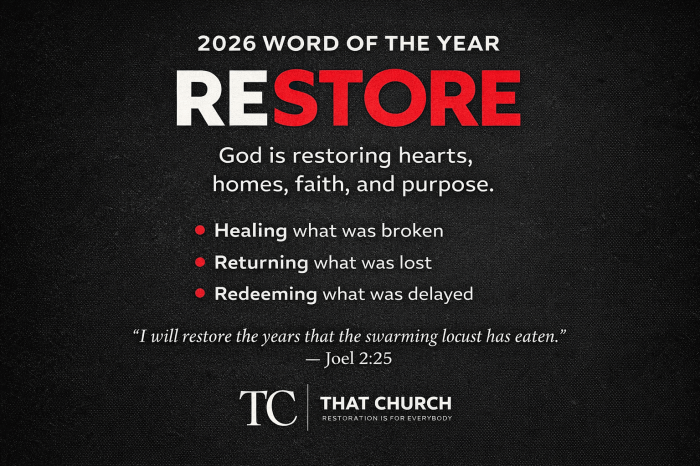
RESTORE: Why This Is the Right Word for the Year

Every year carries its own weight.
Some years stretch us.
Some years break us.
Some years take more than they give.

And if we’re honest, many people are walking into this year carrying losses they never planned for—lost time, broken trust, deferred dreams, strained relationships, weakened faith.

That’s why our word for this year is not accidental.
It’s intentional.
It’s biblical.
It’s hopeful.

Our Word for the Year is: RESTORE.


God Is a Restoring God

Restoration is not a trend.
It’s part of God’s nature.

God doesn’t just forgive—He restores.
He doesn’t just heal—He rebuilds.
He doesn’t just rescue—He renews.

The Lord makes this promise clearly:

“I will restore the years that the swarming locust has eaten.”
— Joel 2:25 (CSB)

Notice what God promises to restore:
Years.

Not just moments.
Not just feelings.
Not just circumstances.

God speaks to time that felt wasted, stolen, or destroyed—and says, “I can redeem even that.”


Restore Is About More Than the Past

Restoration is not living backward.
It’s not pretending the pain didn’t happen.
It’s not erasing history.

Restoration is God taking what was damaged and giving it new strength.
What was delayed and giving it new purpose.
What was broken and giving it new life.

God doesn’t always restore things to the way they were.
Often, He restores them to what they were meant to be.


What Restore Means for This Year

This is a year to believe God for more than survival.

  • Restored hearts — healing from grief, bitterness, and disappointment
  • Restored faith — trust that has been shaken but not destroyed
  • Restored relationships — forgiveness, reconciliation, and peace
  • Restored purpose — clarity where confusion once lived
  • Restored joy — strength rising where weariness settled in

Restoration is not rushed.
It’s intentional.
It’s often gradual.
But it is always guided by God’s hand.


Restore Requires Participation

God restores—but He invites us to walk with Him in the process.

Restoration asks us to:

  • Let go of what we cannot change
  • Release what we were never meant to carry
  • Obey God in the small steps
  • Trust Him with the timeline

Restoration doesn’t begin with everything changing around us.
It begins with God changing something within us.


A Declaration for the Year

This year, we are choosing to believe that God is not finished.

Finished with your story.
Finished with your calling.
Finished with your family.
Finished with your future.

He restores what life tried to take.
He redeems what the enemy tried to ruin.
He renews what felt too far gone.

This is a year of RESTORE.


A Simple Prayer

Lord, I place this year in Your hands. Restore what has been broken, strengthen what is weak, and redeem what was lost. Teach me to trust You with the process and to walk forward in faith. I believe You are still restoring. Amen.


Final Thought:
God is not intimidated by what you’ve lost.
He specializes in restoration.

This is the year to believe again.
This is the year to heal again.
This is the year to walk restored.