A Lifestyle of Forgiveness

When people think of Christmas, they usually think of family. No matter how far away or how long it’s been since you last saw them, something about this season always seems to bring us back home, back together, back to what’s important.

But what if there is unforgiveness in your life keeping you from those you need to celebrate with?

The Calculator We Need to Throw Away

Peter asked Jesus a question in Matthew 18 that must have sounded incredibly generous coming from him. Religious leaders in his day taught that forgiving someone three times made you righteous—you had done your spiritual homework, so to speak. So Peter, feeling perhaps very magnanimous at the time, inquires of Jesus: “Should I forgive someone seven times?”

Jesus’ answer must have blown him away: “Not seven times, but seventy times seven.”

He was not giving Peter license to whip out a calculator and start keeping track. Jesus was talking about throwing away the very calculator itself! He was saying that forgiveness is not a mathematical equation with a finite answer. It’s a lifestyle.

I love my smartphone. I have the calculator, the notes app, reminders, spreadsheets, everything. But I do not need to track forgiveness, because forgiveness is not about mathematical equations.

The Unpayable Debt

Jesus follows up with a parable that drives this point home. The servant owed his king an unfathomable amount of money—10,000 talents. To give you an idea of how much money this is, think of every penny you could ever possibly earn in this life and multiply it by several lifetimes. This is not $1,000 or $50,000 or even $300,000. This is an incomprehensible, unpayable debt.

The servant falls at the king’s feet and begs for patience. He promises to pay back everything, both of them knowing this to be an impossibility. Yet the king has compassion, sets the servant free, and forgives the entire loan.

This is the picture of our salvation. We owed God a debt that could never be paid. Our sins created a gaping chasm between ourselves and God that no amount of good works, no amount of effort, no amount of time could ever have bridged. And yet, God forgave it all.

The Tragic Irony

But here’s where it gets really tragic. This same servant, newly forgiven of millions, goes out and finds a fellow servant who owes him an insignificant amount—100 denarii. Pocket change in comparison. He grabs this man by the throat, demanding payment. When the fellow servant begs for patience, using the exact same words he had just used before the king, the forgiven servant does not relent. He has the man thrown into prison until he can pay what he owes.

I am amazed by the irony. How does someone in prison earn money to pay a debt? Logically, it is impossible. But this is what we do when we refuse to forgive. We lock people into relational prisons, cut them off from all communication with us, and then somehow expect them to fix what was broken. We make restoration impossible and then demand it.

The Chains We Choose to Wear

Consider this image: A prisoner chained to a wall—chains on his feet, his arms, across his chest, around his throat. A new guard walks by one day and asks the prisoner why he’s still standing there. He responds that he’s chained to the wall. The guard looks at him, shocked, and replies: “We unlocked those chains years ago.”

When God saves us, he sets us free. The chains of sin, guilt, and condemnation are broken. Yet many of us remain in the same spot, not because we’re chained to the wall, but because we’re still wrapped up in the bitterness and unforgiveness we are not willing to let go of. We have been set free but are still standing against that wall, convinced that we’re trapped.

The Cost of Unforgiveness

The parable ends with a sobering warning. When the king hears of what the forgiven servant has done to the other, he has him brought before him, only to have him sent to the jailers to be tortured until he can pay everything he owes. Jesus drives the point home: “So also my heavenly Father will do to you unless every one of you forgives his brother or sister from your heart.”

This is not saying that unforgiveness can change your eternal destination if you’re truly saved. But it does mean that you’re living a lesser life than you could. Unforgiveness gives the enemy legal ground to torment you. It shows up in patterns you can’t break, behaviors you can’t make sense of, and bondage you can’t explain.

When we refuse to forgive, we grieve the Holy Spirit. We are like a garden hose with a kink in it—connected to the water source, but with no flow, no power, no life-giving water reaching its destination.

A Christmas Challenge

Before you get together with family this Christmas, before you open gifts, before you cook that meal or go to that party, ask the Holy Spirit a simple question: “Who do I need to forgive?”

Maybe it’s been five years since you last spoke to them. Maybe twenty. Maybe they’re a family member who will be at the Christmas table. Maybe they’re someone who hurt you so deeply, you can’t imagine ever releasing it.

Forgiveness isn’t about whether they deserve it. You didn’t deserve it either. None of us did. “God proved his love for us in that while we were still sinners, Christ died for us” (Romans 5:8).

The Gift That Keeps Giving

Christmas is the celebration of the ultimate gift—God leaving heaven, coming to earth as a baby in a manger, to live a perfect life, die a criminal’s death, all to save humanity that did not deserve it. Before He even created the world, He knew what we would do and still chose to create us anyway. He chose to love us anyway. He chose to save us anyway.

Grace was never meant to be kept. It was meant to be given away.

Forgiveness is not situational. It’s a lifestyle. It’s a conscious decision we make every day. We choose to love. We choose to extend mercy. We choose to give grace. Not because people have earned it, but because it was freely given to us.

Forgive from your heart this Christmas. Make the call. Send the text. Open the door. Life is too short, and eternity is too long to live in the prison of unforgiveness.

The calculator can be thrown away. The lifestyle of forgiveness awaits.

When the Fire Never Goes Out: Living in the Power of Pentecost

A fire pit

Years ago I read about a mountain preacher in West Virginia who did something strange when he first came to his little church. He built a fire pit off to the side of the platform and kept a fire burning in it every day. For 40 years, that fire never went out. One man would come by in the morning, and another in the evening, to keep the fire burning.

A reporter asked the aging preacher why he did this. His answer was simple: “Every day when we walk in, we see that fire still burning. It reminds us that the Holy Spirit should still be burning in our lives. That he’s not supposed to go out.”

The preacher died, but the fire did not. Young people who had grown up seeing that fire took up the torch and continued to keep it burning. Even today, almost 75 years later, that fire still burns.

The power that never faded

We like to wax nostalgic about the power of the early church. We read in Acts chapter 2 about the day of Pentecost and say, “Those were the days! Man, if only we had that power today.” But we forget this: the power that fell on the day of Pentecost is still available to us today.

Acts 2: 1-4 says, “When the day of Pentecost had arrived, they were all together in one place. Suddenly a sound like that of a violent rushing wind came from heaven, and it filled the whole house where they were staying. They saw tongues like flames of fire that separated and rested on each one of them. Then they were all filled with the Holy Spirit and began to speak in different tongues as the Spirit gave them ability for speech.”

Notice that word. Suddenly. The Holy Spirit wasn’t on a schedule. He wasn’t programmed into a service outline. He just showed up when He wanted to, in His timing, with His power.

The problem with our programs

We’ve gotten really good at planning these days. We plan our services, our events, our outreach efforts, and there’s nothing wrong with that. But we’ve planned the Holy Spirit right out of our gatherings. There’s no margin in our services, no margin in our events, and no room for a sudden movement of God.

We’ve made our buildings into the church and forgotten that the people are the church. We’ve made programs for everything, from shipping our children off to kids’ areas so they won’t “disrupt” the service to losing the power that comes from being together with one purpose.

Think about a fire for a moment. If you take one log and set it by itself, you may be able to light it, but it’s not going to stay lit long. But when you start stacking wood together, you have a fire that roars. You have a fire that produces heat. You have a fire that can’t be blown out by a sudden gust of wind.

The church works the same way. We’ve become so dispersed and so individualized in our efforts to reach the lost and serve the broken that we’ve lost the combined power of the church working together with one purpose: sharing the gospel with a lost and dying world.

The evidence of His presence

When the Holy Spirit came on Pentecost, there was evidence. Tongues of fire rested on each person. But we’ve confused the issue when it comes to the evidence of the Holy Spirit in our lives today. Some have taught that the only evidence of the Holy Spirit is speaking in tongues, but that’s simply not true.

The Holy Spirit gives different gifts to different people, not so that we can compare or compete, but so that we can serve. Some speak. Some serve. Some clean. Some pray. Some encourage. The evidence of the Holy Spirit in your life isn’t so that you can measure it up or down against someone else’s. It’s simply the Holy Spirit enabling you to do what you could not do on your own.

Maybe it’s the evidence of the Holy Spirit is giving you the courage to share Jesus with a stranger. Maybe it’s showing up to serve when you don’t feel like it. Maybe it’s praying for someone when the Holy Spirit prompts you. Maybe it’s using the talents and skills you thought were only ordinary to do extraordinary things for the kingdom.

Getting out of the boat

Peter walked on water, but he wasn’t the only disciple in that boat that night. The difference? Peter got out. On the day of Pentecost, every disciple was filled with the Holy Spirit in that upper room, but when you read the account, it says, “Peter stood up.”

Most of us will never walk on water. Most of us will never preach or lead or do anything remarkable—not because we can’t but because we’re afraid to get out of the boat. We’re afraid to stand up.

We say things like:

“I can’t do that.”

“I’m not qualified.”

“That’s for someone else.”

“I’ll serve, but I can’t clean toilets.”

“I’ll help, but I can’t talk to strangers.”

We put conditions on our availability to God, and then we wonder why His power doesn’t flow through us. The problem is that God’s plan for your life may require you to do exactly the thing that you think you can’t do. God’s purpose for your life may be to manifest through you while you’re doing that menial, mundane task you think is beneath you.

The same power today

The revolutionary truth is this: you have the same Holy Spirit in you that Peter had when he stood up and preached to thousands on the day of Pentecost. You have the same power available to you today that was available on the day of Pentecost. The Holy Spirit has not changed. His power has not lessened. He’s just waiting for you to quit planning Him out of your life and start allowing Him to work through you.

Wind can move things that we cannot. Wind can drive a pine needle through a windshield. Wind can topple trees. Wind can carve out canyons and reshape a landscape. The Holy Spirit is often compared to wind. He can do things in and through us that we could never do on our own—if we will just let Him.

Keeping the fire alive

Like that fire in West Virginia that’s been burning for 75 years, the fire of the Holy Spirit is intended to keep burning in our lives and in our churches. But fire requires fuel. It requires attention. It requires people who are willing to keep feeding the fire, keep showing up, and keep saying yes to whatever God asks.

The question isn’t whether God is still in the business of doing powerful things. The question is whether we’re willing to be the wood that keeps the fire burning. Are we willing to be suddenly interrupted by the Holy Spirit? Are we ready to stand up like Peter? Will we get out of the boat?

The same power that changed the world on the day of Pentecost is available to you and to me today. The fire doesn’t have to go out. It just needs people who are willing to keep it burning—one act of obedience, one step of faith, one surrender at a time.

The Holy Spirit is still moving. Are you?

The Narrow Gate: What It Really Means to Follow Jesus

There’s a powerful distinction that often gets lost in modern Christianity—the difference between calling yourself a Christian and actually following Jesus. It’s a distinction that could determine your eternal destiny.

When Jesus Calls, He Says “Follow Me”

Think about the moment Jesus encountered Matthew, the despised tax collector. He didn’t hand him a membership card or invite him to attend services. He simply said, “Follow me.” The same words echoed to Peter, James, and John: “Follow me.”

Throughout the Gospels, Jesus never once commanded anyone to “be a Christian.” That term, when first used, was actually meant as mockery—a way to ridicule those crazy people who followed the teachings of Christ. Yet somehow, over two thousand years, we’ve turned it into a badge we wear without understanding its weight.

The uncomfortable truth is this: being a Christian has become easy. It’s a label anyone can claim. It requires no sacrifice, no change, no radical transformation. But following Jesus? That’s an entirely different matter.

The Problem with Wide Gates

In Matthew 7:13, Jesus warns us: “Enter through the narrow gate. For the gate is wide and the road broad that leads to destruction.”

Look around at the religious landscape today. There are thousands of churches, hundreds of denominations, and countless interpretations of what it means to follow God. Some affirm lifestyles the Bible clearly calls sin. Others add traditions that contradict Scripture entirely. Yet they all claim the Christian label.

The gate has become so wide that anyone can walk through while carrying whatever baggage they choose. We’ve watered down the gospel, afraid to offend, desperate to fill our pews. We’ve traded truth for tolerance and holiness for happiness.

But Jesus said the gate is narrow. Not everyone gets through. Not everyone who claims His name actually knows Him.

The Danger of Knowing About Jesus Without Knowing Him

Everyone knows who the President of the United States is, whether they like him or not. But knowing about someone and actually knowing them are vastly different things.

You can know all the Bible stories. You can attend church every Sunday. You can serve on committees, teach Sunday school, and even get baptized—multiple times. None of that guarantees you know Jesus or that He knows you.

The sobering reality comes in Matthew 7:21-23: “Not everyone who says to me, ‘Lord, Lord,’ will enter the kingdom of heaven, but only the one who does the will of the Father in heaven. On that day many will say to me, ‘Lord, Lord, didn’t we prophesy in your name, drive out demons in your name, and do many miracles in your name?’ Then I will announce to them, ‘I never knew you. Depart from me, you workers of iniquity.'”

Read that again. People who prophesied, cast out demons, and performed miracles—all in Jesus’ name—will be turned away. Why? Because Jesus never knew them.

What Does It Mean to Be Known by Jesus?

Being known by Jesus requires relationship, not religion. It demands surrender, not just Sunday attendance. It calls for transformation, not mere information.

When someone truly encounters Jesus, change is inevitable. You can’t spend time with the Son of God and remain the same. The disciples were uneducated fishermen, but after walking with Jesus, even their enemies had to admit: “These men have been with Jesus.”

Can people tell you’ve been with Jesus? Not because you wear a Christian t-shirt or have a fish symbol on your car. Not because you can quote Scripture or know all the hymns. But because your life has been radically transformed by His presence.

The Will of the Father

So what is God’s will for your life? Why did He leave you on this earth after you encountered Him?

If God’s only purpose was for you to attend church and sing worship songs, He would have taken you to heaven the moment you believed. In heaven, we’ll praise Him for eternity. But He left you here for a reason.

The Bible tells us that people are saved through the preaching of the gospel. God’s will, as Jesus stated clearly, is that none would perish but all would come to repentance. His desire is for the lost to be found, for the broken to be restored, for those walking the broad path to destruction to discover the narrow gate.

That means you have a job to do. You’re here to tell people about Jesus. You’re here to live in such a way that people wonder what makes you different. You’re here to love the unlovable, reach the unreachable, and speak truth even when it’s uncomfortable.

Today Is the Day

You woke up this morning. That means God gave you another day for a purpose. 150,000 people worldwide didn’t make it through the night, but you did. What will you do with this gift?

Today is the day the Lord has made. Not yesterday—that’s gone and can’t be changed. Not tomorrow—it will never actually arrive because when it comes, it will be today. Right now is all you have.

So the question becomes: What are you going to do for Jesus today?

Maybe you need to start by asking yourself the most important question of all: Does Jesus know me? Not “Do I know about Jesus?” but “Does He know me?”

Have you truly surrendered your life to Him? Have you walked through that narrow gate, leaving behind the baggage of sin and self? Or are you just playing church, hoping your Sunday attendance and good deeds will be enough?

The Choice Before You

The gate is narrow. The road is difficult. Following Jesus will cost you something—maybe everything. It might cost you relationships with family members who don’t understand. It might cost you popularity at work. It might mean standing alone when everyone else compromises.

But the alternative is far worse. The broad road looks easy and comfortable. It’s crowded with people who call themselves Christians, who attend services and know all the right words. But it leads to destruction. And at the end of that road, they’ll hear the most terrifying words imaginable: “I never knew you.”

Don’t let that be you.

Choose today to truly follow Jesus. Not just to be a Christian in name, but to be a follower in deed. Walk through the narrow gate. Take up your cross. Die to yourself. Let Him transform you from the inside out.

Because at the end of your life, only one thing will matter: Does Jesus know you?

The Forgotten Friend: Rediscovering the Holy Spirit in Your Daily Walk

Life happens in peaks and valleys. Some weeks leave us feeling victorious, while others drag us through canyons of difficulty. But here’s the challenging question: when you’re walking through your valley, are you thanking God for it? That’s where the rubber meets the road in our faith journey.

As we approach seasons of thanksgiving and reflection, we’re often quick to acknowledge Jesus as our Savior and God as our Father. But there’s a third person of the Trinity who has become what many would call a “forgotten friend”—the Holy Spirit.

The Condition of Love

Scripture presents us with a straightforward condition: “If you love me, you will keep my commandments” (John 14:15). Notice the certainty in that statement—not “you might” or “if you feel like it,” but “you will.” This isn’t about earning salvation through works; it’s about the natural overflow of genuine love.

Think about it in human terms. When you truly love someone, you demonstrate that love through action. You don’t just say the words; you show up. You sacrifice. You prioritize. If someone claimed to love you but consistently ignored your requests, dismissed your presence, and lived as though you didn’t exist, would you believe their profession of love?

Many believers today wear Christian t-shirts, carry Bibles, and attend services regularly, yet their lives don’t reflect obedience to Christ’s commands. They’ll walk past someone in need without a second thought. They’ll hoard their leftovers while someone holds a sign saying “will work for food.” They’ll claim to love Jesus while feeding their flesh with entertainment, attitudes, and behaviors that grieve the Holy Spirit.

The truth is uncomfortable but necessary: if we’re not keeping His commandments, we don’t love Him as much as we claim.

The Promise of Another

In John 14:16-17, Jesus makes an incredible promise: “And I will ask the Father, and he will give you another counselor to be with you forever—the Spirit of truth.”

That word “another” is significant. It means “one exactly like the one who’s speaking.” Jesus wasn’t sending a lesser version or a spiritual force. He was sending someone with the same nature, the same power, the same love—the Holy Spirit, who is fully God.

Yet somehow, the church has relegated the Holy Spirit to the background. We study Him like a subject in school rather than getting to know Him as a person. We’re comfortable with Jesus and God the Father, but the Holy Spirit? He’s become the forgotten friend we once knew but pushed aside when we got too busy or too comfortable with religious performance.

The Helper Who Never Leaves

The Holy Spirit was sent as our Helper—not to force us into obedience, but to guide us, teach us, convict us, and reveal truth to us. He’s the answer key to life’s test, confirming God’s will through Scripture, through other believers, and through that still, small voice within.

Unlike earthly relationships that end at death, the Holy Spirit’s presence is forever. When you said “I do” to Jesus, you entered an eternal relationship. The Holy Spirit doesn’t leave when things get hard. He doesn’t abandon you in your darkest moments. He’s there in your tears and your triumphs, in your failures and your victories.

The problem is that we’ve learned to quiet Him. We’ve put Him in our back pocket, muffling His voice so we can do what we want without conviction. We’ve taken the One who saved us and pushed Him aside, unwilling to let Him control our lives.

Feeding the Right Nature

Here’s a fundamental truth: you’re made up of two parts—flesh and spirit. The one you feed the most will grow the most.

If you feed your flesh with worldly entertainment, toxic relationships, and self-centered pursuits, your flesh will dominate. The Holy Spirit will still be present, but you won’t hear Him over the noise of your fleshly desires.

But if you feed your spirit—through Scripture, worship, fellowship, prayer, and obedience—the Holy Spirit will grow stronger in your life. He’ll take control not by force, but because you’ve relinquished control to Him.

Your eye gates and ear gates matter. What you watch and what you listen to feeds one nature or the other. The world understands this principle even if the church has forgotten it. That’s why secular culture works so hard to infiltrate entertainment with messages that feed the flesh, especially targeting children.

The Spirit of Truth

The Holy Spirit will never contradict Scripture. Ever. He is the Spirit of truth, and truth doesn’t change based on feelings or circumstances.

When someone claims “the Holy Spirit told me” to do something that dishonors parents, breaks biblical commands, or contradicts God’s character, you can be certain it wasn’t the Holy Spirit speaking. Test the spirits. Know the Word. The enemy also whispers, but his voice will never align with Scripture.

The world cannot understand the Holy Spirit because they don’t know Him. To them, the idea of Someone living inside you, guiding your decisions and transforming your character, is foolishness. But you know Him—or at least, you should.

Rekindling the Friendship

Today is a good day to restart your friendship with the Holy Spirit. Stop treating Him like an “it” or a force. He’s a Person—the third person of the Trinity, fully God, deserving of your reverence, attention, and obedience.

Stop dismissing His promptings as indigestion or feelings. Start listening. Start obeying. Start allowing Him to control more of your life.

The church doesn’t need more programs or better performances. It needs believers who are so filled with the Holy Spirit that Jesus overflows from their lives naturally. It needs disciples who do life together, feeding the spirit man instead of the flesh.

Jesus is coming back soon. The signs are all around us. When He returns, will He find you walking in step with the Holy Spirit, or will you be one of the many who claimed to know Him but lived as though He didn’t exist?

Your forgotten friend is waiting. He’s been there all along, patient and gentle, ready to help you become everything God created you to be. The question is: will you finally let Him?

Redeeming the Time: Living with Purpose in an Evil Age

Time has a peculiar way of slipping through our fingers. One moment we’re changing diapers and buying hoodies that are too big, and the next, those same children have outgrown everything we bought just months ago. We look back and wonder where the years went, wishing we had spent more time doing this or that, wishing we had gathered more with fellow believers, wishing we had been more intentional with the moments God gave us.

The apostle Paul understood this reality when he penned his letter to the Ephesians. In chapter 5, verses 15-18, he delivers a sobering reminder: “Pay careful attention then to how you live—not as unwise people but as wise—making the most of the time, because the days are evil. So don’t be foolish, but understand what the Lord’s will is.”

Living Carefully in Dangerous Days

We live in a world where the enemy prowls around like a roaring lion, seeking whom he may devour. Notice—he’s like a lion, not actually a lion. But his intent remains singular and focused: to destroy anything important to God. And what’s important to God? Family. Faith. The church. You.

This reality demands that we live carefully. Not fearfully, but cautiously—like special forces operatives who seem fearless yet meticulously prepare for every mission. We must be careful in what we watch, what we listen to, what we say, and where we go. The enemy has plans, and we need to be wise enough not to walk blindly into his traps.

Consider how the church has compromised over the years. We’ve allowed things to creep in that would have been unthinkable to previous generations. What was once considered an abomination has become a celebration, demanding not just tolerance but participation and affirmation. We’ve remained silent when we should have spoken up, afraid of being canceled, afraid of losing people, afraid of being labeled.

But here’s the truth: someone is always watching you. If you’re a follower of Christ, you may be the only Bible some people ever read. And frankly, some of our Bibles aren’t telling a very good story.

The Bible People Read When They Look at You

Think about your daily life. When someone cuts you off in traffic and you respond with anger—what Bible are they reading? When you’re rude to the cashier because your order is taking too long—what message does that send? When you gossip about fellow believers or refuse to forgive over trivial matters—what gospel are you preaching?

The days are evil, and people are watching to see if what we claim to believe actually makes a difference in how we live. They’re watching to see if this Jesus we talk about on Sunday actually shows up in our lives on Monday through Saturday.

Living wisely means understanding that tomorrow isn’t promised. We can’t afford to waste today being petty, holding grudges, or sitting on the sidelines while the world burns. We need to redeem the time—to buy back the moments we’ve wasted and invest them in what matters eternally.

Understanding God’s Will

Many believers waste years asking, “What is God’s will for my life?” while doing absolutely nothing. They sit around waiting for a divine revelation, a burning bush experience, or an angelic visitation to tell them their purpose.

But here’s a revolutionary thought: just start doing something. Anything. Clean the church bathrooms. Be kind to the grocery store clerk. Visit the lonely. Feed the hungry. Give to those who can never repay you.

God’s will isn’t primarily about where you are but about who you’re becoming. Are you being transformed into the image of Christ? Are you growing in love, patience, kindness, and self-control? That’s God’s will.

The Bible makes clear that God wishes none would perish but all would come to repentance. He wants you to have the mind of Christ. Romans 8:29 tells us that we’re predestined to be conformed to the image of His Son. That’s the will of God—your transformation, not your location.

When you start moving, when you start serving, when you start giving—that’s when God can direct your steps. You can’t steer a parked car. Get moving, and let Him guide you as you go.

Drunk on the Holy Spirit

Paul’s instruction not to get drunk with wine but to be filled with the Spirit is often misunderstood. He’s not necessarily forbidding all alcohol consumption; he’s warning against drunkenness and calling for something far better—being controlled by the Holy Spirit.

When someone is drunk on alcohol, they do things they would never do sober. The substance controls them. Similarly, when we’re “drunk” on the Holy Spirit, He controls us to the point where we do things we’d never do on our own. We forgive the unforgivable. We love the unlovable. We give sacrificially. We speak truth boldly. We serve humbly.

Here’s the reality: when you got saved, you received all the Holy Spirit you’re ever going to get. Being filled with the Spirit isn’t about getting more of Him; it’s about Him getting more of you. It’s about surrender, about letting Him dictate your actions, your words, your priorities.

How much control are you willing to give Him? It’s ironic that many of us who once willingly surrendered control to alcohol, pornography, or other addictions now struggle to surrender control to the One who loves us most and wants what’s best for us.

The Power of Gratitude in Suffering

Ephesians 5:20 calls us to give “thanks always for everything to God the Father in the name of our Lord Jesus Christ.” Everything? Even the hard things?

Yes, even the hard things.

When was the last time you thanked God for something bad in your life? We readily thank Him for blessings, but thanking Him for trials requires a different level of faith. Yet Scripture promises that trials produce endurance, endurance produces character, and character shapes who we are.

Sometimes the worst things that happen to us become the very things God uses to bring us to where we need to be. The painful childhood. The broken relationship. The failed business. The health crisis. Looking back, we can often see how God was working even in the darkness, shaping us, preparing us, drawing us closer to Him.

Living as Family

The final instruction in this passage is perhaps the most challenging: “submitting to one another in the fear of Christ.” This requires that we actually know one another, spend time together, and work through our differences.

The modern church has become like a Sunday morning social club where we show up, sing a few songs, hear a message, and scatter. We don’t know each other’s struggles. We don’t bear one another’s burdens. When someone leaves the fellowship, we treat it like a divorce and stop communicating entirely.

But if we’re going to survive the persecution that’s coming—and it is coming—we need to function as a family. Not a dysfunctional family that gathers out of obligation, but a healthy family bound together by the blood of Jesus.

This means going out to eat together. Serving together. Praying together. Being there for each other in crisis. Getting past the petty disagreements and personality clashes that the enemy uses to divide us.

The Urgency of Now

Time is ticking. The world is getting darker. The church is under attack. But we have today. We have this moment. We can choose right now to live differently, to love more deeply, to serve more sacrificially, to speak truth more boldly.

Don’t wait for tomorrow to do what God is calling you to do today. Don’t waste another moment on bitterness, pride, or fear. Redeem the time. Live wisely. Be controlled by the Spirit. Give thanks in all circumstances. Submit to one another in love.

The days are evil, but the light of Christ in you can pierce the darkness. The question is: will you let it shine?

Life Service Over Lip Service: Do You Really Follow Jesus?

Our culture is all about empty words. We scroll through social media, look at all these Instagram posts about love, look at all these relationship posts that we know will be broken by morning, and look at all these perfectly filtered pictures. Nothing in social media even remotely resembles reality. We’re masters at how to say the right thing while doing absolutely nothing at all.

And let’s be honest, my friends. The church is infected with this same disease.

The Problem With Going to Church

Look, it’s time to call a spade a spade: the average churchgoer does not attend church in order to be the church. They attend church in order to feel like they’ve checked off their religious “to-do” box for the week.

Sunday morning we come, we drop an envelope in the offering plate (sometimes empty), we sing a few songs, we listen to a message, and then we take Jesus right back out the door when we leave.

We’re masters at lip service.

But Jesus never called for lip service. He called for life service.

James 1: 22 goes straight to the heart of the matter: “But be doers of the word and not hearers only, deceiving yourselves.” The one who hears God’s word but never takes action is like the one who looks in a mirror and then immediately walks away and forgets what they look like.

How many of us are spiritual amnesiacs who, the second we leave the service, forget who we are?

Jesus’ Parable That Exposes Us All

In Matthew 21, Jesus tells a parable about a father with two sons. He asks each of them to work in the vineyard.

The first son answers back, “I don’t want to!” But later he repents and does go and work in the vineyard.

The second son says, “Yes sir, I will!” But he never shows up.

Jesus asks the crowd, “Which one did the will of his father?” The answer is obvious—the first one. Jesus then crushes everyone in the room: “Truly I tell you, tax collectors and prostitutes are entering the kingdom of God before you.”

Ouch.

Jesus was saying the religious leaders of the day—the ones with all the answers, who attended all the services, who looked the part—were being outrun into heaven by the very people they looked down on!

Why? Because saying “yes” is meaningless if you don’t back it up.

The Deadly Sin of Delayed Obedience

We must be clear on this point: delayed obedience is disobedience.

The moment God tells you to do something and you hem and haw and rationalize or refuse, that’s not obedience. That’s rebellion. God didn’t say, “Okay, wait 15 years to do this, you know, when you’ve thought about it enough.” No, God said, “Do this.” If you fail to do it, you’re disobeying God. The fact that you got around to it eventually doesn’t negate the fact that you said no at first.

How many times have you heard God say:

  • Tell someone the gospel, but you were worried about what they’d think about you?
  • Give, but you thought of yourself first?
  • Serve, but you wanted to live your own agenda?
  • Forgive someone, but you wanted to stew in your own vindictiveness a little longer?
  • Invite your neighbor, but it felt uncomfortable?

And how many times have you said “Yes, Lord” and done absolutely nothing?

Ananias and Sapphira: A Warning to the Church from the Early Church

The church in the book of Acts gives us a window into how dangerous it is to lie to the Holy Spirit. We see the story of Ananias and Sapphira, who sold their property, but decided to keep some of the money to themselves, while telling the church they had given it all.

Peter asked them, “Why have you lied to the Holy Spirit?” And both of them died on the spot.

Thankfully, the Holy Spirit doesn’t do that today or our churches would be littered with bodies on Sunday. But the point is this: when we lie to fellow Christians, we’re lying to the Holy Spirit. The moment you give your life to Jesus, you become one in Spirit with every other Christian in the world. We are one. When you lie to other believers about your love for Jesus, you’re lying to Jesus Himself.

What Does Life Service Look Like?

Life service is simple: your walk matches your talk.

  • Loving your neighbor doesn’t just mean having a nice sentiment, it means actually showing up to help them when they need it, even when it’s inconvenient.
  • Following Jesus means your life actually changes, not just your vocabulary.
  • Giving generously means sacrificing something that actually costs you, not just throwing spare change in God’s direction.
  • Witnessing means you open your mouth and actually tell people about Jesus, even if it scares you.
  • Serving means you get your hands dirty in ministry, not just rip apart the ones who do.

You know, the two greatest commandments are pretty simple. Love God with everything you are, and love your neighbor as yourself. Everything else flows out of these two commands. But we can’t say we love God while treating our neighbor like an inconvenience. We can’t claim to love Jesus while we live like the devil.

Missouri Principle: Show Me

“I’m from Missouri, you’ve gotta show me.” There’s something about that old Missouri saying that has so much wisdom to it. Words are cheap. Anyone can say anything. But what do you show people with your life?

Don’t tell people you love them and then lie to them. Don’t tell God you’ll obey Him and then tune Him out. Don’t tell yourself you’re a committed Christian when you look like someone who’s never even heard of Jesus.

The Message of Repentance

John the Baptist had one primary message for people: Repent. Turn around. Stop doing the same stupid things over and over again, thinking you’ll get different results.

The religious leaders heard this message and did nothing. But the prostitutes and tax collectors—the ones society had already given up on—heard this message and they turned their lives upside down.

Repentance is not a class you go to. It’s not a 12-step program. It’s a conscious decision you make to stop living one way and start living another, trusting God to help you follow through.

If you’re an alcoholic, stop going to bars. If you’re addicted to pornography, stop going to places that feed your addiction. If you’re caught in gossip, stop hanging out with the people who encourage you to do it. You can’t change your life if you keep doing the same things.

The Power of One Simple Yes

God doesn’t need you to have it all together. God doesn’t require a degree from seminary or perfect theology. All God wants from you is a yes.

One simple yes. Backed by action. Your yes can change the trajectory of your entire family tree. Your yes to God could be the one thing that saves your kids, transforms your marriage, or reaches your neighbor.

When you say yes to God and actually follow through, you’re not just changing your own life. You’re setting in motion a ripple effect that will last for generations.

Stop Straddling the Fence

Jesus is not a donkey you can straddle. You can’t serve both Jesus and the world. You can’t be 50% in and 50% out. You’re either 100% for Jesus or you’re against Him.

Trying to do both will just trip you up in the end. You can’t please both God and the world. Decide today whom you will serve, and live like it matters.

Challenge: Lip Service or Life Service?

So here’s the challenge question: Are you giving Jesus lip service or life service?

Are you a hearer only or are you a doer?

When you say, “I love Jesus,” does your life follow through on it?

It’s time to stop playing church. It’s time to stop just talking about faith and actually walking in it. It’s time to stop making excuses and start making moves.

Just one step forward. One. Just meet God there and let Him walk with you the rest of the way.

Your yes matters. What are you going to do with it?

Accepting the New: Baptism and Surrender

Can I get an AMEN? Well, hold that thought, let’s try that again. If you said, “No, thank you, I’ve got enough of that amenity, move along now,” then I might have just lost you. Maybe your initial reaction was… “What does he think we do?” You’re probably thinking, “We’re saved, as in, we go to church, we do Bible studies, and such. We do that stuff because we love God and are trying to live for Him.” Wait a minute. Let me see if I can find this. If you said, “Oh, yeah, man. We love to worship and make a joyful noise unto the Lord,” keep reading, cause I am talking to you. You’re like, “Ya, right? But am I one of them?” To put it another way, let me put it this way. Do you know Jesus? Do people know you know Jesus? If they don’t, guess what? The demons know. Your kids know. Your neighbors know. Your spouse knows. The problem is… does Jesus know you? That’s the big question. It’s a simple question, but ask yourself. Does Jesus know you? Am I one of those people… one of “them?” Do you know the president? Of course you do. He’s president. You don’t know him like your pastor knows him or your mayor knows him. You might be able to pick him out of a lineup. That’s cool but not important. What if you were the president’s wife or daughter? Yeah, THAT is important. Are you one of His kids? If so, when we get to church, or any other gathering of His people, we should beam like those little lighthouses with a joy that attracts others and screams: “LOOK AT US!” Do we do that? Maybe it goes like this. We come in and head straight for the coffee pot. By the way, where’s the coffee pot at? Where are we going to meet our people? Where are we going to fellowship? Hey, where do you think Satan works in our lives? In our BIBLICAL studies. He’s certainly got us well-trained and indoctrinated in ‘church.’ Where’s that pot at? Do you come in, and where is your face? I see more “church people” who look like they sucked on PVC pipes full of pickle juice. What’s up with that? You know, if we don’t get excited about what we have in Jesus Christ… no one else will either. You know, I have been asked many times, “What is our first step of restoration in our lives?” There is a first step and a last step to it all. First, let’s go to Romans 6:4. (NASB) “We were therefore buried with Him through baptism into death so that, just as Christ was raised from the dead through the glory of the Father, we too may live a new life.” Baptism is that first step. Let’s go to I Peter 3:21. (NASB) “Baptism now saves you, not as a removal of dirt from the body but as an appeal to God for a good conscience, through the resurrection of Jesus Christ.” Now, baptism isn’t the water; it’s just like dipping the old couch in the water before we take the cushions out and start restoring. Baptism is our public declaration. You see, the whole idea of baptism is based on God’s restoration of the world through the flood of water; He has water figured out. We get baptized, and then God begins the restoration process within us. If it’s good enough for Jesus to be obedient to the Father, I can be obedient to Him in that area. Some of you were baptized for dead people. I used to baptize people for the living, but now I only baptize the dead to bring them back to life. I get this question a lot. Pastor, why do you insist on people getting baptized? Aren’t they saved just by believing? Isn’t baptism an option for us? Let me tell you something, everything we do as a Christian is optional except for being obedient to Christ in baptism. If you’re going to be disobedient there, I can’t expect you to obey Him in other areas. In the end, there are no wasted songs, sermons, or baptisms. They are all stored up for God’s glory to be revealed in our lives. We don’t have to take classes. Do you know why? As soon as the Ethiopian eunuch believed in Philip’s preaching of the scriptures, he wanted to be baptized. No classes, just obedience. That is what baptism is. If you’re not willing to be obedient in baptism, you’re not going to be obedient in other areas either. If you’ve made it this far, thank you. I’m not saying, go on down there and get baptized. Look at the scripture again. We were buried with Him through baptism… Do we walk in newness of life? Does your life look different now? Do the things that used to excite you make you puke? We’re just starting a restoration process. We come out of that water, and we’re called to walk in newness of life. Yeah, your life will look different. That’s part of the problem. We’re trying to keep certain areas of our lives in control and hold onto our will. You know you’ve met some older restored furniture. It has to be stripped and sanded before restoration can take place. Oh! When you get hurt, His glory gets revealed in you. But it has to hurt first. So, here is what I want you to do… and this isn’t the old sales pitch. I surrender all, all to Thee. I freely give stuff. I want you to say, “Okay, Lord, I will let you restore my life.” Let’s pray… Lord Jesus, we thank you for the glory you’ve already displayed in our lives. But Lord, we confess that there are some things that we still try to control that we shouldn’t. Help us, Lord, to be obedient. Help us to walk in newness of life, to look different than this world. Thank you for calling us, thank you for saving us. Thank you for calling us to full surrender. We love you, we praise you, and we worship you now and forevermore. Amen.

Running from God’s Call: The Dangers of Disobedience

Have you ever felt God calling you to do something, but found yourself running in the opposite direction? You’re not alone. The story of Jonah in the Bible provides a powerful illustration of what happens when we try to flee from God’s presence and ignore His call on our lives.

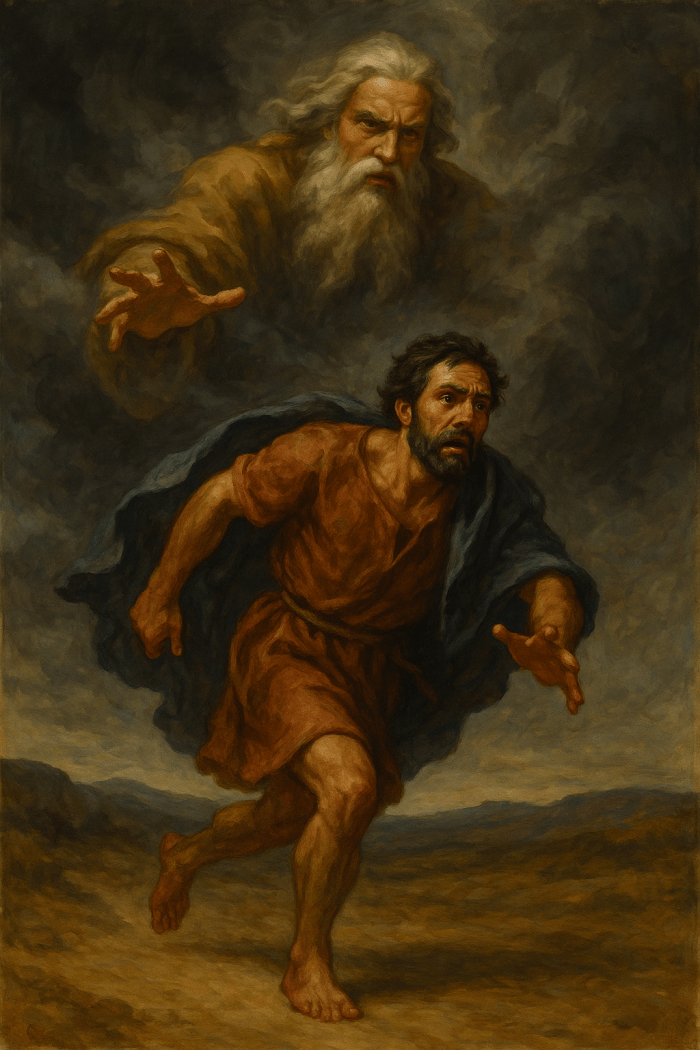
Jonah was a prophet living near Nazareth who received a clear command from God: “Get up and go to the great city of Nineveh and preach against it.” But instead of obeying, Jonah “got up to flee to Tarshish from the Lord’s presence.” He went in the exact opposite direction God told him to go.

This act of disobedience set off a chain of events that endangered not only Jonah, but everyone around him. As he boarded a ship headed for Tarshish, we’re told that “the Lord threw a great wind onto the sea, and such a violent storm arose that the ship threatened to break apart.” The sailors were terrified and began crying out to their gods for help.

Meanwhile, where was Jonah? He had gone down to the lowest part of the vessel and fallen into a deep sleep. His disobedience was affecting others, yet he remained oblivious to the chaos around him.

How often do we do the same thing? When we run from God’s call, it doesn’t just impact us – it can have serious consequences for those in our sphere of influence. Our families, friends, and communities may suffer because of our unwillingness to obey God’s voice.

The story of Jonah teaches us several important lessons about running from God’s call:

  1. You can’t hide from God’s presence. Jonah thought he could flee from the Lord, but God’s presence is everywhere. As Psalm 139:7-10 reminds us: “Where can I go from your Spirit? Where can I flee from your presence? If I go up to the heavens, you are there; if I make my bed in the depths, you are there. If I rise on the wings of the dawn, if I settle on the far side of the sea, even there your hand will guide me, your right hand will hold me fast.”
  2. Disobedience always leads downward. Notice how Jonah kept going “down” – down to Joppa, down into the ship, down into a deep sleep. When we choose to disobey God, we begin a downward spiral in our spiritual lives.
  3. You can’t run forever. Eventually, Jonah had to face the consequences of his actions. God will use whatever means necessary to get our attention and bring us back to His plan for our lives.
  4. Others suffer because of our disobedience. The innocent sailors on the ship were caught in a life-threatening storm because of Jonah’s decision to run from God.
  5. God’s call doesn’t change. Even after all of Jonah’s attempts to flee, God still wanted him to go to Nineveh. The call of God is without repentance – He doesn’t change His mind about what He’s asked us to do.

So why do we run from God’s call? Often, it’s because what He’s asking us to do feels uncomfortable or challenging. Maybe He’s calling you to witness to a difficult group of people, or to step out in faith in a way that scares you. Perhaps you feel unqualified or unprepared for the task He’s given you.

But here’s the truth: God doesn’t call the qualified; He qualifies the called. When He gives us a task, He also provides the strength, wisdom, and resources we need to accomplish it. Our job is simply to obey.

Consider the excuses we often make:

“I’m not ready.”
“Someone else could do it better.”
“I don’t have the time/money/skills.”
“It’s too hard.”
“What if I fail?”

Sound familiar? These are the same kinds of excuses Jonah probably made when God told him to go to Nineveh. But God’s call on our lives isn’t dependent on our feelings of readiness or capability. It’s dependent on His power working through us.

So what does obedience to God’s call look like in practical terms? It might mean:

  • Sharing your faith with a coworker or neighbor
  • Volunteering at a local ministry or outreach
  • Using your talents to serve in your church
  • Showing kindness to someone who’s difficult to love
  • Giving generously, even when it’s a sacrifice
  • Forgiving someone who’s hurt you deeply

The possibilities are endless, but the principle remains the same: when God calls, our response should be immediate obedience.

Remember, delayed obedience is still disobedience. We can’t put off what God is asking us to do today, hoping for a more convenient time in the future. The time to act is now.

If you’ve been running from God’s call on your life, today is the day to stop. You don’t have to wait for a dramatic intervention like Jonah’s “great fish” experience. You can choose right now to turn back to God and say, “I’m sorry for running. I’m ready to do what you’ve called me to do.”

Imagine the impact we could have on the world if every believer stopped making excuses and started living in full obedience to God’s call. Lives would be changed. Communities would be transformed. The Kingdom of God would advance in powerful ways.

So let’s make a commitment today. Let’s stop running and start obeying. Let’s say “yes” to whatever God is asking of us, trusting that His plans for us are good. As we step out in faith, we’ll discover the joy and fulfillment that comes from living in alignment with God’s will for our lives.

Are you ready to stop running and start obeying? The choice is yours. What will your answer be?

Standing Firm in Faith: A Call for Courageous Witness in Difficult Times

Dear brothers and sisters in Christ,

We live in a tumultuous time, where many things are spiraling out of control. Recently, several events have shaken us to the core, and many of us are struggling to know how to respond as Christians. In the midst of these chaotic times, it’s easy to become overwhelmed and wonder where God is in all of this.

Yet, it is precisely during these times of trial and tribulation that our faith is tested, and our true character is revealed. In the book of Acts, we read about a man named Stephen, who was “full of grace and power” and was falsely accused of blasphemy. Despite the lies and half-truths that were thrown at him, Stephen stood before the religious leaders of his day and preached boldly about the One True God.

In Acts 6: 10, we read about how Stephen’s face “was like that of an angel.” This was no ordinary man; he had the full power of the Holy Spirit within him, and his every word was seasoned with the wisdom of God. Yet, even with all of this, he remained humble and steadfast in his faith, knowing that the power to persevere came not from him but from God alone.

As we read about Stephen’s trial, we must ask ourselves: when has the time been where we can say everything we want and go unchecked by God? Are we so consumed by the culture wars that we have allowed worldly foolishness to be the norm in our churches?

Paul, a chosen vessel, a man who could say “By the grace of God I am what I am” (1 Cor. 15: 10), wrote in Romans 1:16, “For I am not ashamed of the gospel, because it is the power of God that brings salvation to everyone who believes.” So, today, I am calling us all to stand up and be bold for Christ, unashamed of the gospel of our blessed Savior.

But what does it really mean to be unashamed of the gospel? It means to wear our faith proudly on our sleeves, not just on Sundays but every day of our lives. It means being willing to speak the truth in love, even when it’s uncomfortable or unpopular. It means being willing to extend grace and forgiveness to those who have wronged us, just as Christ has forgiven us.

Let me share with you a story about a Catholic priest who kept going to the man who murdered his mother. He would sit across from the man in prison and stare at the back of his head for hours. One day, the prisoner finally asked him, “Why do you keep coming back here? Why do you even look at me?” The priest replied, “Because Jesus loves me as much as he loves you.” The murderer finally came to faith in Christ and is now serving as a prison chaplain.

Friends, that’s the kind of perseverance we need in these difficult times. We must keep going back to Jesus, over and over again, asking for His grace and mercy. We must be willing to look people in the eye, even those who have rejected and despised Christ, and show them that there is hope and redemption in Jesus alone.

As we face the challenges of our day, we must also be prepared for the possibility of increased persecution. Jesus never promised us an easy life in this world; in fact, He told us that following Him would often lead to opposition and even martyrdom. But He also promised us that He would never leave us or forsake us, “I will be with you always, to the end of the age” (Matthew 28:20).

This truth should give us the courage to stand firm in our faith, knowing that our ultimate allegiance is not to this world or its powers but to the King of Kings. We must be willing to count the cost of discipleship and decide whether we are truly ready to follow Christ, no matter the cost.

As we stand firm in our faith, we must also remember the importance of unity within the body of Christ. In a world that is trying to divide us along political, racial, and socioeconomic lines, we must strive to maintain the bond of peace that unites us as believers. Our shared faith in Christ should transcend any earthly differences, allowing us to stand together as a powerful witness to a watching world.

We must also be careful not to fall into the trap of self-righteousness or judgmentalism. While we are called to stand firm in our convictions, we must do so with humility and grace, recognizing that we too are sinners saved by grace. Our goal should always be to point others to Christ, not to win arguments or prove ourselves right.

In conclusion, as we face the challenges of our time, let us draw strength and courage from the examples set before us in Scripture and throughout church history. Let us be unashamed of the gospel, standing firm in our faith while extending love and grace to those around us. May we be known not for our condemnation of others but for our unwavering commitment to Christ and our love for all people.

As we go forth, let us echo the words of the apostle Paul: “I have been crucified with Christ and I no longer live, but Christ lives in me. The life I now live in the body, I live by faith in the Son of God, who loved me and gave himself for me” (Galatians 2:20). This is the essence of what it means to be a true follower of Christ – fully surrendered, unashamed, and ready to stand firm in the face of whatever challenges may come our way.

Understanding the Differences Between Protestant Beliefs and Jehovah’s Witnesses: Communicating With Clarity and Kindness

It’s not uncommon for conversations on the subject of faith to become confusing. Protestants and Jehovah’s Witnesses both claim to be Christians, but our beliefs on some significant issues could not be more different. To have constructive conversations about our faith, we must understand both the differences between our beliefs and those of Jehovah’s Witnesses, as well as the most effective ways to communicate those differences in the spirit of Christlike love.

Trinity

Protestant Beliefs: Protestants confess that God exists eternally as Father, Son, and Holy Spirit, and these three are one in essence but distinct in personhood.

Jehovah’s Witness Beliefs: Jehovah’s Witnesses deny the Trinity. They believe Jehovah (the Father) is the only true God, that Jesus was a created son and therefore is not equal with the Father, and the Holy Spirit is God’s impersonal active force rather than a person.

Jesus Christ

Protestant Beliefs: Protestants confess that Jesus Christ is fully God and fully man, that He eternally existed as the second person of the Trinity with the Father, and that His death and resurrection are the sole source of our salvation, given by God’s grace through faith.

Jehovah’s Witness Beliefs: Jehovah’s Witnesses teach that Jesus was Michael the Archangel before being born of a woman, that He is merely a created being and not God, and that His death provides salvation, but only for those who obey the commands of Jehovah as outlined by the Watchtower Society.

Scripture and Authority

Protestant Beliefs: Protestants affirm the sole authority of the Bible (sola scriptura) for all matters of faith and practice.

Jehovah’s Witness Beliefs: Jehovah’s Witnesses reject sola scriptura. They use a special translation of the Bible called the New World Translation, and teach that the Watchtower organization is the only accurate interpretation of Scripture.

Salvation

Protestant Beliefs: Protestants believe that salvation is a gift of God, received by grace through faith in Christ alone (Ephesians 2:8-9).

Jehovah’s Witness Beliefs: Jehovah’s Witnesses believe faith in Christ is essential for salvation, but it is not enough. To be saved, one must also live obediently to Jehovah’s commands, submit to the requirements of the Watchtower organization, and continue to produce good works.

Afterlife

Protestant Beliefs: Protestants believe in heaven and hell. Jesus taught that all who put their trust in Him will be with Him eternally in heaven (Matthew 25 31–46; John 14:1-3), but all who reject Him will be cast into hell to face eternal punishment (Matthew 8:12; 25:41).

Jehovah’s Witness Beliefs: Jehovah’s Witnesses deny that there is an eternal conscious torment. They teach that only 144,000 will reign with Christ in heaven, while most faithful Witnesses will live forever on a paradise earth. The wicked are destroyed rather than tormented for eternity.

Tips for Sharing Your Faith with Kindness

It’s one thing to be able to recognize the differences between Jehovah’s Witnesses and Protestants on doctrinal matters, but what about in real-life conversations with those who are Witnesses? Knowing what to say and how to say it in a spirit of love is equally important. Here are some helpful tips:

Listen First

Listening well is the fastest way to gain respect and open up a meaningful conversation about the differences between Jehovah’s Witnesses and Protestants’ beliefs. Asking questions about what they believe and why, with genuine interest in their responses, will help you gain their trust.

Start With What You Have in Common

Both Jehovah’s Witnesses and Protestants value the Bible and speak about Jesus. Start with these common beliefs to establish trust and then move into your differences.

Stay Clear and Simple

Leave the theological jargon at home. Be clear and straightforward as you explain the Protestant positions on grace, faith, and the deity of Jesus. Think through examples that will help illustrate these points and make them easy to understand.

Ask Questions Rather Than Arguing

Don’t get into an argument; ask good questions. These help to get past the emotional resistance that often comes when talking about beliefs and into honest consideration of differences. Good questions to ask include: “What does this verse mean to you?” or “How do you understand Jesus’ role in salvation?”

Remember to Love Like Christ

Remember, the goal is not to “win” the argument but to love like Christ. In everything we do, we should do it with humility, gentleness, and respect (1 Peter 3:15).

Final Thought

Sharing our faith with Jehovah’s Witnesses is an opportunity to show them the true hope of the gospel. As long as we stay informed on the differences between Jehovah’s Witnesses and Protestant beliefs, remain grounded in Scripture, and share our faith with gentleness and respect, we can effectively communicate the truth to others in a way that brings honor to Christ and glorifies God.