Diverse family beneath a cross with text: Under Christ’s Spiritual Authority; Family of God

UNDER CHRIST Part 6

Part 6: Do You Need Your Leader’s Permission to Obey God?

Counsel, Confirmation, and the Voice of Christ

“Has your pastor released you?”

“Did your spiritual father approve it?”

“Did your covering give you permission?”

“I know you believe God told you to do it, but you need to wait until your leader releases you.”

Statements like these raise one of the most difficult questions surrounding modern teachings on spiritual authority:

Do Christians need a human leader’s permission before they can obey what they believe God has called them to do?

We need to answer that question carefully.

There are two extremes we need to avoid.

One extreme says:

“Nobody can tell me anything. God speaks directly to me.”

This might sound spiritual, but it can lead to pride, recklessness, and a lack of accountability.

The other extreme says:

“I cannot obey God unless my spiritual authority gives me permission.”

This may seem submissive, but it puts a person in a place that, according to Scripture, belongs only to Christ.

Both of these extremes are unhealthy.

The New Testament offers a better way.

Believers hear God through Scripture and the Holy Spirit’s work.

They walk in community.

They receive counsel.

They test what they believe they’re hearing.

They recognize godly leadership.

They remain teachable.

They welcome correction.

But in the end, each Christian is personally responsible for following Jesus Christ.

No one else can take on that responsibility for you.

“GOD TOLD ME” DOESN’T END THE CONVERSATION

Let’s start with the first problem.

Sometimes Christians use:

“God told me”

as a way to avoid accountability.

Someone says:

“God told me to marry this person.”

But everyone who knows them sees serious warning signs.

“God told me to quit my job.”

But they have no plan for providing for their family.

“God told me to start a ministry.”

But they refuse to serve faithfully anywhere before demanding a platform.

“God told me this doctrine is true.”

But they cannot support it with Scripture.

When questioned, the response is:

“You can’t tell me what God told me.”

That’s not mature discernment.

That’s just using God’s name to make our own wishes seem beyond question.

The Bible teaches a much healthier approach.

WHAT WE HEAR MUST BE TESTED

1 Thessalonians 5:20–21 (CSB)says:

“Don’t despise prophecies, but test all things. Hold on to what is good.”

Pay attention to both parts of this instruction.

Don’t automatically reject what may be from God.

But don’t automatically accept it either.

Test it.

Paul gives similar instructions in1 Corinthians 14:29:

“Two or three prophets should speak, and the others should evaluate.”

We are called to evaluate.

This is an important idea.

Even prophetic speech within the New Testament church was subject to discernment.

So when someone says:

“I believe God is leading me to do this,”

there is nothing wrong with mature believers asking:

“Does this agree with Scripture?”

“Does this reflect Christ’s character?”

“Have you prayed about this?”

“Have you sought counsel?”

“Are your motives healthy?”

“Are there warning signs you may be overlooking?”

This isn’t about controlling anyone.

It’s about helping them discern what’s right.

SCRIPTURE IS OUR FIRST TEST

The clearest boundary is Scripture.

God will not lead you in a way that goes against what He has already revealed in His Word.

If someone says:

“God told me to leave my spouse because I met my soulmate,”

we don’t need three prophetic confirmations.

We have Scripture.

If someone says:

“God told me to lie about this situation because the truth would hurt the ministry,”

we don’t need to discern whether that was God.

God has already spoken about truthfulness.

If someone says:

“God told me I don’t need Christian community or accountability anymore,”

we compare that claim with Scripture.

The Holy Spirit doesn’t contradict the Word He inspired.

This is why knowing the Bible is so important.

When people don’t know Scripture well, it’s easier for someone else’s so-called revelation to influence them.

THE BEREANS DIDN’T OUTSOURCE DISCERNMENT

We’ve already looked at the Bereans in this series, but they deserve another mention.

In Acts 17:11, they received Paul’s message eagerly while examining Scripture daily to determine whether what they were hearing was true.

They didn’t say:

“Paul is the apostle. Whatever he says must automatically be right.”

They examined Scripture.

And Scripture calls them noble for doing it.

This means that mature Christians don’t let others do all their discerning for them.

Pastors help us discern.

Teachers help us understand Scripture.

Prophets may bring something that requires evaluation.

Mature believers provide wisdom.

But ultimately, every believer has responsibility before God to know truth.

COUNSEL IS A GIFT

Now let’s address the opposite extreme.

Some people hear teaching like this and conclude:

“Great. I don’t need anybody.”

That’s not biblical.

Proverbs repeatedly emphasizes the value of wise counsel.

Proverbs 15:22 (CSB)says:

“Plans fail when there is no counsel, but with many advisers they succeed.”

Wisdom lies in asking other people.

Especially people who know you.

People who aren’t impressed by you.

People who can tell you no.

People who understand Scripture.

People who have experience.

People who don’t have anything to gain from your decision.

People who love you enough to tell you what you don’t want to hear.

That kind of honesty is a real gift.

I would be concerned about someone making major decisions while refusing all counsel.

The issue isn’t whether we need counseThe real question is whether seeking advice turns into needing permission.permission.

THERE IS A DIFFERENCE BETWEEN COUNSEL AND PERMISSION

Suppose you believe God is calling you to plant a church.

You go to your pastor.

A healthy conversation might sound like:

“I believe God may be calling me to plant.”

Your pastor responds:

“Let’s pray about that. Let’s examine your character, calling, gifting, preparation, family situation, finances, and timing. Let’s make sure you’re ready.”

That’s a healthy way to approach things.

Your pastor may even tell you:

“I believe you’re called, but I don’t believe you’re ready yet.”

You would be wise to take that seriously.

You may be hearing the what correctly but missing the when.

Maybe God really has called you, but you need preparation.

Good advice can help us tell the difference between excitement and true readiness.

But now imagine something different.

“I believe God is calling me to plant.”

The response:

“You cannot plant a church unless I release you. God placed me over you. If you go without my permission, you’ll be operating outside your covering.”

But now, this is a different kind of claim.

The question becomes:

Where does Scripture give that leader universal authority over another believer’s calling?

That’s much harder to prove from Scripture.

ACTS 13 SHOWS COMMUNITY CONFIRMATION

Acts 13 gives us a beautiful model.

The church at Antioch is worshiping and fasting when the Holy Spirit says:

Acts 13:2 (CSB)

“Set apart for me Barnabas and Saul for the work to which I have called them.”

Notice who called them.

The Holy Spirit.

Then the church fasted, prayed, laid hands on them, and sent them off.

That’s a powerful example.

There is both:

Divine calling

and

community confirmation.

These two ideas can work together.

The Spirit calls.

The Church recognizes.

The Church prays.

The Church commissions.

The Church sends.

That’s healthy.

But notice, the church is not shown as the source of the calling.

God is.

The church recognizes what God is doing.

WHAT IF LEADERS DISAGREE?

This is where things become difficult.

What happens when you sincerely believe God is leading you one direction and your spiritual leaders believe you’re wrong?

Don’t immediately assume they’re controlling.

Listen.

Pray.

Slow down if possible.

Ask why they disagree.

Maybe they see something you don’t.

Maybe your motives are mixed.

Maybe your timing is wrong.

Maybe you’re unprepared.

Maybe you’re hurt and calling escape “calling.”

Maybe you’re ambitious and calling ambition “anointing.”

Maybe they’re right.

We should always be humble enough to consider that possibility.

But leaders also need to consider another possibility:

They could be wrong.

Pastors aren’t infallible.

Elders aren’t omniscient.

Prophets don’t know everything.

Apostles aren’t God.

Sometimes leaders misunderstand what God is doing in someone else’s life.

PETER AND JOHN FACED A LIMIT

Acts 4 and 5 give us an extreme example of the limits of human authority.

Religious authorities commanded the apostles to stop preaching Jesus.

Peter and John responded in Acts 4:19by asking whether it was right before God to listen to them rather than God.

Then in Acts 5:29 (CSB)Peter and the apostles say:

“We must obey God rather than people.”

But we need to use this passagewisely.y.

It isn’t a license for Christians to say:

“My pastor asked me to arrive at church at 8:00, but God told me 8:30.”

That’s not a serious example.

Acts 5 involves authorities directly commanding the apostles to stop obeying Christ.

Even so, the principle here is important:

No human authority is absolute.

Whenever human authority directly contradicts God’s authority, God wins.

Every time.

PAUL’S CALLING CAME FROM CHRIST

Paul says something interesting in Galatians 1:15–17.

When God revealed Christ to him and called him to preach among the Gentiles, Paul emphasizes that he didn’t immediately consult human beings or go to Jerusalem to the apostles before him.

He went away and later returned to Damascus.

Paul isn’t teaching independence from the Church.

His later ministry clearly demonstrates deep relationships with churches and other leaders.

But his calling didn’t originate in Jerusalem.

It originated with Christ.

That makes a real difference.

Human beings may recognize a calling.

Human beings may confirm a calling.

Human beings may help develop a calling.

Human beings may provide opportunities for a calling.

But ultimately:

God calls.

A CHURCH DOES CONTROL ITS OWN PULPIT

We need another important distinction.

Suppose someone says:

“God called me to preach.”

Does that mean your pastor must let you preach next Sunday?

No.

Your calling doesn’t obligate another leader to surrender responsibility God has entrusted to them.

A pastor has responsibility for what happens in the congregation he shepherds.

Church leaders can say:

“We don’t believe you’re ready to teach here.”

They can say:

“You aren’t authorized to lead this ministry.”

They can remove someone from a leadership position when necessary.

They can establish standards for people serving within that congregation.

That’s an example of proper authority.

But there is a difference between saying:

“You cannot exercise that ministry here.”

and saying:

“God cannot use you anywhere unless I release you.”

One deals with stewardship over a particular congregation.

The other claims authority over another person’s calling.

These are not the same thing.

YOUR PASTOR ISN’T THE HOLY SPIRIT

Pastors should help people hear God.

Not replace Him.

A pastor should be able to say:

“Here’s what Scripture says.”

“Here’s what I believe wisdom suggests.”

“Here’s what concerns me.”

“Here’s what I think you should pray about.”

“Here’s what I’ve learned through experience.”

And sometimes:

“I strongly believe you’re making a mistake.”

That’s pastoral care.

But we should be very cautious about saying:

“God told me what you’re supposed to do, therefore you must obey me.”

That’s a very serious claim.

If I’m wrong, I haven’t merely given bad advice.

I’ve attached God’s name to my opinion.

That’s a serious matter.

YOU ARE RESPONSIBLE BEFORE GOD

Romans 14 deals with disputed matters among believers.

Paul repeatedly emphasizes personal responsibility before God.

Romans 14:12 (CSB)says:

“So then, each of us will give an account of himself to God.”

Each of us.

That means one day I cannot stand before Jesus and say:

“But my pastor told me to.”

Neither can I say:

“My spiritual father made that decision.”

Or:

“My covering approved it.”

I am responsible before Christ for my obedience.

Leaders can guide me.

They can teach me.

They can correct me.

They can warn me.

But they cannot assume my responsibility before God.

DON’T CONFUSE INDEPENDENCE WITH MATURITY

Mature believers don’t say:

“I don’t need anyone.”

They say:

“I need the body of Christ, but Christ is stiThat’s the balance we need.s the balance.

I need pastors.

I need brothers and sisters.

I need people who can correct me.

I need wisdom.

I need accountability.

I need people who can recognize blind spots.

But none of those people become Jesus.

FIVE QUESTIONS BEFORE YOU SAY “GOD TOLD ME”

Before making a major decision based upon what you believe God has spoken, ask yourself:

1. Does it agree with Scripture?

God won’t contradict His Word.

2. Have I genuinely prayed, or have I already decided what I want?

Sometimes we ask God to confirm decisions we’ve already made emotionally.

3. What are mature believers saying?

Not just people who always agree with you.

Ask people who will tell you the truth.

4. Are there repeated confirmations?

Circumstances alone don’t determine God’s will, but sometimes God graciously confirms direction through Scripture, counsel, opportunity, gifting, and providence.

5. Am I willing to hear “no”?

If every person who disagrees with you automatically becomes “religious,” “controlling,” or “unable to hear God,” you may not actually be seeking counsel.

You may be seeking agreement.

AND FIVE QUESTIONS FOR LEADERS

Leaders should examine themselves too.

Before telling someone what God supposedly requires of them, ask:

1. Is this clearly Scripture—or my preference?

Those aren’t the same thing.

2. Am I giving counsel or demanding control?

3. Would I respond differently if this person’s decision didn’t affect my ministry?

That’s a revealing question.

4. Am I afraid of losing this person?

Sometimes leaders call something “rebellion” because they’re afraid someone is leaving their influence.

5. Am I pointing this person toward Christ or making them dependent upon me?

That question should sober every leader.

THE GOAL IS MATURE DISCERNMENT

Healthy leadership produces believers who can eventually say:

“I’ve searched Scripture.”

“I’ve prayed.”

“I’ve listened to counsel.”

“I’ve examined my motives.”

“I’ve invited correction.”

“I’ve waited when necessary.”

“And after doing those things, I believe this is what obedience to Christ requires.”

That is very different from impulsively saying:

“God told me, so leave me alone.”

And it’s also very different from saying:

“I cannot move until another human being gives me permission.”

The first can be arrogance.

The second can lead to bondage.

Biblical maturity lives somewhere between them.

CHRIST IS LORD

Pastors are gifts.

Mentors are gifts.

Spiritual fathers and mothers, understood relationally, can be tremendous gifts.

Prophetic voices can be gifts.

Wise counselors are gifts.

Accountability is a gift.

But none of these gifts can take the place of the Giver.

Jesus remains Lord.

The Holy Spirit remains present within His people.

Scripture remains our authoritative standard.

The Church remains a community where discernment happens.

And every believer remains responsible before God.

So seek counsel.

Please seek counsel.

Especially before major decisions.

Listen when mature believers disagree with you.

Don’t become defensive.

Don’t baptize every personal desire with the words:

“God told me.”

Remain teachable.

Remain accountable.

Remain humble.

But also remember:

No pastor died for you.

No apostle died for you.

No spiritual father died for you.

No spiritual mother died for you.

Jesus did.

No pastor will ultimately judge your faithfulness.

Jesus will.

No human leader owns your calling.

Jesus does.

And no human being has the right to occupy the place in your life that belongs uniquely to Christ.

Good leaders understand that.

They don’t demand that you hear God through them.

They help you learn to recognize God’s truth for yourself.

They don’t need you to be permanently dependent on their approval.

They want you mature enough to obey Christ faithfully.

Because the goal of discipleship isn’t producing Christians who constantly ask:

“What does my leader want me to do?”

The goal is producing mature disciples whose lives increasingly revolve around one question:

“Jesus, what would You have me do?”

Then they open Scripture.

They pray.

They listen.

They seek counsel.

They test.

They discern.

And when they know what obedience requires—

they follow Christ.

COMING IN PART 7

The Fivefold Ministry Was Given to Equip You, Not Own You

Apostles, Prophets, Evangelists, Pastors, and Teachers Under Christ

Jesus gives leaders to His Church.

Ephesians 4:11–12identifies apostles, prophets, evangelists, pastors, and teachers and explains exactly why Christ gave them:

“to equip the saints for the work of ministry.”

That raises an important question.

If leaders were given to equip the saints, why do some ministry structures leave believers permanently dependent upon the leaders?

In Part 7, we’ll examine Ephesians 4:11–16closely.

We’ll talk about the fivefold ministry.

We’ll talk about apostles and prophets.

We’ll talk about pastors and teachers.

We’ll talk about spiritual authority.

And we’ll examine the goal Jesus Himself established for ministry leadership:

Not control.

Not celebrity.

Not building personal kingdoms.

Not collecting spiritual sons and daughters.

Equipping God’s people until they grow into maturity in Christ.
Diverse family beneath a cross with text: Under Christ’s Spiritual Authority; Family of God

UNDER CHRIST Part 5

Part 5: “Touch Not My Anointed”

What That Verse Actually Means

“Be careful.”

“That’s God’s man.”

“You shouldn’t say anything about him.”

“Touch not God’s anointed.”

If you’ve spent much time in church, you’ve probably heard some version of those statements.

Sometimes the warning comes from a sincere desire to protect unity.

And that’s understandable.

Christians shouldn’t enjoy attacking other Christians.

We shouldn’t spread rumors.

We shouldn’t gossip about pastors.

We shouldn’t make accusations without evidence.

We shouldn’t dishonor faithful leaders simply because we disagree with them.

Scripture takes slander seriously.

Scripture takes false accusations seriously.

Scripture teaches us to honor godly leaders.

But this issue has another side.

Sometimes people use the phrase “Touch not my anointed ones” as a way to shield leaders from honest questions, biblical evaluation, correction, or accountability.

A pastor’s teaching is questioned:

“Touch not God’s anointed.”

A prophet’s prediction doesn’t happen:

“Don’t attack God’s prophet.”

A leader behaves wrongly:

“You better be careful what you say about God’s man.”

Someone asks for financial accountability:

“You’re operating in rebellion.”

A church member raises a legitimate concern:

“Don’t put your mouth on the anointed.”

But is that what the Bible means when it says:

“Do not touch my anointed ones”?

Let’s look at the text.

WHERE DOES “TOUCH NOT MY ANOINTED” COME FROM?

The statement appears in Psalm 105:15 and 1 Chronicles 16:22.

Psalm 105 recounts God’s covenant faithfulness throughout Israel’s history.

The psalm describes Abraham, Isaac, Jacob, Joseph, and God’s protection of His covenant people.

Immediately before the famous statement, Psalm 105 describes God’s people wandering among nations.

Then we read:

Psalm 105:14–15 (CSB)

“He allowed no one to oppress them; he rebuked kings on their behalf: ‘Do not touch my anointed ones, or harm my prophets.’”

Notice the context.

This isn’t a pastor standing before his congregation saying:

“Nobody is allowed to question my leadership because I am God’s anointed.”

God is protecting His people from hostile kings and nations.

The word“touch” isn’t referring to asking questions.

It isn’t describing examining someone’s teaching.

It isn’t talking about respectfully disagreeing with a leader.

It is talking about real harm and oppression.

This is very different from how people sometimes use the verse.

DAVID AND SAUL

Another story frequently connected to this idea involves David and King Saul.

Saul was trying to kill David.

David eventually had an opportunity to kill Saul.

But David refused.

In1 Samuel 24:6, David essentially says he will not harm Saul because Saul is the LORD’s anointed.

Later, David again refuses to kill Saul in1 Samuel 26.

This shows something admirable about David’s character.

David refused to seize the throne through violence.

He trusted God.

He wouldn’t murder Saul to accelerate God’s promise.

That’s worth preaching.

But notice something important.

David refused to kill Saul.

David did not refuse to acknowledge Saul’s wrongdoing.

Read the entire relationship.

David knew Saul was acting wickedly.

David fled from him.

David challenged Saul concerning his actions.

David didn’t pretend Saul’s behavior was acceptable because Saul was anointed.

That is a very important difference.

Honoring Saul’s position didn’t require David to submit himself to Saul’s spear.

HONOR DOESN’T MEAN PRETENDING WRONG IS RIGHT

Sometimes Christians have confused honor with silence.

But biblical honor does not mean being dishonest.

If a leader sins, saying:

“That behavior is wrong”

isn’t automatically dishonor.

If a pastor teaches something contrary to Scripture, saying:

“I don’t believe that teaching is biblical”

isn’t automatically rebellion.

If a prophet makes a prediction that fails, evaluating the prophecy isn’t an attack against the Holy Spirit.

Scripture actually commands discernment.

1 Thessalonians 5:20–21 (CSB)says:

“Don’t despise prophecies, but test all things. Hold on to what is good.”

Notice the balance.

Don’t despise.

But test.

This is what healthy Christianity looks like.

We don’t reject everything.

We don’t accept everything.

We test everything.

THE BEREANS TESTED PAUL

Acts 17 gives us one of the strongest examples.

Paul arrives in Berea preaching the gospel.

The Bereans receive the message eagerly.

But they also examine the Scriptures daily to determine whether Paul’s teaching is true.

Think about who they’re examining.

Paul.

An apostle.

A man who encountered the risen Jesus.

A man through whom God performed extraordinary miracles.

A man who would write a significant portion of the New Testament.

But Luke praises the Bereans for comparing Paul’s message with Scripture.

Apparently:

Testing teaching isn’t dishonoring the teacher.

If Paul could be examined by Scripture, so can I.

So can your pastor.

So can your favorite preacher.

So can the prophet.

So can the apostle.

So can the bishop.

So can the television evangelist.

So can the conference speaker.

So can the bestselling author.

No ministry platform rises above the Word of God.

PAUL CONFRONTED PETER

Now things become even clearer.

Galatians 2:11 (CSB)records Paul saying:

“But when Cephas came to Antioch, I opposed him to his face because he stood condemned.”

Cephas is Peter.

Peter wasn’t an obscure church member.

Peter walked with Jesus.

Peter saw miracles.

Peter was present at the transfiguration.

Peter witnessed the crucifixion and resurrection.

Peter preached on Pentecost.

Peter was unquestionably a major leader in the early Church.

And Paul confronted him.

Publicly.

Why?

Because Peter was wrong.

Did Paul violate the principle of “touch not God’s anointed”?

No.

Paul wasn’t attacking Peter’s calling.

He wasn’t murdering Peter.

He wasn’t slandering Peter.

He was confronting conduct that contradicted the gospel.

Clearly, biblical honor and confrontation can go together.

NATHAN CONFRONTED DAVID

Go back to the Old Testament.

David was unquestionably God’s anointed king.

Yet after David’s sin involving Bathsheba and Uriah, God sent the prophet Nathan to confront him.

Nathan tells David a story.

David becomes angry about the injustice described.

Then Nathan delivers one of the strongest confrontations in Scripture:

2 Samuel 12:7 (CSB)

“You are the man!”

Imagine if David had responded:

“Nathan, watch your mouth. I’m God’s anointed.”

But that’s not what happened.

Nathan confronted the anointed king because God Himself demanded accountability.

Being anointed didn’t place David beyond correction.

In fact, his position made him even more accountable.

SAMUEL CONFRONTED SAUL

Saul was also God’s anointed king.

Yet Samuel repeatedly confronted him.

After Saul disobeyed God’s command, Samuel didn’t say:

“Well, he’s anointed, so nobody should question him.”

Samuel told him the truth.

In1 Samuel 15, Samuel confronts Saul’s rebellion and announces the consequences.

Again, the pattern is clear:

Anointing never meant immunity from accountability.

LEADERS ACTUALLY FACE GREATER ACCOUNTABILITY

James gives teachers a sobering warning.

James 3:1 (CSB)says:

“Not many should become teachers, my brothers, because you know that we will receive a stricter judgment.”

Think about that.

Leadership doesn’t reduce accountability.

It increases it.

Teachers face stricter judgment.

Pastors will give an account for the flock.

Elders must meet specific character qualifications.

Public ministry carries public responsibility.

So the idea that a leader’s anointing makes them less accountable is the opposite of what the Bible teaches.

WHAT DOES “ANOINTED” MEAN FOR CHRISTIANS?

Another important New Testament reality matters.

Sometimes modern church language suggests that only certain elite leaders are “the anointed.”

But listen to John’s language toward ordinary believers.

1 John 2:20 (CSB)says:

“But you have an anointing from the Holy One, and all of you know the truth.”

Later, 1 John 2:27 again speaks about the anointing believers have received.

The New Testament certainly recognizes different gifts and leadership responsibilities.

But the Holy Spirit isn’t reserved for celebrity preachers.

Every believer belongs to Christ.

Every believer has the Spirit.

We should not create a special group where only a few leaders are called “the anointed” and everyone else is beneath them.

BUT BE CAREFUL—CRITICISM CAN BECOME SIN

Now we need balance.

Everything I’ve written could be misused.

Someone could say:

“Great! Now I have biblical permission to attack pastors.”

No.

You don’t.

Biblical accountability isn’t an excuse for slander.

There is a difference between:

Correction and character assassination.

There is a difference between:

Discernment and gossip.

There is a difference between:

Exposing genuine wrongdoing and enjoying someone’s downfall.

There is a difference between:

Questioning teaching and attacking someone’s character.

The internet has made this especially difficult.

Entire ministries can be built around criticizing other ministries.

People can spend more time investigating preachers they dislike than studying Jesus.

That is not healthy either.

ACCUSATIONS AGAINST ELDERS ARE SERIOUS

Paul gives Timothy specific instructions concerning accusations against elders.

1 Timothy 5:19 (CSB)says:

“Don’t accept an accusation against an elder unless two or three witnesses support it.”

That’s important.

Rumors shouldn’t destroy pastors.

One angry person shouldn’t be able to invent an accusation and destroy someone’s reputation.

Evidence matters.

Truth matters.

Due process matters.

But notice what comes next.

1 Timothy 5:20 (CSB)says:

“Publicly rebuke those who sin, so that the rest will be afraid.”

That’s remarkable.

Verse 19 protects elders from false accusations.

Verse 20 refuses to protect guilty elders from accountability.

That’s biblical balance.

Don’t believe every accusation.

But don’t cover genuine sin either.

PROTECTION ISN’T THE SAME AS COVER-UP

The Church has sometimes made a tragic mistake.

We want to protect the ministry’s reputation.

So we hide wrongdoing.

“We don’t want people talking.”

“We need to protect the church.”

“Think about what this will do to the ministry.”

But hiding real sin to protect an institution does not protect the Church.

It’s damaging it.

TrutIt actually harms the Church.n Christ’s Church.

Sin does.

When wrongdoing occurs, follow biblical processes carefully, truthfully, fairly, and without sensationalism.

Victims should not be sacrificed to preserve a leader’s platform.

Nor should leaders be condemned merely by accusation.

Truth should be more important than reputation.

JESUS IS THE ONE WE PROTECT

Sometimes we become so concerned about protecting leaders that we forget whose reputation ultimately matters.

Jesus.

The Church belongs to Him.

If a leader behaves in a way that dishonors Christ, hiding the behavior doesn’t protect Jesus.

Repentance honors Jesus.

Truth honors Jesus.

Justice honors Jesus.

Restoration honors Jesus.

Accountability honors Jesus.

We do not need to protect Jesus from the truth.

THE RIGHT QUESTION

So what should we do when we have concerns about spiritual leadership?

Ask:

Is this true?

Not:

“Do I like the leader?”

Not:

“Do I dislike the leader?”

Not:

“Is this person popular?”

Not:

“How large is the ministry?”

Not:

“How anointed do they seem?”

Ask:

What does Scripture say?

Is the teaching biblical?

Is the accusation credible?

Are there witnesses?

Has proper process been followed?

Is the concern about actual sin or merely preference?

Is correction being pursued for restoration or revenge?

These questions are important.

HONOR AND ACCOUNTABILITY BELONG TOGETHER

We shouldn’t have to choose between honoring leaders and holding leaders accountable.

Biblically, those ideas belong together.

Honor means I don’t casually attack you.

Accountability means I don’t pretend you can’t be wrong.

Honor means I refuse to gossip.

Accountability means I refuse to cover serious sin.

Honor means I recognize your calling.

Accountability means your calling doesn’t place you above Scripture.

Honor means I pray for you.

Accountability means I may sometimes need to speak truth to you.

This is what a biblical family looks like.

NOBODY IS UNTOUCHABLE

The phrase“Touch not my anointed ones” is Scripture.

We shouldn’t mock it.

We shouldn’t dismiss it.

We should understand it.

God protected His covenant people.

David refused to murder Saul.

Those passages offer powerful lessons about trusting God, refusing vengeance, respecting what God has established, and not taking justice into our own hands.

But those passages do not create an untouchable class of Christian leaders who cannot be questioned, evaluated, corrected, or held accountable.

Peter could be confronted.

David could be confronted.

Saul could be confronted.

Prophecy could be tested.

Teaching could be examined.

Elders could be disciplined.

Even Paul allowed his preaching to be measured against Scripture.

So yes:

Honor God’s servants.

Pray for pastors.

Respect faithful leaders.

Refuse gossip.

Reject slander.

Don’t celebrate people’s failures.

Don’t attack someone’s family.

Don’t destroy reputations casually.

Don’t confuse personal preference with biblical wrongdoing.

But never allow someone to use:

“Touch not God’s anointed”

to close your Bible, silence legitimate questions, hide genuine sin, or make a human leader spiritually untouchable.

Only One never needs correction.

Only One never teaches error.

There is only One whose motives are always pure.

Only One has never abused authority.

Only One’s words never need to be tested against a higher standard.

His name isJesus.

Every other leader stands beneath Him.

Every pastor.

Every prophet.

Every apostle.

Every bishop.

Every teacher.

Every spiritual father.

Every spiritual mother.

Every one of us.

And genuine honor begins when we stop protecting leaders from accountability and start loving them enough to want them walking faithfully before Christ.

Because accountability is not the enemy of anointing.

Sometimes accountability is one of the very things God uses to protect it.

COMING IN PART 6

Do You Need Your Leader’s Permission to Obey God?

Counsel, Confirmation, and the Voice of Christ

Should Christians seek pastoral counsel?

Absolutely.

Should mature believers help us discern major decisions?

Absolutely.

But what happens when counsel becomes permission?

What happens when someone believes God has called them to ministry but they’re told they cannot move until another person “releases” them?

What happens when a leader claims the authority to determine whom you marry, where you serve, where you attend church, or whether you can pursue what you believe God has called you to do?

In Part 6, we’ll examine Acts 5:29, Acts 13, Acts 17:11, Galatians 1, 1 Corinthians 14, Proverbs, and the New Testament pattern of discernment.

Because mature believers seek counsel.

Mature believers welcome correction.

Mature believers don’t operate independently of Christ’s body.

But ultimately:

No human leader gets to become the Holy Spirit in someone else’s life.

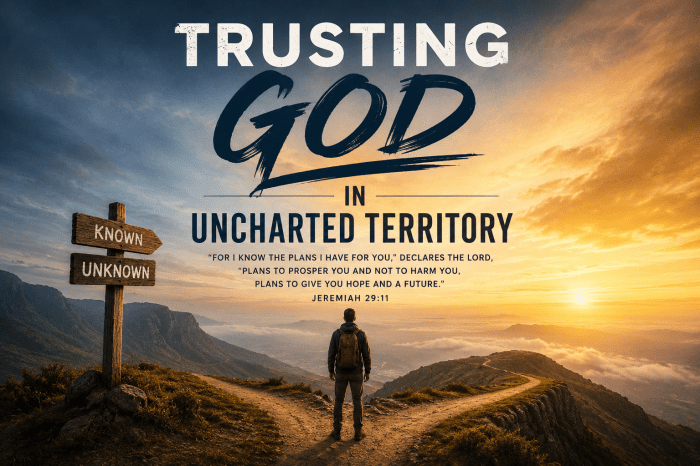
When God Reroutes You: Trusting the One Who Knows the Way

Many of us have had this happen with GPS. You are driving a road you know well, feeling sure of your route, when the device suddenly says, “Rerouting.” Your first reaction is to resist. You know this road. You have driven it so many times. Why would you need to take a different route?

Life can reroute us as well. Sometimes a doctor gives you unexpected news. A relationship ends in a way you never saw coming. A job ends suddenly. A loved one needs hospice care. Suddenly, your future looks nothing like what you expected. In those moments, we all face the same question: Will we trust what we know, or will we trust the One who knows?

This question is at the center of one of the most powerful moments in the Old Testament.

Standing at the Edge of the Impossible

In Joshua 3, Israel faces this exact situation. They stand at the edge of the Jordan River during flood season, with the water overflowing and rushing by. Behind them are forty years in the wilderness. Ahead is the promised land. Between them is a river that seems impossible to cross.

To make things even more uncertain, their leader who had guided them through every challenge was gone. Moses, the only leader most of them knew, had died. Joshua was new. The way forward was new. The land was unknown.

Joshua 3:4 says, “You have not traveled this way before.” This is more than just a comment about geography. It is a spiritual truth that everyone faces at some point. There will be times when nothing in your past has prepared you for what is ahead. The diagnosis is new. The grief is new. The uncertainty is new. In those moments, it is tempting to go back to what is familiar, even if that means returning to the wilderness.

God Brings You to the Impossible on Purpose

Here is something worth considering about the Israelites standing at that flooded river: God knew exactly what the Jordan looked like. He was not surprised by the flood season. He did not miscalculate. He brought them there intentionally.

God will sometimes bring you to the impossible because he wants to demonstrate that he is God and you are not. If you could solve it yourself, you would not need him. If the situation had an obvious human solution, the credit would go to human ingenuity. But when you are standing at the edge of something that cannot be explained, something that has no reasonable path forward, that is precisely where God tends to show up in ways that leave no room for any other explanation.

The Israelites stood at that river for three days. Three days of staring at the impossible. Some of you know what that feels like. You are in the waiting room of an impossible situation right now, looking at something that has no clear resolution. That waiting is not wasted. It is part of the process of understanding just how much you need the God you say you serve.

Follow the Presence, Not the Pattern

Before the Israelites crossed, Joshua gave them an instruction that carries profound weight: consecrate yourselves, because the Lord will do wonders among you tomorrow. Before anything happened on the outside, God required something on the inside. Cleansing. Surrender—preparation of the heart.

This principle holds in every generation. God wants to work in you before he works in front of you. When life reroutes you into unfamiliar territory, the first response should not be panic or problem-solving. It should be a return to God’s presence. Psalm 23 reminds us that even in the darkest valleys, the Lord is our shepherd. But valleys have a way of pulling our eyes away from the one leading us through them.

Joshua also told the people to keep the ark of the covenant in their sight, staying back far enough that everyone could see it clearly. The ark represented God’s presence. The instruction was simple: keep God in your vision. When the obstacle is overwhelming, when the situation is unfamiliar, when fear is loud, keep your eyes on his presence.

A New Method, the Same God

When Israel had faced an impassable body of water before, at the Red Sea, Moses stretched out his staff, and the water parted before anyone stepped in. But at the Jordan, God gave different instructions. The priests carrying the ark were told to step into the water first. The miracle would not come before the step of faith. It would come in response.

This distinction matters. God did not change who he was, but he changed how he worked. The same miracle was accomplished differently, through a different leader, for a different generation. Just because God moves differently than he did before does not mean he is absent. It means he is doing something new.

Isaiah 43:19 speaks of God doing a new thing, making a way in the wilderness and rivers in the desert. The same God who stopped the Red Sea also stopped the Jordan. He did it differently.

The Stones You Are Supposed to Tell About

After Israel crossed the Jordan on dry ground, God instructed Joshua to have twelve men each carry a stone from the riverbed and build a monument on the other side. The purpose was explicit: when your children ask what these stones mean, you tell them. You tell them what God did. You tell them about the impossible road and the God who made a way through it.

Every person reading this has stones. There are moments in your story that you cannot fully explain, situations that resolved in ways that defy logic, relationships that were restored when they should have been finished, health that returned when the prognosis said otherwise, provision that appeared when there was no visible source. Those are your stones.

The question is whether you are telling anyone about them. The world around you is filled with people standing at their own flooded rivers, staring at their own impossible situations, wondering if anyone or anything is big enough to help them through. Your story, the road you never expected to travel and the God who walked it with you, is exactly what someone near you needs to hear.

You have never traveled this way before. But you do not travel it alone, and you do not travel it without purpose. Trust the One who knows the way, and then tell everyone what he did when you got to the other side.

Diverse family beneath a cross with text: Under Christ’s Spiritual Authority; Family of God

UNDER CHRIST Part 4

Part 4: Submission Is Biblical, but Control Is Not

When Spiritual Authority Crosses the Line

“Submit to your leaders.”

That’s biblical.

“Obey your pastor.”

Depending on what is meant, that statement can reflect biblical truth.

“Don’t rebel against spiritual authority.”

Again, Scripture takes rebellion, disorder, pride, and divisiveness seriously.

But sometimes the conversation goes even further.

“Don’t question your leader.”

“God told me what you’re supposed to do.”

“If you disagree with me, you’re in rebellion.”

“You can’t leave this church unless I release you.”

“If you leave without my blessing, you’re stepping outside God’s protection.”

“You need my permission before you pursue that ministry.”

“Your job is to submit even when you think I’m wrong.”

At this point, we need to ask another question:

Is that biblical submission—or spiritual control?

These are not the same thing.

The Bible teaches spiritual authority.

The Bible teaches pastoral oversight.

The Bible teaches submission.

The Bible teaches honor.

But Scripture never gives human leaders unlimited authority over another believer’s life.

Every pastor is under Christ.

Every elder is under Christ.

Every apostle is under Christ.

Every prophet is under Christ.

Every teacher is under Christ.

And every believer ultimately belongs to Christ.

So biblical submission must always stay within biblical boundaries.

HEBREWS 13:17 IS REAL

We shouldn’t avoid passages simply because people have misused them.

Hebrews 13:17 teaches believers to respond appropriately to their leaders because those leaders keep watch over their souls as those who will give an account.

This is a serious responsibility.

God expects pastors and spiritual leaders actually to lead.

A pastor isn’t merely someone who gives a sermon once a week.

Shepherds watch.

Shepherds guide.

Shepherds warn.

Shepherds protect.

Shepherds correct.

Shepherds sometimes have to say difficult things.

Believers also shouldn’t get offended every time spiritual leadership challenges them.

Sometimes the pastor isn’t trying to control you.

Sometimes he’s correcting you.

There is an important difference.

Sometimes the leader isn’t trying to manipulate you.

He’s trying to protect you from something you cannot yet see.

Sometimes what we call “control” is actually godly counsel we don’t want to hear.

Let’s make this clear:

Biblical submission is real.

But Hebrews 13:17 gives leaders responsibility.

But it does not give them absolute authority.

THE LEADER WILL GIVE AN ACCOUNT

Hebrews 13:17 contains something leaders should notice as much as followers.

Leaders are described as people who will give an account.

To whom?

God.

That means the leader isn’t the highest authority in the relationship.

The leader himself is under authority.

Every sermon preached.

Every correction given.

Every decision made.

Every person counseled.

Every exercise of church discipline.

Every use of spiritual influence.

Pastors will answer to God for how they handled His people.

This should keep spiritual leaders from becoming arrogant.

The congregation isn’t the pastor’s personal kingdom.

The church isn’t the pastor’s possession.

The people don’t belong to the preacher.

Jesus purchased the Church with His blood.

Pastors are stewards.

And stewards answer to the Owner.

PETER PUTS LIMITS ON LEADERSHIP

Peter speaks directly to elders in1 Peter 5:2–3.

He tells them to shepherd God’s flock and exercise oversight.

Notice both ideas.

Shepherd.

Oversee.

Those are authority words.

But then Peter immediately establishes boundaries.

He tells leaders not to exercise their ministry through compulsion, greed, or“lording it over those entrusted to you.”

Instead, they are to set an example.

This is very important.

Biblical leaders have authority.

But they are specifically forbidden from becoming domineering.

Jesus said something similar.

JESUS REDEFINED GREATNESS

InMatthew 20:25–28, Jesus contrasts kingdom leadership with worldly leadership.

The rulers of the Gentiles “lord it over” people.

Jesus says:

“It must not be like that among you.”

Instead, whoever wants to become great must become a servant.

Jesus doesn’t eliminate leadership.

He changes it.

Worldly authority says:

“You exist to serve my vision.”

Kingdom authority says:

“God has entrusted me with responsibility to serve you.”

Worldly leadership asks:

“How many people answer to me?”

Kingdom leadership asks:

“How faithfully am I serving the people God entrusted to me?”

Worldly leadership protects the leader’s position.

Kingdom leadership protects the sheep.

This difference is important.

SUBMISSION DOESN’T MEAN SURRENDERING DISCERNMENT

One of the most dangerous misunderstandings of spiritual submission is the idea that submitting to leadership means surrendering your responsibility to discern truth.

Scripture never teaches that.

Consider the Bereans.

Paul and Silas arrive in Berea and begin teaching.

These people are listening to an apostle.

Not just any preacher.

Paul.

Yet Acts 17:11tells us they examined the Scriptures daily to see whether what Paul taught was true.

And Luke calls them noble for doing it.

Consider this.

They checked an apostle’s teaching against Scripture.

And the Bible praises them.

Imagine if Paul had responded:

“How dare you question my teaching! I’m God’s apostle!”

He didn’t.

Because genuine spiritual authority isn’t afraid of Scripture.

Healthy pastors should want people checking what they preach.

Open your Bible.

Read the context.

Ask questions.

Study.

Search.

Compare.

If what I preach cannot survive an open Bible, you shouldn’t believe it simply because I am standing behind a pulpit.

The pastor isn’t the final authority.

Scripture is.

YOU CAN HONOR SOMEONE AND STILL DISAGREE

The Church needs to recover this.

Disagreement isn’t automatically dishonor.

Questions aren’t automatically rebellion.

Concern isn’t automatically division.

A believer can say:

“Pastor, I love you and respect you, but I don’t believe that interpretation is correct.”

That’s possible.

A church member can disagree with a ministry decision without becoming an enemy.

A leader can receive criticism without assuming the critic is demonically influenced.

A mature leader doesn’t need everyone to agree with him to feel respected.

In fact, secure leaders can listen.

They may ultimately disagree.

They may maintain their decision.

Leadership sometimes requires that.

But they don’t need to demonize everybody who asks questions spiritually.

PAUL WAS CORRECTED—AND CORRECTED OTHERS

Consider Galatians 2.

Peter was a prominent apostle.

He walked with Jesus.

He witnessed the resurrection.

He preached at Pentecost.

Thousands responded to his preaching.

Yet Paul tells us that when Peter acted wrongly at Antioch:

“I opposed him to his face because he stood condemned.”

—Galatians 2:11

Peter’s position didn’t make him beyond correction.

Imagine Peter responding:

“Paul, be careful. Touch not God’s anointed.”

That’s not what Scripture records.

Even apostles were accountable to truth.

This is extremely important.

If Peter could be confronted, your pastor can be confronted.

If Peter could be wrong, your apostle can be wrong.

If Peter could make a bad decision, your bishop can make a bad decision.

If Peter’s title didn’t make him infallible, neither does anyone else’s.

“GOD TOLD ME” CAN BECOME A WEAPON

One of the easiest ways spiritual leadership becomes controlling is through claims of divine revelation.

A leader says:

“God told me you’re supposed to…”

Now what happens?

If you disagree with the pastor, you’re no longer simply disagreeing with the pastor.

You’re supposedly disagreeing with God.

This puts a lot of pressure on people.

We should be extremely careful when speaking for God.

Sometimes the Holy Spirit gives someone insight, wisdom, prophetic encouragement, or conviction about another person.

But New Testament prophecy isn’t presented as something believers receive without discernment.

1 Corinthians 14:29says that prophets should speak and others should evaluate.

Evaluate.

Discern.

Test.

Similarly, 1 Thessalonians 5:20–21 tells believers not to despise prophecies but to test all things and hold on to what is good.

So even when someone says:

“I believe God showed me something for you,”

The biblical response is not blind obedience.

It is discernment.

A healthy leader understands that.

COUNSEL IS DIFFERENT FROM CONTROL

Suppose someone comes to a pastor and says:

“I’m thinking about marrying this person.”

A good pastor might say:

“I have serious concerns.”

He may point out character issues.

He may identify warning signs.

He may provide biblical counsel.

He may strongly advise against the marriage.

The believer would be foolish to dismiss wise counsel simply because they don’t like it.

But there’s a difference between:

“As your pastor, I strongly believe marrying this person would be unwise, and here’s why…”

and:

“God has placed me over you, and you are forbidden from marrying this person without my permission.”

One is pastoral counsel.

The other approach may become controlling.

The same applies to:

Where you work.

Where you live.

Whether you buy a house.

Whether you start a business.

Who your friends are.

What ministry you pursue.

Whether you move to another city.

Whether you attend another church.

Wise believers look for good advice.

But pastors are not a substitute for the Holy Spirit.

CAN YOU LEAVE A CHURCH?

This is another area where spiritual control sometimes appears.

A member feels God leading them somewhere else.

Leadership responds:

“You cannot leave until we release you.”

Where exactly does the New Testament establish that requirement?

Now, there are good and bad ways to leave churches.

Leaving because you’re angry over correction may reveal immaturity.

Leaving while spreading gossip is wrong.

Leaving to avoid reconciliation isn’t healthy.

Leaving every church whenever someone tells you something you don’t want to hear will keep you from growing.

Whenever possible, believers should leave graciously.

Have conversations.

Seek reconciliation.

Honor people.

Try not to end relationships on bad terms if you can avoid it.

But the idea that a pastor must spiritually “release” a Christian before that Christian can attend another congregation is difficult to establish from Scripture.

Pastors shepherd God’s people.

They don’t own them.

MUTUAL SUBMISSION MATTERS TOO

Discussions of submission often focus exclusively on what church members owe leaders.

But the New Testament contains a broader culture of humility.

Ephesians 5:21says:

“submitting to one another in the fear of Christ.”

Christian community isn’t supposed to be built around everyone fighting for position.

We serve one another.

Listen to one another.

Honor one another.

Bear one another’s burdens.

Correct one another.

Forgive one another.

Encourage one another.

Leadership exists within that family.

Pastors don’t graduate out of being brothers.

Elders don’t graduate out of needing correction.

Teachers don’t graduate out of needing accountability.

Apostles don’t graduate out of humility.

Everybody remains under Christ.

CONTROL CREATES DEPENDENCY

This is one of the clearest warning signs.

Healthy leadership produces maturity.

Controlling leadership produces dependency.

Healthy leadership teaches you Scripture.

Controlling leadership teaches you to depend upon the leader’s interpretation.

Healthy leadership teaches you to pray.

Controlling leadership makes you believe the leader hears God better than you ever could.

Healthy leadership gives counsel.

Controlling leadership requires permission.

Healthy leadership welcomes questions.

Controlling leadership labels questions rebellion.

Healthy leadership admits mistakes.

Controlling leadership protects its image.

Healthy leadership releases people into ministry.

Controlling leadership makes ministry revolve around loyalty to the leader.

Healthy leadership points people toward Jesus.

Controlling leadership gradually positions the leader between people and Jesus.

PAUL REFUSED TO LORD OVER FAITH

Once again, Paul’s statement in2 Corinthians 1:24gives us an extraordinary standard:

“I do not mean that we lord it over your faith, but we are workers with you for your joy, because you stand by faith.”

Workers with you.

That’s apostolic authority speaking.

Paul could correct.

Paul could confront.

Paul could discipline.

Paul could teach.

Yet he understood there was a boundary.

Your faith belongs to God.

THE ANSWER ISN’T REBELLION

We need to be equally clear about the opposite error.

Some believers use “Jesus is my authority” as an excuse for refusing all accountability.

Nobody can correct them.

Nobody can question them.

Nobody can tell them they’re wrong.

They bounce from church to church.

They reject pastors.

They refuse correction.

Then they call their independence “freedom.”

This is not true biblical freedom.

Sometimes God uses leaders to tell us things we desperately need to hear.

Sometimes submission means accepting correction when our flesh wants to fight.

Sometimes honoring leadership means trusting a decision we wouldn’t personally make.

Sometimes spiritual maturity means admitting:

“My pastor was right, and I was wrong.”

So the answer to controlling leadership isn’t rebellious Christianity.

The answer is biblical leadership and biblical submission.

CHRIST DEFINES THE BOUNDARIES

The ultimate question isn’t:

“Do I have to submit?”

The better question is:

“What does biblical submission look like under the lordship of Christ?”

Jesus remains Lord.

Scripture remains authoritative.

Pastors remain shepherds.

Elders remain overseers.

Believers remain accountable.

The Church remains a family.

And nobody gets to take Jesus’ seat.

Healthy spiritual authority doesn’t say:

“You need me to control your life.”

It says:

“God has entrusted me with responsibility to help you follow Jesus faithfully.”

Healthy submission doesn’t say:

“I’ll surrender my conscience to another human being.”

It says:

“I will walk humbly, receive biblical correction, honor godly leadership, seek wise counsel, remain teachable, and ultimately obey Jesus.”

This is not rebellion.

This is maturity.

And perhaps the simplest test for any spiritual authority structure is this:

Does it make Jesus more necessary—or the leader more necessary?

If leadership consistently points people toward Christ, Scripture, maturity, service, and personal responsibility before God, something healthy is happening.

But if people become afraid to make decisions without the leader…

Afraid to ask questions…

Afraid to disagree…

Afraid to leave…

Afraid to test what they’re being taught…

Afraid that God’s protection will disappear if they disappoint their leader…

Clearly, something is wrong in this situation.

Because Jesus didn’t die to transfer us from the bondage of sin into the bondage of religious control.

He brought us into His family.

And within that family there is leadership.

There is authority.

There is accountability.

There is submission.

But above all of this is Jesus Christ.

Submission is biblical.

Control is not.

COMING IN PART 5

“Touch Not My Anointed”

What That Verse Actually Means

Few phrases have been used more effectively to silence questions about spiritual leadership:

“Touch not God’s anointed.”

But what did that statement originally mean?

Was Scripture teaching Christians never to question pastors, prophets, apostles, or other leaders?

Does criticizing a preacher mean you’re “touching the anointed”?

And if God’s leaders are never supposed to be confronted, what do we do withNathan confronting David, Paul confronting Peter, Samuel confronting Saul, and the New Testament’s repeated commands to test teaching?

In Part 5, we’re going back to Psalm 105, 1 Chronicles 16, 1 Samuel 24, Galatians 2, and the broader biblical context to examine one of the most frequently misunderstood phrases concerning spiritual authority.

Because honoring God’s leaders is biblical.

But using Scripture to make leaders untouchable is not.

Diverse family beneath a cross with text: Under Christ’s Spiritual Authority; Family of God

UNDER CHRIST Part 3

Part 3: Who Is Your Covering?

Is “Spiritual Covering” Actually Biblical?

“Who is your covering?”

If you have been part of certain churches, ministry groups, or leadership circles, you have likely heard this question before.

Sometimes it simply means:

“Who are you accountable to?”

If that is all someone means, there is not really a problem. Accountability, pastoral leadership, elders, and submission are all biblical. Believers are not meant to live in isolation, without anyone to question, challenge, correct, or guide them.

But sometimes “covering” means considerably more.

You may hear statements like:

“You can’t operate without a covering.”

“You need to get under someone’s covering.”

“Who released you into ministry?”

“You shouldn’t start a church without your spiritual father’s blessing.”

“If you leave your covering, you open yourself to spiritual attack.”

“Your anointing flows through your covering.”

“You need someone above you spiritually.”

That raises an important question:

Where does the Bible actually teach that?

Not:

“Can we find verses about leadership?”

Of course we can.

Not:

“Does Scripture teach submission?”

Absolutely.

Not:

“Should pastors be accountable?”

Without question.

The issue is more specific:

Does the New Testament teach that every believer or minister must have another human being functioning as their spiritual covering to be protected, authorized, or legitimately used by God?

That’s the question we need Scripture to answer.

START WITH THE WORD “COVERING”

One of the first things to notice is that the New Testament does not create an office or doctrine called “spiritual covering” as people often use the term today.

That doesn’t automatically make the terminology wrong.

We use theological terms that don’t appear word-for-word in Scripture when those terms accurately summarize biblical teaching.

The question isn’t merely:

“Does the phrase appear in the Bible?”

The better question is:

“Does the concept being taught by that phrase appear in the Bible?”

This is where we need to be careful.

If by “covering” someone means:

“I belong to a local church.”

“I have pastors and elders who shepherd me.”

“I welcome accountability.”

“I don’t operate as a lone ranger.”

“I seek godly counsel.”

“I recognize legitimate spiritual leadership.”

Then much of what they’re describing is thoroughly biblical.

But why not simply call those things what Scripture calls them?

Shepherding.

Oversight.

Leadership.

Discipleship.

Accountability.

Submission.

The concern comes up when “covering” starts to mean something beyond those biblical ideas.

This is especially true if it suggests that someone else stands between you and God as the source of your spiritual protection or authority.

WHAT ABOUT HEBREWS 13:17?

Hebrews 13:17 is one of the most frequently referenced passages in discussions about spiritual authority.

The verse teaches believers to respond appropriately to their leaders because those leaders keep watch over their souls and will give an account.

That’s serious.

Pastoral oversight is real.

Church leadership isn’t imaginary.

God entrusts shepherds with responsibility for His people.

A pastor shouldn’t say:

“I’m just another guy here. Nobody has any responsibility to listen to me.”

Scripture gives elders genuine responsibility.

But Hebrews 13:17 doesn’t say:

“Your leader is your spiritual covering.”

It doesn’t say:

“Your protection from spiritual attack flows through your leader.”

It doesn’t say:

“You need your leader’s permission before obeying God’s calling.”

It doesn’t say:

“Leaving your leader removes God’s protection.”

Those ideas go beyond what the text actually says.

Hebrews 13 gives leaders responsibility.

It doesn’t make them mediators.

This is an important difference.

SHEPHERDS WATCH—JESUS OWNS THE SHEEP

Peter gives us an incredibly helpful picture of pastoral authority.

1 Peter 5:2–4 (CSB)tells elders to:

“Shepherd God’s flock among you, exercising oversight…”

Then Peter warns them not to lead by “lording it over those entrusted to you,” but by being examples to the flock.

And then Peter points to someone greater:

“When the chief Shepherd appears…”

That phrase establishes the entire structure.

Pastors are shepherds.

But Jesus is the Chief Shepherd.

Pastors oversee.

But the flock belongs to God.

Leaders serve.

Jesus owns.

This means every pastor has authority that is given to them, not authority they hold on their own.

A pastor cannot rightly say:

“These are my people, therefore they must do whatever I tell them.”

That is not correct.

They are God’s people.

The shepherd will actually give an account to God for how he treated people who belonged to God.

That shThis should lead every spiritual leader to be humble.ABOUT 1 CORINTHIANS 11?

Another passage sometimes connected with covering is1 Corinthians 11, particularly Paul’s discussion of head coverings and headship.

Paul writes in 1 Corinthians 11:3 that Christ is the head of every man, man is the head of woman, and God is the head of Christ.

Whatever position someone takes regarding the cultural and continuing application of physical head coverings, one thing should be clear:

Paul isn’t establishing the modern doctrine of pastoral covering.

The passage addresses order, headship, worship, men and women, and the Corinthian assembly.

It doesn’t say:

“Every Christian must find another Christian to be their spiritual covering.”

It doesn’t say:

“Every pastor needs a higher-ranking pastor covering him.”

It doesn’t establish a chain where:

Believer → Pastor → Bishop → Apostle → God.

In fact, Paul’s statement begins:

“Christ is the head of every man.”

This point is very important in this discussion.

CHRIST IS THE HEAD OF THE CHURCH

The New Testament is remarkably clear about who occupies the supreme position over the Church.

Colossians 1:18 (CSB)says:

“He is also the head of the body, the church…”

Ephesians 1:22–23 (CSB) says, God:

“subjected everything under his feet and appointed him as head over everything for the church, which is his body…”

Jesus isn’t merely at the top of a human pyramid.

Jesus is the Head of His body.

Every pastor serves under Him.

Every apostle serves under Him.

Every prophet serves under Him.

Every teacher serves under Him.

Every believer belongs to Him.

Nobody replaces Him.

WHAT ABOUT ACCOUNTABILITY?

This is where people sometimes misunderstand the argument.

If we say:

“I don’t believe the modern doctrine of spiritual covering is clearly established in Scripture,”

someone may immediately respond:

“So you don’t believe in accountability?”

That is a false choice.

We don’t have to choose between an extra-biblical authority structure and complete independence.

Biblical accountability is real.

Proverbs repeatedly praises wise counsel.

The New Testament teaches mutual correction.

Galatians 6:1–2instructs spiritually mature believers to restore someone caught in wrongdoing.

James 5:16tells believers to confess sins to one another and pray for one another.

Hebrews 10:24–25teaches believers to gather and encourage one another.

Pastors shepherd.

Elders oversee.

Believers submit appropriately.

Brothers and sisters correct one another.

That’s a deeply interconnected Christian life.

But notice something.

Much of the accountability in the New Testament is about relationships and community, not just about hierarchy.

The New Testament uses a tremendous amount of “one another” language.

Love one another.

Serve one another.

Encourage one another.

Carry one another’s burdens.

Forgive one another.

Confess to one another.

Teach one another.

Admonish one another.

Pray for one another.

The New Testament Church wasn’t designed around spiritual isolation.

But it wasn’t designed around one untouchable person sitting at the top of everyone’s spiritual life.

WHO COVERS THE PASTOR?

This question often comes next.

“If the pastor doesn’t have a spiritual covering, who holds him accountable?”

That’s an excellent question.

And every pastor should have a good answer.

But again, accountability and covering aren’t necessarily the same thing.

A pastor should absolutely have accountability.

Depending on a church’s structure, that may include fellow elders, overseers, trusted ministers, denominational relationships, boards, accountability teams, or mature believers with permission to ask difficult questions.

No one should be above accountability just because they are the senior pastor.

In fact, leadership increases the need for accountability.

But accountability works best when it’s genuine.

Putting another minister’s name on your website and calling him your “covering” accomplishes very little if he never asks you hard questions.

Real accountability knows you.

Real accountability can confront you.

Real accountability can tell you no.

Real accountability isn’t impressed by your title.

Real accountability cares more about your soul than your platform.

This matters much more than simply listing someone’s name above yours on an organizational chart.

PAUL DIDN’T LORD IT OVER PEOPLE’S FAITH

Paul’s words in2 Corinthians 1:24deserve to appear repeatedly in conversations about spiritual leadership:

“I do not mean that we lord it over your faith, but we are workers with you for your joy, because you stand by faith.”

Consider Paul’s authority.

He was an apostle.

He planted churches.

He corrected doctrine.

He appointed leaders.

He exercised church discipline.

Paul clearly believed in authority.

Yet Paul deliberately established a boundary:

“We don’t lord it over your faith.”

That’s extraordinary.

Biblical aThis is remarkable.es.

Pastors aren’t dictators.

Apostles aren’t kings.

Prophets aren’t unquestionable.

Teachers aren’t infallible.

Leaders don’t own people’s consciences.

Christ does.

THERE IS ONE MEDIATOR

Perhaps the most important theological boundary is found in1 Timothy 2:5:

“For there is one God and one mediator between God and humanity, the man Christ Jesus.”

One mediator.

Jesus.

That means no pastor stands between you and God.

No apostle stands between you and God.

No prophet stands between you and God.

No spiritual father stands between you and God.

No spiritual mother stands between you and God.

You may receive tremendous help from those people.

You may need their counsel.

You may benefit from their correction.

You may be accountable within a church they lead.

But they aren’t your mediator.

Jesus is.

SOMETIMES “COVERING” BECOMES FEAR-BASED

This is where the teaching can become spiritually harmful.

Someone feels God calling them into something.

They seek counsel.

Their leader disagrees.

Now they’re told:

“If you move forward without your covering’s permission, you’re in rebellion.”

Or someone believes God is leading them to another church.

They’re told:

“If you leave this covering, you’ll become vulnerable to the enemy.”

Consider what that message sends.

It can teach believers that their spiritual security rests partly in remaining attached to a particular human leader.

But Scripture points believers somewhere much stronger.

Psalm 91:1 (CSB)says:

“The one who lives under the protection of the Most High dwells in the shadow of the Almighty.”

Our security is ultimately in God.

That doesn’t justify rebellion.

It doesn’t mean every impulse someone feels is God’s voice.

Sometimes the pastor saying “don’t do this” may be completely right.

That’s why counsel matters.

But advice should never be used to control people or trap them spiritually.

COUNSEL IS NOT THE SAME AS PERMISSION

Some decisions genuinely require church authority.

Church leaders decide who teaches from their church’s pulpit.

Church leaders establish ministry standards.

Church leaders exercise discipline within the congregation.

Church leaders have legitimate responsibilities over ministries entrusted to them.

But that doesn’t mean the pastor possesses universal authority over every personal decision in a believer’s life.

Should I marry this person?

Should I take this job?

Should I move?

Should I start a business?

Should I pursue this ministry calling?

Should I buy this house?

Wise believers seek counsel.

But the pastor does not take the place of the Holy Spirit.

A good pastor helps people discern God’s will.

He doesn’t replace their responsibility to discern it.

HEALTHY LEADERSHIP POINTS UPWARD

Imagine a pastor standing before his congregation.

Healthy leadership says:

“Follow me as I follow Christ.”

That’s Paul’s language in1 Corinthians 11:1.

Notice the qualification.

Follow me as I follow Christ.

The leader is not the goal.

Christ is.

The leader is not the highest authority.

Christ is.

The leader is not the source of a believer’s spiritual life.

Christ is.

Healthy leaders don’t panic when believers mature.

They celebrate.

Healthy leaders aren’t threatened when people study Scripture for themselves.

They encourage it.

Healthy leaders do not need everyone to depend on them.

They want everyone to depend on Jesus.

MAYBE WE SHOULD USE BIBLICAL LANGUAGE

One of the simplest solutions is to use the language Scripture gives us.

Instead of asking:

“Who is your covering?”

Maybe ask:

“Who shepherds you?”

“Where are you planted?”

“Who can correct you?”

“Who knows your life?”

“Who are you accountable to?”

“Who speaks truth to you?”

“Who walks with you?”

“Who are your elders?”

These questions address what really matters without creating a teaching that Scripture does not clearly support.

Because accountability matters.

Submission matters.

Church membership and participation matter.

Pastoral leadership matters.

Spiritual authority matters.

But Jesus is far more important than all of these.

SO WHO IS YOUR COVERING?

If someone uses “covering” simply as shorthand for biblical pastoral oversight and accountability, I don’t believe we need to fight over vocabulary.

But we should be clear about what we mean.

Because the words we use shape what we believe.

And if “covering” means that another person must approve your calling, act as a go-between for God’s protection, give you permission to obey, or stand between you and Christ, we should look for clear biblical support.

Not tradition.

Not ministry culture.

Not “That’s how we’ve always done it.”

Scripture.

The New Testament gives us pastors.

It gives us elders.

It gives us apostles.

It gives us prophets.

It gives us evangelists.

It gives us teachers.

It gives us discipleship.

It gives us accountability.

It gives us submission.

It gives us church discipline.

It gives us spiritual family.

But over every one of those relationships stands Jesus Christ.

He is the Head.

He is the Chief Shepherd.

He is the Mediator.

And ultimately, every legitimate spiritual leader should help people live faithfully under His authority.

We don’t need less accountability.

We need biblical accountability.

We don’t need less leadership.

We need Christlike leadership.

We don’t need less submission.

We need biblical submission.

And we don’t need human leaders taking responsibility God never gave them.

Because the safest place for a believer is not under someone else’s personality, position, or reputation.

It is faithfully living under the leadership of Jesus Christ.

COMING IN PART 4

Submission Is Biblical—Control Isn’t

When Spiritual Authority Crosses the Line

The Bible absolutely teaches submission.

But what does biblical submission actually mean?

Does submitting to spiritual leadership mean obeying whatever your pastor says?

Is disagreement rebellion?

Can you question leadership?

Can a pastor tell you whom to marry, where to work, whether you can leave a church, or what ministry you’re allowed to pursue?

And what happens when a leader uses phrases like“rebellion,” “dishonor,” “Jezebel spirit,” or “touch not God’s anointed” to silence legitimate questions?

In Part 4, we’ll examine Hebrews 13:17, 1 Peter 5:1–4, Ephesians 5:21, Acts 17:11, and 2 Corinthians 1:24to distinguish something the Church desperately needs to understand:

Submission is biblical.

Control isn’t.

Diverse family beneath a cross with text: Under Christ’s Spiritual Authority; Family of God

UNDER CHRIST Part 2

Part 2: Does the Bible Teach Spiritual Mothers?

Mentorship Without a Throne

If you want to understand what the Bible says about spiritual motherhood, Titus 2 is one of the clearest places to look.

Paul writes in Titus 2:3–5 that older women are to live reverently, teach what is good, and encourage younger women in godly living.

This is important because Paul gives mature women real responsibility in helping other believers grow spiritually.

They aren’t merely supposed to attend church beside younger women.

They are supposed to invest in them.

Teach them.

Encourage them.

Model godliness before them.

Help them mature.

You could call this spiritual mothering.

But pay attention to this:

Paul describes what spiritual mothers do, but he doesn’t give them a special title.

He doesn’t establish an office called “Spiritual Mother.”

He doesn’t tell Titus to appoint spiritual mothers over groups of spiritual daughters.

He doesn’t set up a system where younger women get their authority, identity, calling, or spiritual protection from an older woman.

Instead, mature women use what they’ve learned to help others grow.

That’s discipleship.

And discipleship is very different from making someone dependent.

SPIRITUAL MOTHERHOOD SHOULD PRODUCE MATURITY

Think about healthy biological motherhood.

A good mother doesn’t raise children hoping they remain permanently incapable of functioning without her.

When they’re infants, they are completely dependent.

But gradually she teaches them.

She helps them walk.

She teaches them to communicate.

She teaches them responsibility.

She gives them more freedom as they show they are growing up.

Eventually, they become adults.

The relationship doesn’t disappear.

The love doesn’t end.

The mother doesn’t become irrelevant.

But the relationship changes as the child grows up.

Something similar should happen in discipleship.

A mature believer may initially need to walk very closely with a younger believer.

The younger believer may have countless questions.

“How do I study Scripture?”

“How do I pray?”

“How do I recognize false teaching?”

“How should I handle this temptation?”

“How do I forgive someone?”

“How do I know God’s will?”

Those are good questions.

And mature believers should help answer them.

But over time, things should change.

The younger believer should mature.

They should learn Scripture.

They should develop discernment.

They should learn to pray.

They should become confident in their identity in Christ.

They should discover their gifts.

They should begin serving others.

Eventually, they should begin discipling somebody else.

That’s how the New Testament describes it.

Paul explains the goal of ministry in Ephesians 4:13 as believers “growing into maturity with a stature measured by Christ’s fullness.”

Notice the standard of maturity.

Not the spiritual mother.

Not the spiritual father.

Not the pastor.

Not the apostle.

It’s Christ.

Jesus is the standard.

Jesus is the goal.

Jesus is our example.

Jesus is at the center.

THE PROBLEM BEGINS WHEN RELATIONSHIP BECOMES RANK

This is where we need discernment.

Calling someone “like a spiritual mother to me” isn’t automatically problematic.

Scripture gives us enough familial language to understand what someone means.

But things change when the relationship turns into a formal spiritual hierarchy.

The language can subtly shift from:

“She has been like a mother to me.”

to:

“She is my Spiritual Mother.”

And then sometimes:

“I am under my Spiritual Mother.”

Then:

“I need my Spiritual Mother’s approval.”

Then:

“I cannot make this decision until my Spiritual Mother releases me.”

Then:

“If I leave my Spiritual Mother’s ministry, I will lose my covering.”

Then:

“Questioning my Spiritual Mother is rebellion.”

At that point, we’ve gone far beyond what Romans 16 and Titus 2 describe.

Now we’re dealing with an authority structure.

And authority structures must be biblically supported.

We shouldn’t create spiritual offices merely because the terminology sounds biblical.

JESUS WARNED ABOUT RELIGIOUS STATUS

Jesus repeatedly confronted religious systems where titles and positions became sources of prominence.

InMatthew 23:11–12, immediately after addressing religious titles, Jesus says:

“The greatest among you will be your servant. Whoever exalts himself will be humbled, and whoever humbles himself will be exalted.”

Jesus always turns the world’s idea of hierarchy upside down.

The world asks:

“Who is above whom?”

Jesus asks:

“Who is serving whom?”

The world measures greatness by how many people answer to you.

Jesus measures greatness by how willing you are to serve.

That’s why we should look at Christ’s example when we think about spiritual motherhood.

A spiritual mother in the Bible doesn’t need a throne.

She needs a towel.

She serves.

She teaches.

She encourages.

She corrects when necessary.

She models holiness.

She walks alongside younger believers.

She points Her influence doesn’t mainly come from having a title.marily from a title.

It comes from her character, maturity, love, wisdom, and faithful service.

HONOR IS BIBLICAL

None of this means mature women shouldn’t be honored.

They absolutely should.

Scripture consistently values maturity, wisdom, faithfulness, and godly example.

Paul tells Timothy in 1 Timothy 5:1–2 to relate to older men as fathers, younger men as brothers, older women as mothers, and younger women as sisters.

There it is again.

Family language.

Older women are to be treated as mothers.

That’s beautiful.

But notice again that the focus is on relationships.

Paul isn’t creating the ecclesiastical office of Father, Mother, Brother, and Sister.

He’s describing how believers should treat one another inside God’s household.

This means we can honor mature women without turning that honor into a hierarchy.

We can listen to wisdom without surrendering our conscience.

We can receive correction without surrendering personal responsibility before God.

We can seek counsel without requiring permission.

We can value someone’s spiritual help without making them a go-between between us and Christ.

JESUS DOESN’T NEED A MIDDLEMAN

This is where the issue becomes especially important.

The New Testament repeatedly emphasizes the believer’s direct relationship with God through Jesus Christ.

1 Timothy 2:5says:

“For there is one God and one mediator between God and humanity, the man Christ Jesus.”

One mediator.

That doesn’t eliminate pastors.

It doesn’t eliminate teachers.

It doesn’t eliminate mentors.

It doesn’t eliminate accountability.

It doesn’t eliminate discipleship.

It establishes the proper place for all of them.

They stand beside us and point us to Christ, not between us and Christ.

That’s the difference.

A healthy spiritual mother says:

“Let me help you know Jesus.”

An unhealthy system can eventually communicate:

“You need me to access what Jesus wants for you properly.”

Those two messages are completely different.

THE BEST SPIRITUAL MOTHERS DON’T COLLECT DAUGHTERS

They make disciples.

There is a difference.

Collecting spiritual daughters can become more about identity, status, influence, and having a platform.

Making disciples is about Jesus.

A mature Christian woman shouldn’t judge her success by how many people call her “Mother.”

She should rejoice when the people she has discipled become mature followers of Christ.

Imagine the beauty of Titus 2 functioning throughout the Church.

Older women teaching younger women.

Seasoned believers walking alongside new believers.

Women who have survived difficult seasons helping others navigate similar valleys.

Women with decades of faithful marriages encouraging younger wives.

Mothers helping younger mothers.

Women who have learned contentment, teaching others.

Women who know Scripture, opening the Bible with younger women.

Women who have learned how to pray, praying beside those who are still learning.

Women who have experienced restoration reminding others that failure isn’t final.

That is what spiritual motherhood looks like.

And we truly need it.

But none of that requires a title.

BE CAREFUL ABOUT SWINGING TOO FAR

When we push back against unhealthy spiritual structures, we might be tempted to go too far in the other direction.

Someone experiences controlling leadership and concludes:

“I don’t need anybody.”

But that’s not biblical either.

Christianity isn’t designed to be lived independently.

We need one another.

We need pastors.

We need elders.

We need teachers.

We need accountability.

We need people mature enough to tell us when we’re wrong.

We need people who know our weaknesses.

We need people who will encourage us when we’re discouraged.

We need spiritual mothers and fathers in the relational sense.

What we don’t need is someone else taking a place that only Jesus should have.

Accountability and control are different.

There is a difference between counsel and permission.

There is a difference between honor and unquestioning loyalty.

Discipleship and dependency are different.

And there’s a difference between someone being like a spiritual mother and someone holding an official position called Spiritual Mother.

ASK THE RIGHT QUESTIONS

If someone is functioning as a spiritual mother in your life, don’t merely ask what you call her.

Ask what the relationship produces.

Does she encourage you to read Scripture for yourself?

Does she teach you to hear and obey God’s Word rather than obey her?

Can you disagree respectfully without being labeled rebellious?

Can she admit when she’s wrong?

Does she encourage healthy relationships with other believers?

Does she celebrate when God uses someone besides her to help you?

Does she point you toward your local church rather than creating her own separate authority structure?

Does she encourage you to grow?

Does she want you to mature enough to disciple others?

Most importantly:

Does your relationship with her help you focus more on Jesus, or does it make her seem more important?

That’s a question worth asking.

MENTORSHIP WITHOUT A THRONE

I believe the Church needs more spiritual mothers.

Not necessarily more people with the title.

We need more women doing the work.

More mature women investing in younger women.

More believers opening their homes.

More women opening their Bibles with others.

More intergenerational relationships.

More wisdom being transferred.

More prayer.

More encouragement.

More correction given with love.

More examples of faithful Christian living.

More mothers in the faith who can look at struggling believers and say:

“I’ve walked through some things too. Come walk with me, and I’ll keep pointing you toward Jesus.”

That’s powerful.

That’s biblical.

That’s desperately needed.

But the healthiest spiritual mother will never try to rule over someone’s life.

She will always point others to the throne that belongs to Christ.

She knows she isn’t the destination.

She is simply helping someone along their journey.

She isn’t the source.

Christ is.

She isn’t the mediator.

Christ is.

She isn’t the head.

Christ is.

She isn’t building her family.

God is building His family.

And Romans 16:13 gives us the picture better than any modern title ever could.

Paul didn’t need Rufus’s mother to occupy an office.

Apparently, she loved him so genuinely that he could say:

“She’s been a mother to me too.”

That’s a powerful testimony.

Maybe instead of seeking the title “Spiritual Mother,” the better goal is to live a life of love, discipleship, wisdom, sacrifice, and faithfulness so that one day someone can honestly say:

“She never asked me to call her Mother.

She loved me like one.”

COMING IN PART 3

Who Is Your Covering?

Is “Spiritual Covering” Actually Biblical?

“Who is your covering?”

It’s a question heard throughout many churches and ministry circles. Sometimes ministers are told they shouldn’t preach, plant a church, start a ministry, or walk in their calling unless they are “under someone’s covering.”

But where does that teaching actually come from?

In Part 3, we’ll examine Hebrews 13:17, 1 Corinthians 11, biblical submission, pastoral oversight, and the passages often used to support spiritual covering.

The question won’t be whether Christians need accountability.

We absolutely do.

The question is much more specific:

Does the New Testament teach that another human being must serve as your spiritual covering—or is Christ Himself the believer’s covering, authority, Head, and Chief Shepherd?

Diverse family beneath a cross with text: Under Christ’s Spiritual Authority; Family of God

Under Christ: Rethinking Spiritual Authority, Covering, and the Family of God Part 1

Part 1: Who Is Your Spiritual Father?

Relationship or Religious Title?

A phrase is being heard more often in some parts of the Church:

“Who is your spiritual father?”

Sometimes, the question is just meant kindly. Someone might want to know who helped you grow, invested in you, or acted like a father figure in your faith.

There is nothing inherently wrong with that.

Paul also used father-and-son language for some of his closest ministry relationships. He called Timothy his “true son in the faith” (1 Timothy 1:2) and saw himself as a father to the Corinthians because he shared the gospel with them.

But in other settings, “spiritual father” means considerably more.

It becomes a title.

A position.

A hierarchy.

People are sometimes told they are “under” a spiritual father. Ministry approval is said to come through this person. Decisions might need their permission. Leaving can be called rebellion, and questioning the leader may be seen as dishonor. Some ministers are even told they cannot fully follow their calling unless a spiritual father supports them.

That’s where we need to stop and ask a very simple question:

Is that actually what the Bible teaches?

Not whether it is popular.

Not whether respected preachers practice it.

Not whether a particular ministry network requires it.

The question for followers of Jesus must always be:

What does Scripture actually say?

JESUS SAID SOMETHING WE CANNOT IGNORE

One of the strongest passages concerning religious titles comes directly from Jesus.

In Matthew 23, Jesus speaks directly to the scribes and Pharisees. He is not just talking about words. He is challenging a religious culture focused on recognition, status, authority, and titles.

Jesus says:

Matthew 23:8–10 (CSB)

“But you are not to be called ‘Rabbi,’ because you have one Teacher, and you are all brothers and sisters. Do not call anyone on earth your father, because you have one Father, who is in heaven. You are not to be called instructors either, because you have one Instructor, the Messiah.”

Jesus obviously wasn’t prohibiting us from calling our biological father “Dad” or “father.”

Paul himself later uses father terminology.

Jesus is confronting something deeper.

He is challenging religious systems that put some people above others in spiritual importance.

Notice the phrase that sits right in the middle of His teaching:

“You are all brothers and sisters.”

That is incredibly important.

Jesus teaches that God is our Father, Christ is our Instructor, and all His followers are part of the same spiritual family.

The family has different responsibilities.

There are pastors.

There are teachers.

There are elders.

There are apostles.

There are prophets.

There are evangelists.

Mature believers disciple younger believers.

But beneath all these roles is a basic truth:

We are brothers and sisters under one Father.

BUT DIDN’T PAUL CALL HIMSELF A FATHER?

Yes.

And we shouldn’t ignore that either.

Paul writes:

1 Corinthians 4:15 (CSB)

“For you may have countless instructors in Christ, but you don’t have many fathers. For I became your father in Christ Jesus through the gospel.”

At first glance, someone might read this and say:

“There it is! Paul taught spiritual fatherhood.”

Yes—but notice what Paul actually sYes, but look at what Paul actually says.esus through the gospel.”

Paul isn’t describing an ecclesiastical office he occupies.

He is describing a relationship that exists because he brought them the gospel.

He planted.

He nurtured.

He corrected.

He loved.

He sacrificed.

He watched them grow.

That’s fatherly language.

The distinction matters tremendously.

Paul talks about being like a father in relationship, not about creating a special position called Spiritual Father.

No ceremony appoints someone as another person’s spiritual father.

No qualification list exists for the office of spiritual father.

No command requires every Christian to identify a spiritual father.

No teaching says ministry authority must flow through one’s spiritual father.

There is no warning that leaving your spiritual father removes God’s protection from your life.

People add those ideas to the text, but they are not found there naturally.

LOOK AT PAUL AND TIMOTHY

Perhaps the strongest example of spiritual fatherhood in the New Testament is Paul’s relationship with Timothy.

Paul writes:

1 Timothy 1:2 (CSB)

“To Timothy, my true son in the faith.”

That’s beautiful.

Paul clearly loved Timothy as a son.

He invested in him.

He trained him.

He encouraged him.

He corrected him.

He entrusted ministry responsibility to him.

This is the kind of spiritual parenting the Church truly needs.

We need older believers investing in younger believers.

We need seasoned pastors pouring into younger pastors.

We need mature men teaching younger men.

We need mature women teaching younger women.

We need generations walking together.

But notice what Paul was producing in Timothy.

Maturity.

Paul wasn’t trying to keep Timothy permanently dependent upon Paul.

He was preparing Timothy to lead.

That is the difference between discipleship and dependency.

Healthy spiritual parenting says:

“Walk with me while I help you learn to walk faithfully with Jesus.”

Unhealthy spiritual parenting says:

“You will always need me between you and what God has called you to do.”

Those are not the same thing.

PAUL REFUSED TO OWN PEOPLE’S FAITH

This may be one of the most important statements Paul ever made concerning spiritual authority.

2 Corinthians 1:24 (CSB)

“I do not mean that we lord it over your faith, but we are workers with you for your joy, because you stand by faith.”

Think about who said that.

An apostle.

A church planter.

A man who had personally encountered the risen Christ.

A man who wrote Scripture under the inspiration of the Holy Spirit.

Yet Paul says:

“We don’t lord it over your faith.”

Instead:

“We are workers with you.”

This is very different from some modern ideas about spiritual authority.

Paul possessed genuine apostolic authority, yet he understood that the Corinthians ultimately belonged to Jesus.

They weren’t Paul’s sheep.

They were Christ’s.

They weren’t Paul’s possession.

They were Christ’s.

Their faith wasn’t built upon Paul.

It was built upon Christ.

HONOR DOESN’T REQUIRE IDOLIZATION

There is another mistake we need to avoid.

Some people have experienced controlling leadership and responded by rejecting all spiritual authority.

That’s not biblical either.

Scripture teaches us to honor godly leadership.

1 Thessalonians 5:12–13 (CSB)tells believers to recognize those who labor among them and lead them in the Lord and to regard them very highly in love because of their work.

Hebrews 13 speaks about responding appropriately to spiritual leaders.

Peter commands elders to shepherd God’s flock faithfully.

So this is not an argument for spiritual independence.

It’s an argument for biblical spiritual authority.

We can honor without worshiping.

We can submit without surrendering discernment.

We can receive correction without becoming controlled.

We can follow godly leadership without pretending that the leader stands between Jesus and Jesus.

We can deeply love someone who has been a spiritual father to us, but we do not need to turn “Spiritual Father” into a position that Scripture never created.

A REAL FATHER WANTS HIS CHILDREN TO GROW UP

Think about healthy parenting.

A good father doesn’t raise a child hoping the child will remain helpless forever.

He teaches the child.

He protects the child.

He corrects the child.

He encourages the child.

But gradually something happens.

The child grows.

Eventually, a father’s success is shown when the child is able to stand on their own.

Spiritual discipleship should work similarly.

Paul says the purpose of ministry leadership is maturity:

Ephesians 4:13 (CSB)

“until we all reach unity in the faith and in the knowledge of God’s Son, growing into maturity with a stature measured by Christ’s fullness.”

Notice the goal.

Maturity.

Not dependence upon the leader.

Dependence upon Christ.

Healthy leaders are glad when those they disciple listen to God, understand Scripture, use good judgment, find their gifts, serve others, and eventually help someone else grow.

They don’t feel threatened by maturity.

They helped make it happen.

HERE IS THE TEST

If you call someone your spiritual father, I don’t believe the terminology itself is necessarily the problem.

Ask instead:

What does the relationship produce?

Does this person consistently point you toward Jesus?

Do they encourage you to know Scripture yourself?

Can you disagree with them without being threatened?

Can you ask questions without being labeled rebellious?

Do they celebrate your growth?

Are they preparing you to serve Christ rather than building your identity around serving them?

Can they admit when they are wrong?

Do they recognize that Jesus—not themselves—is Lord over your conscience?

Are they helping you mature?

Or are they making you increasingly dependent upon them?

These questions tell us much more than just looking at the title.

JESUS MUST REMAIN AT THE CENTER

The Church has room for fathers.

There is room for mothers.

There is room for mentors.

There is room for pastors.

There is room for teachers.

There is room for deep relationships where someone can truthfully say:

“That person has been like a father to me in the faith.”

That is a wonderful thing.

But there is only one heavenly Father.

Only one Head of the Church exists.

There is only one Chief Shepherd.

Only one Mediator stands between God and humanity.

And His name is Jesus.

The healthiest spiritual father will never make you believe you cannot reach Jesus without him.

He will teach you how to follow Jesus when he isn’t there.

He will not try to rule over your life.

He will always point you toward Christ.

Because ultimately, the goal of spiritual leadership isn’t to gather spiritual sons and daughters around ourselves.

It is to help God’s sons and daughters grow into maturity under their Father in heaven.

Maybe this is the simplest way to see if spiritual fatherhood is still biblical:

Healthy spiritual fathers don’t create followers of themselves.

They raise followers of Jesus.

Coming in Part 2:Does the Bible Teach Spiritual Mothers? — Mentorship Without a Throne

We’ll examine Jesus’ surprising statement that those who do the Father’s will are His “brother and sister and mother,” Paul’s description of Rufus’s mother as his own, and the Titus 2 model of older women discipling younger women. The question isn’t whether spiritual motherhood can exist.

The question is what happens when a beautiful relationship becomes a religious rank.

Mercy, Justice, and the Gospel: How Do We Hold It All Together?

At some point, every follower of Jesus feels a real tension. We want justice for wrongs that have been done, but we also feel called to show mercy to those who did them. Most of us tend to lean more toward one side. Sometimes we want justice for the victim and consequences for the person who did wrong. Other times, we hope for mercy for everyone. But the gospel doesn’t make us pick one or the other. It brings both together and asks us to do the same.

This isn’t easy. In fact, it might be one of the hardest things we’re ever asked to do.

The Courtroom We All Live In

Imagine a courtroom. On one side are the people who have been hurt or treated unfairly. On the other side is the person who caused the harm. Our first reaction is very human: we want the victim to be protected and to see justice done, and we want the person who did wrong to face consequences. That’s not wrong. God cares about justice, and it matters.

But here’s the real question: as followers of Jesus, what do we want for the person who did wrong?

Jesus didn’t come for people who are innocent. He came for those who are guilty. If that feels uncomfortable, think about this: if you aren’t as guilty as the worst person you can imagine, then Jesus didn’t come for you either. He came for sinners, and that means all of us. As Paul says in Romans, while we were still sinners, Christ died for us (Romans 5:8). He didn’t wait for us to fix ourselves or prove we were worthy. He came right into our mess.

This changes how we see the people who have hurt us.

Do Not Repay Evil for Evil

Romans chaRomans chapter 12 makes this very clear. The instruction isn’t complicated, even if it’s hard to follow: Do not repay anyone evil for evil (Romans 12:17). It doesn’t say some people or most people. It says anyone. There are no exceptions, no matter how much you’ve been hurt or how right your anger feels.age continues by urging believers to live at peace with everyone, adding an important qualifier: as far as it depends on you (Romans 12:18). That phrase carries real wisdom. Some people will not allow peace. Some people are so committed to conflict that no amount of goodwill on your part will change the dynamic. In those cases, you are not required to force a relationship that cannot exist. You are only responsible for your own behavior. But where peace is possible, pursue it.

Then there’s a verse that might be the most surprising instruction in all of scripture: if your enemy is hungry, feed him. If he’s thirsty, give him something to drink (Romans 12:20). The passage says that by doing this, you heap burning coals on his head. This isn’t about trying to manipulate anyone. It’s about showing radical, unexpected generosity that can soften even the hardest heart—and your own, too.

Something amazing happens when you choose to bless someone who has hurt you. Your heart starts to follow your actions. It’s hard to stay bitter toward someone you’re serving. Being generous to an enemy is one of the best ways to start forgiving them in your own heart.

Getting Out of God’s Way

One of the hardest and most practical truths in this passage is that vengeance belongs to God, not us. The Lord says, “Vengeance is mine; I will repay” (Romans 12:19). That’s not just a suggestion. It’s God’s promise and authority.

Here’s the problem: when someone hurts us and we try to handle it ourselves, we take on a role that isn’t ours. Sometimes, we even get in the way of the consequences God meant for that person. We end up making ourselves the focus, instead of letting God finish the story.

Think about it: we trust God with our eternal salvation. We believe he can handle the biggest question of all—where we’ll spend eternity. But sometimes we struggle to trust him with the person who hurt us or treated us unfairly. That doesn’t add up. If we can trust him with forever, we can trust him with this, too.

The Gospel Is for Everyone, No Exceptions

Maybe the hardest truth in all of this is how wide the gospel really is. It’s not just for people whose mistakes seem acceptable to us. It’s not only for those whose failures we can understand. The gospel is for the guilty—period.

That means the person who hurt your family deserves to hear the gospel. So does the person whose choices you can’t stand. The murderer, the abuser, the addict, the person whose politics or lifestyle offend you—they all deserve to hear the gospel. If the gospel isn’t big enough for the worst person you can imagine, then it isn’t big enough for you either.

This doesn’t mean we call evil good. You can love someone without agreeing with what they’ve done. You can pray for someone without pretending their actions were okay. Grace doesn’t mean giving up on truth. But truth without grace isn’t the gospel. They go together.

When the gospel really reaches someone, it changes them. Real repentance leads to a different kind of life—not a perfect one, but one that’s truly moving in a new direction. The light of the gospel, when it comes, shines on everything.

The call is simple, even if it’s not easy: trust God with justice, show mercy freely, and share the gospel with everyone. Keep all three together and see what God will do.

When God Fights for You Part 4

Part 4: The Cross Is Proof That God Can Bring Victory Through Silence

Key Passage:Isaiah 53:7; Romans 12:19 (CSB)

“He was oppressed and afflicted, yet he did not open his mouth. Like a lamb led to the slaughter and like a sheep silent before her shearers, he did not open his mouth.”Isaiah 53:7

“Friends, do not avenge yourselves; instead, leave room for God’s wrath, because it is written, Vengeance belongs to me; I will repay, says the Lord.”Romans 12:19

A lot of Christians think staying silent always means you are weak, but that is not true.

We often look up to people who always have a quick response. We praise those who call out their critics and stand up for themselves in public. Our culture tells us that if we do not respond to every accusation, others will think the accusations are true.

But the message of the cross is very different.

The greatest victory in history did not happen because of a clever argument.

It happened because of total trust in God the Father.

When Jesus stood before the religious leaders, Pilate, and the crowds, He faced lies, unfair accusations, public shame, and mockery. The very people who should have known He was the Messiah called for His death. The Creator stood before people who thought they could judge Him.

If anyone had the right to speak up for Himself, it was Jesus.

But He chose a different way.

Matthew records:

“While the chief priests and elders were accusing him, he didn’t answer.”(Matthew 27:12)

Isaiah had prophesied this centuries before:

“He was oppressed and afflicted, yet he did not open his mouth.”(Isaiah 53:7)

Jesus was not silent because He lost the argument.

He was silent because He already knew what would happen.

Imagine what Jesus could have done instead.

With a single word, He could have exposed every lie.

He could have revealed every hidden sin of His accusers.

He could have summoned legions of angels.

He could have shown His power in a way that would have quieted every critic for good.

But instead, He stayed silent.

Why?

Because He was not trying to win in court.

He trusted in doing what God the Father wanted.

Sometimes we think that if people misunderstand us, it means God’s plan is not working.

But the cross shows the opposite is true.

Jesus was completely misunderstood.

He was accused of blasphemy while being the Son of God.

He was accused of deceiving people, though he was the Truth.

He was condemned as a criminal while living a sinless life.

Yet none of those accusations stopped God’s redemptive plan.

In fact, God turned what looked like defeat into the greatest victory ever.

That truth should completely reshape how we view criticism and opposition.

Not every false accusation must be corrected immediately.

Not every misunderstanding has to be resolved today.

Not every attack deserves your response.

Sometimes God does more through your quiet trust than through your loudest defense.

This does not mean Christians should never speak.

The Bible commands us to defend the faith.

Peter writes:

“Always be ready to give a defense to anyone who asks you for a reason for the hope that is in you.”(1 Peter 3:15)

Notice what Peter is talking about.

We are called to defend the hope of the gospel, not our personal pride.

Throughout this series, we have not been arguing that believers should never explain themselves or address false teaching. Scripture gives examples of both.

Paul defended the gospel.

The apostles corrected false doctrine.

Church leaders are called to protect sound teaching.

But there is a big difference between standing up for God’s truth and just protecting our own pride.

One advances God’s Kingdom.

The other often feeds our flesh.

That distinction is essential.

Paul gives us anoThat difference really matters.mans.

“Friends, do not avenge yourselves; instead, leave room for God’s wrath…”(Romans 12:19)

Notice what he doesn’t say.

He does not say evil is acceptable.

He does not say justice does not matter.

He says vengeance belongs to God.

That iThat truth sets us free. believers carry burdens they were never designed to carry because they have appointed themselves as judge, jury, and executioner.

They replay offenses.

They imagine future confrontations.

They hope their critics fail.

They quietly celebrate when those who hurt them experience hardship.

But all that worry and anger takes away our peace.

Forgiveness becomes impossible.

We slowly lose our joy.

Our focus on getting even pushes Christ’s mission aside.

The enemy is glad when this happens.

Satan knows that when we are distracted, we are less effective as believers.

If he can keep us focused on defending ourselves, he can stop us from sharing Christ.

Think about what would have happened if the apostles spent all their time trying to answer every critic.

TheThe gospel would not have spread throughout the Roman Empire.nstead, they accepted misunderstanding as part of following Jesus.

Paul was called a troublemaker.

Peter was imprisoned.

Stephen was falsely accused.

James was executed.

Yet none of them aBut none of them let opposition become their main focus.mained unchanged.

We should do the same.Jesus’ followers are not meant to live just to protect themselves.n.

We are called to make disciples.

We are called to love our enemies.

We are called to bless those who curse us.

Jesus Himself said:

“Love your enemies and pray for those who persecute you.”(Matthew 5:44)

It is almost impossible to obey that command if we are always focused on defending ourselves.

But when we really trust God to defend us, everything changes.

We become free to forgive.

Free to serve.

Free to love.

We are free to keep following God without letting other people’s opinions control us.

One day, every false accusation will be answered.

Every hidden motive will be revealed.

Every injustice will be made right.

Every lie will be exposed.

But that day is in God’s hands, not ours.

Until then, our calling is actually simple.

Walk humbly.

Love faithfully.

Speak truth when God calls you to speak.

Remain silent when wisdom requires silence.

Trust the Judge who never gets a verdict wrong.

As this series comes to a close, remember the words Moses spoke to Israel at the edge of the Red Sea:

“The LORD will fight for you, and you must be quiet.”(Exodus 14:14)

Those words are not an invitation to passivity.

They are an invitation to faith.

God has never asked you to carry the weight of defending your own reputation.

He has asked you to carry your cross.

He has asked you to follow His Son.

He has asked you to trust Him.

And history has already proven that when God fights for His people, He never loses.

Final Reflection

Ask yourself these questions:

  • Am I spending more time defending myself than following Jesus?
  • Have I confused personal vindication with faithfulness?
  • Is there someone I need to forgive because I have been waiting for my own version of justice?
  • What would change in my life if I truly believed God is my Defender?

The world tells us to protect our image.

Jesus calls us to surrender our lives.

The world says, “Win the argument.”

Jesus says, “Follow Me.”

The world says, “Get even.”

Jesus says, “Trust My Father.”

The cross always shows that what looks like weakness to the world is often God’s greatest show of power.

When God is the one who defends you, you do not have to be afraid of every accusation.

When your identity is in Christ, you do not have to seek everyone’s approval.

And when your hope is in the resurrection, you can move forward with quiet confidence, knowing that your final verdict comes from your King, not your critics.

When God Fights for You Part 3

Part 3: Your Reputation Is Safer in God’s Hands Than Yours

Key Passage: Psalm 37:5–6 (CSB)

“Commit your way to the LORD; trust in him, and he will act, making your righteousness shine like the dawn, your justice like the noonday.”

Trying to control what everyone thinks about you can be truly exhausting.

We want others to see our true intentions and respect our character. When someone questions our motives, spreads rumors, or misrepresents us, it’s natural to want to fix things right away.

The problem is that reputation can easily become an idol.

Without noticing, we can start living for people’s approval instead of God’s. We watch what others think, always trying to fix misunderstandings, respond to critics, and protect our image. Soon, we’re serving public opinion instead of Christ.

The Bible offers a much better way.

David understood what it meant to be falsely accused.

Before he ever became king, he was already living under suspicion. King Saul repeatedly accused David of trying to steal the throne, even though David had remained loyal to him. Saul chased David through the wilderness, attempting to kill him again and again. Many believed Saul’s version of events because Saul was the king and David was merely a fugitive.

Imagine how tempting it would have been for David to launch a campaign defending himself.

He could have gathered supporters.

He could have publicly exposed Saul’s failures.

He could have fought for his reputation.

Instead, David repeatedly entrusted himself to God.

One of the clearest examples is found in 1 Samuel 24.

David had a perfect chance to get rid of Saul. While hiding in a cave, he saw Saul come close without realizing David was there. David’s men thought this was a sign from God.

“This is your chance.”

“Take the throne.”

“End the problem.”

Human wisdom would have agreed.

But David refused.

He cut off only a corner of Saul’s robe, and afterward, his conscience troubled him.

Why?

Because David understood something many of us forget.

God does not need us to sin to fulfill His promises.

David refused to take what God had promised by doing something wrong. He trusted that if God wanted him to be king, God could make it happen without David needing to harm Saul.

That is remarkable faith.

David valued God’s approval more than public vindication.

The same principle applies today.

When someone attacks your reputation, your first temptation is often to defend yourself immediately.

But before you respond, ask yourself this question:

Who is responsible for my reputation?

If the answer is “me,” you will spend your life exhausted.

You will constantly monitor conversations.

You will replay interactions.

You will worry about every criticism.

You’ll end up letting the opinions of people who don’t even know the full story control how you feel.

But if your answer is “God,” everything changes.

David writes in Psalm 37:

“Commit your way to the LORD; trust in him, and he will act, making your righteousness shine like the dawn, your justice like the noonday.” (Psalm 37:5–6)

Notice who does the acting.

God.

David doesn’t say, “Fight harder.”

He doesn’t say, “Convince everyone.”

He tells us to trust the Lord, and God will take action.

That doesn’t necessarily mean everyone will eventually believe you.

Some people never changed their opinion of David.

Some continued following Saul.

Others misunderstood David’s actions.

Yet none of that prevented God from accomplishing His purpose.

This is one of the hardest lessons for believers to learn.

We often confuse being understood with being faithful.

They are not the same thing.

Jesus was perfectly faithful.

Yet He was accused of blasphemy.

He was called a glutton and a drunkard (Matthew 11:19).

Some claimed He was demon-possessed (John 8:48).

Others accused Him of breaking God’s Law.

If the sinless Son of God was misunderstood, why are we surprised when people misunderstand us?

Being faithful has never meant everyone will approve of you.

It guarantees God’s approval.

That is the only approval that lasts.

Paul understood this It does mean you have God’s approval.e Corinthians, a church that often questioned his ministry, he said:

“It is of little importance to me that I should be judged by you or by any human court. In fact, I don’t even judge myself. … The one who judges me is the Lord.” (1 Corinthians 4:3–4)

Paul wasn’t arrogant.

He wasn’t dismissing accountability.

He understood that what God thinks matters far more than what people think.

How much anxiety would disappear if we truly believed that?

How much emotional energy would be restored if we stopped trying to convince everyone to like us?

Many believers carry burdens that God never meant for them to bear.

They lie awake at night wondering who believes the rumors.

They constantly check social media to see who commented.

They become consumed with defending themselves.

Meanwhile, their joy quietly disappears.

The enemy delights in this.

Satan knows that if you’re always worried about your image, you won’t have much energy left to do God’s work.

But God invites us into freedom.

We find freedom when we realize our identity doesn’t depend on what others think.

It is built upon Christ.

If you belong to Jesus, your worth is not determined by the opinions of coworkers, family members, church members, or strangers online.

It was settled at the cross.

Jesus declared your value by laying down His life for you.

No accusation can undo His grace.

No rumor can erase your adoption into God’s family.

No criticism can separate you from His love.

This doesn’t mean your reputation doesn’t matter at all.

Scripture encourages believers to live honorably before others (1 Peter 2:12). We should pursue integrity, honesty, and humility because they glorify God.

But there’s a big difference between living with honor and living with anxiety.

One flows from obedience.

The other flows from fear.

God never wanted His children to be trapped by fear of what others think.

Instead, He calls us to walk faithfully and leave the results with Him.

Perhaps someone has spoken falsely about you.

Perhaps you’ve been misunderstood.

Perhaps your motives have been questioned despite your best efforts.

Take comfort in this truth:

God knows the whole story.

He knows what no one else saw.

He knows the conversations that happened in private.

He knows the motives hidden within your heart.

And unlike human beings, His judgment is always perfect.

Your responsibility is not to control everyone’s opinion.

Your responsibility is to walk faithfully before the Lord.

Leave your reputation where it’s always been safest: in God’s hands.

The God who called David from a shepherd’s field to Israel’s throne is still able to defend His people.

You don’t have to spend your life worrying about your image when your life is already secure in Christ.

Reflection Questions

  • Whose opinion has the greatest influence over your emotions?
  • Are you living for God’s approval or the approval of people?
  • What burden could you lay down today by trusting God with your reputation?

Tomorrow: The Cross Is Proof. The Cross Is Proof That God Can Bring Victory Through Silence. We’ll finish this series by looking at the greatest example: Jesus Christ. His silence before His accusers showed complete trust in the Father’s plan, reminding us that God often brings victory when we trust Him fully.